


When people ask what healthy things to eat are, they usually want a short list they can use at the supermarket, not a lecture. The honest answer is less dramatic: most healthy eating comes from ordinary foods eaten often, in sensible portions, rather than from rare ingredients or strict rules. Vegetables, fruit, whole grains, beans, fish, nuts, and plain dairy or fortified alternatives do most of the work, while water, rather than sugary drinks, covers most thirst.
A useful way to picture a meal is the plate model used by Harvard researchers: about half the plate vegetables and fruit, a quarter whole grains, and a quarter protein, with water to drink and a little healthy oil for cooking or dressing. You can read the detail in the Harvard T.H. Chan Nutrition Source guide to the Healthy Eating Plate. That picture matters because it shifts attention from single foods to the whole meal. A salmon fillet with chips and a sugary drink is not the same meal as salmon with brown rice, broccoli, and water, even though one ingredient is identical.
It also helps to judge foods by what they give you for their calories. A food is generally a good everyday choice when it supplies fibre, protein, vitamins, minerals, or healthy fats without loading you with added sugar, salt, or heavily processed fat. That is why an apple, a handful of walnuts, and a bowl of lentil soup tend to keep you fuller and steadier than a pastry of similar calories. They are not magic, and they do not cancel out everything else you eat, but repeated day after day, they change the pattern.
What makes a food a healthy everyday choice?
Nutrition labels and health claims can mislead. A cereal bar can be marketed as natural while containing 18 grams of sugar, and a low-fat yoghurt can be low in fat but high in added sugar. The more reliable checks are simple: how close is the food to its original form, how much fibre does it contain, and how much added sugar and sodium are in a normal portion? Whole oats, for example, contain about 10 grams of fibre per 100 grams, while many instant flavoured oat sachets contain far less fibre and several grams of added sugar.
Portion size matters just as much as the food itself. Nuts are nutritious, but a 100-gram bag of almonds contains roughly 580 calories, so a small handful of about 30 grams is a more useful everyday portion. Cheese provides calcium and protein, yet 40 grams is plenty for most meals. The aim is not to weigh everything forever, but to learn what a normal serving looks like, then use your hand, a small bowl, or the packet weight as a rough guide.
Vegetables and fruit: the foundation
If there is one change with the broadest payoff, it is eating more vegetables and fruit. The World Health Organization recommends at least 400 grams of fruit and vegetables a day, which works out at roughly five 80-gram portions. That sounds like a lot until you count a banana at breakfast, a side salad at lunch, an apple in the afternoon, and two portions of vegetables with dinner. Frozen vegetables count, and they are often frozen within hours of picking, so they keep much of their vitamin content while costing less and lasting longer than fresh produce that sits in the fridge.
Colour is a practical guide to variety. Dark leafy greens such as spinach and kale supply folate and vitamin K. Orange vegetables such as carrots and sweet potatoes are rich in beta-carotene, which the body converts to vitamin A. Red and purple foods such as tomatoes, beetroot, and blueberries provide different antioxidants. No single colour covers everything, so rotating through the week matters more than buying one fashionable item. Potatoes are useful for energy, but because they are starchy and affect blood sugar more like a grain, they work better as a side dish than as your main vegetable.
Fruit needs the same common-sense approach. Whole fruit is preferable to juice because the fibre slows digestion and you are more likely to feel full after one orange than after a glass made from three. Berries, apples, pears, citrus fruit, and bananas are all solid choices, and tinned fruit in juice rather than syrup can be a practical store-cupboard option. Dried fruit is concentrated in sugar, so a small 30-gram portion, roughly a tablespoon of raisins, is a better guide than eating straight from a large bag.
Protein that keeps you full without excess fat
Protein slows hunger, supports muscle maintenance, and makes a meal feel complete. The healthiest everyday sources are not all meat. Lentils provide about 9 grams of protein per 100 grams cooked, plus fibre and iron, for very little fat. Chickpeas, black beans, and kidney beans are similar, and they cost far less than most meat. Tofu and tempeh absorb flavour well in stir-fries, while eggs offer about 6 grams of protein each and remain one of the most versatile breakfast foods.
Fish is another strong choice, especially oily fish such as salmon, sardines, and mackerel, which supply long-chain omega-3 fats. Health authorities in many countries suggest eating fish twice a week, including one portion of oily fish. A 140-gram cooked portion is a standard adult serving. Skinless chicken and turkey are leaner than most red meat, while processed meats such as bacon, sausages, and salami are best kept occasional, because they tend to be high in salt and saturated fat and are classified by the World Health Organization as carcinogenic when eaten regularly in processed form.
Whole grains, dairy, and healthy fats
Whole grains keep the bran and germ that refining removes, and with them come fibre, B vitamins, and magnesium. Brown rice takes longer to cook than white rice but releases energy more steadily. Wholemeal bread, oats, barley, quinoa, and wholewheat pasta are easy swaps that do not require a new recipe, only a different packet. A useful label check is to look for whole grain or wholemeal as the first ingredient and at least 3 grams of fibre per serving where the label gives it.
Dairy foods and fortified alternatives add calcium, iodine in some products, and protein. Plain yoghurt, milk, and cottage cheese are generally better everyday choices than sweetened yoghurts and processed cheese spreads. If you use a plant-based drink, choose one fortified with calcium and, where possible, vitamin D and B12, and check that it is unsweetened. A 200-millilitre glass of milk provides about 240 milligrams of calcium, roughly a third of the 700-milligram daily reference intake for adults in the United Kingdom.
Fat itself is not the problem; the type is. Olive oil and rapeseed oil are rich in monounsaturated fats, while walnuts, flaxseed, and oily fish supply polyunsaturated fats. Butter, coconut oil, and fatty cuts of meat are higher in saturated fat, so they work better in small amounts. You do not need to ban butter, but using olive oil for most cooking and keeping butter for occasional baking is a realistic balance. Avocados, which contain about 15 grams of fat per 100 grams, mostly monounsaturated, are filling precisely because fat slows stomach emptying.
Drinks, snacks, and foods to limit
Drinks deserve attention because liquid calories rarely satisfy hunger. A 330-millilitre can of cola contains about 35 grams of sugar, roughly seven teaspoons, and almost no nutrients. Water, sparkling water, and unsweetened tea or coffee are the simplest everyday drinks. Milk and fortified alternatives add nutrients, while fruit juice, even without added sugar, is best limited to a small 150-millilitre glass because its sugars are freed from the fibre of whole fruit.
Snacks work best when they are planned rather than grabbed in a rush. Fruit with a handful of nuts, plain yoghurt with berries, vegetable sticks with hummus, or a small bowl of popcorn made without excess butter all combine fibre or protein with real food. Crisps, biscuits, and chocolate are not forbidden, but they are easier to enjoy in a single portion after a meal than as a habit between meals, when hunger and habit, rather than taste, often drive the choice.
The same principle applies to salt. Adults in the United Kingdom are advised to eat no more than 6 grams of salt a day, yet much of it is hidden in bread, breakfast cereals, sauces, ready meals, and processed meat. Cooking more often, tasting before adding salt, and using lemon, vinegar, garlic, chilli, and herbs for flavour can reduce intake without making food bland. Checking the label per 100 grams helps: more than 1.5 grams of salt per 100 grams is high, while 0.3 grams or less is low.
What a healthy day of eating can look like
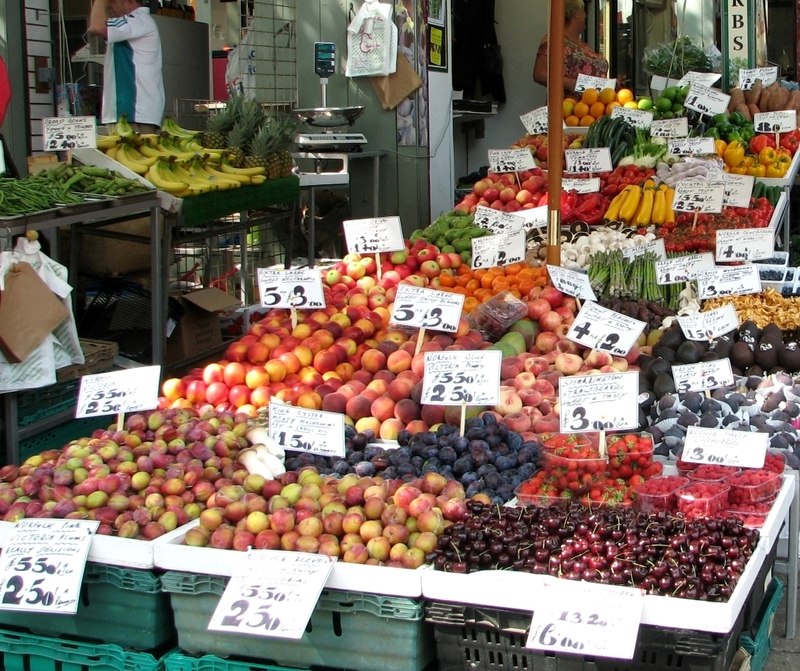
Breakfast could be porridge made with milk or a fortified alternative, topped with sliced banana and a spoonful of peanut butter. Lunch might be a wholemeal wrap with chickpeas, grated carrot, spinach, and a drizzle of olive oil, plus an apple. Dinner could be baked salmon or tofu with brown rice and a large portion of broccoli, carrots, and green beans. Those meals are not a prescription, but they show the pattern: a vegetable or fruit at each meal, a whole grain, a protein source, and a healthy fat.
If you want a broader explanation of how those food groups fit together across the day, this guide to what a balanced diet looks like in practice sets out portions, food groups, and practical tips in more detail. The point to carry forward is consistency. One balanced day does not transform health, and one takeaway does not ruin it. What matters is the average over weeks and months, which is why a plan you can repeat on busy days beats a perfect plan you abandon by Thursday.
Shopping and cooking without overthinking it
A short shopping list makes healthy choices easier. Start with vegetables and fruit for the week, including frozen options for days when fresh supplies run out. Add oats, brown rice, wholemeal bread, lentils, chickpeas, eggs, tinned fish, nuts, olive oil, herbs, and spices. With those staples, you can make soup, a bean stew, a stir-fry, a grain bowl, or an omelette without a special trip. Buying seasonal produce usually costs less and tastes better, and tinned tomatoes, beans, and fish are useful when fresh ingredients are scarce.
Cooking at home gives you control over salt, sugar, and portion size, but it does not need to be elaborate. Roasting a tray of vegetables while rice cooks, batch-cooking lentil soup for two or three days, or preparing overnight oats the evening before all save time later. When you do eat out or order a takeaway, small choices help: choose grilled rather than fried where possible, ask for sauce on the side, add a side salad or extra vegetables, and drink water instead of a sugary drink. Those adjustments keep the meal enjoyable while shifting its balance.
Frequently asked questions
How many portions of fruit and vegetables should I eat each day?
Aim for at least five portions, or 400 grams in total. One portion is about 80 grams, which is roughly one medium banana, a handful of grapes, three heaped tablespoons of cooked vegetables, or a small side salad. Juice counts for at most one portion, even if you drink more, because it lacks the fibre of whole fruit.
Is frozen or tinned produce as healthy as fresh?
Often, yes. Frozen vegetables are usually frozen soon after harvest, and tinned beans, tomatoes, and fish are practical, long-lasting staples. Choose vegetables without added salt where possible, fruit in juice rather than syrup, and beans in water that you rinse before use. Fresh produce is excellent, but it is not the only route to a healthy plate.
Do I need to cut out carbs to eat healthily?
No. Carbohydrates are the body’s main fuel, and the issue is usually the type and portion. Whole grains, oats, potatoes, fruit, and beans supply fibre and nutrients alongside energy, while large portions of white bread, pastries, and sugary drinks add calories with little else. Swapping refined versions for whole-grain ones is usually more sustainable than removing an entire food group.
Are plant-based meals enough for protein?
Yes, with a little variety. Beans, lentils, tofu, tempeh, nuts, seeds, and whole grains all contribute protein, and eating a mix across the day covers the amino acids your body needs. A lentil and brown rice bowl, chickpea curry with wholemeal bread, or tofu stir-fry with quinoa are all complete, filling meals without meat.
How can I eat healthily on a tight budget?
Focus on low-cost staples: oats, rice, dried or tinned lentils and beans, eggs, frozen vegetables, seasonal fruit, and tinned fish. These foods are nutrient-dense and cheap per portion. Planning meals, cooking in batches, and reducing food waste usually save more money than buying premium health products, which are rarely necessary for a balanced diet.
Conclusion
The healthiest pattern is also the most repeatable one: fill half your plate with vegetables and fruit, add a whole grain and a protein source, choose water most of the time, and use healthy oils in moderation. You do not need a perfect diet, an expensive ingredient, or a strict set of rules. Start with one change you can keep, such as adding a vegetable to lunch, swapping white rice for brown rice, or replacing a sugary drink with water, and build from there. Small, steady choices add up to a noticeably different way of eating over a year.
Try it this week: pick two meals, plan them around vegetables, a whole grain, and a protein you enjoy, and keep a healthy snack ready for busy afternoons. If this guide helped, share it with someone who is trying to eat a little better without overhauling their whole life.
Disclaimer: This article is for general wellness information only and is not professional medical advice; talk to a qualified healthcare professional about your individual needs.
