

Walk into a room and forget why you went in. Misplace your keys for the third time this week. Blank on a colleague’s name mid-sentence. If any of that sounds familiar, you are not losing your mind — and learning how to improve your memory is a practical skill, not a talent you either have or you don’t. Memory is built, strengthened and maintained the same way fitness is: with small, repeated actions that add up over time.
Most everyday forgetfulness has ordinary causes — tiredness, stress, distraction, and simply never paying full attention in the first place. The NHS notes that occasional memory lapses are common and often linked to things like poor sleep or low mood, rather than a serious condition, which is reassuring if you have been worrying quietly about it. That also means the basics matter more than any clever trick: fix the foundations first, then add techniques on top.
How Memory Actually Works
Memory is not one thing. It is three jobs working together: encoding, storage and retrieval. Encoding is getting information in — actually noticing it. Storage is keeping it over minutes, days or years. Retrieval is finding it again when you need it. A failure at any one of those stages feels like a bad memory, but the cause, and the fix, is different each time. You cannot recall a name you never really heard, and you cannot find a fact you stored badly in the first place.
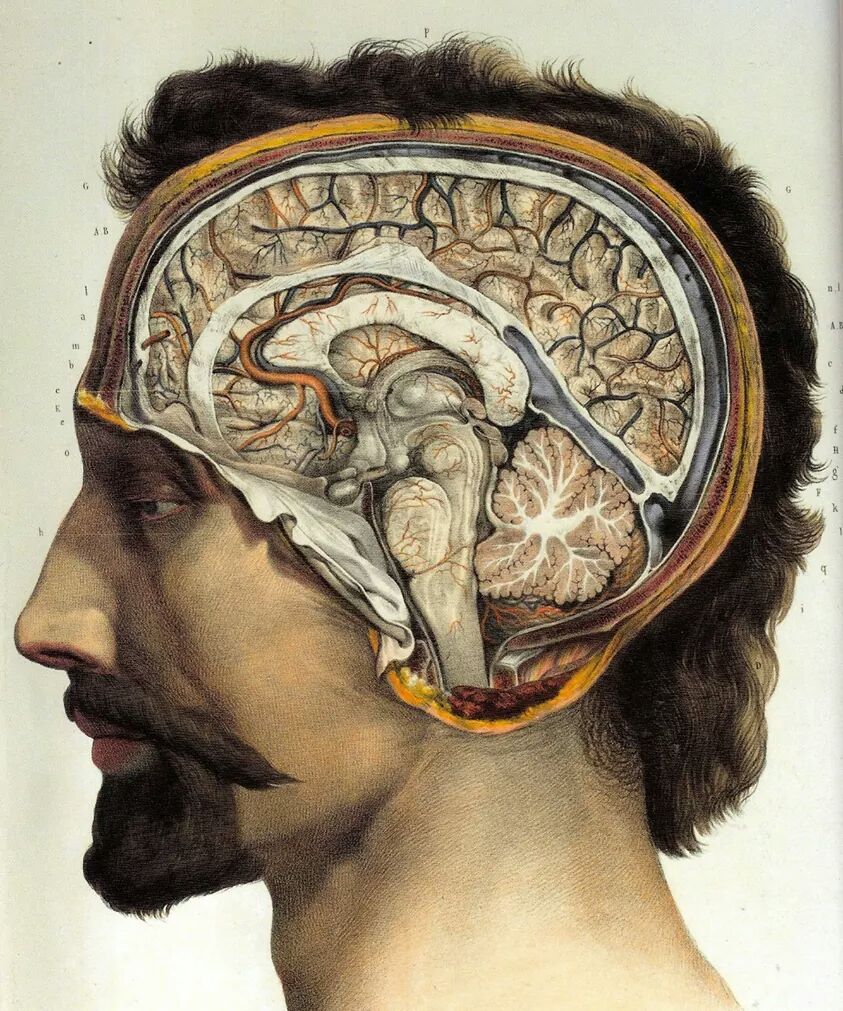
Two parts of the brain do most of the heavy lifting. The hippocampus helps form new memories, especially memories of events and facts, while the prefrontal cortex helps with working memory — the mental notepad you use to hold a phone number while you dial it, or to follow a set of instructions. Working memory is small. The classic estimate was about seven items, plus or minus two, but more recent research puts it closer to four chunks at a time for most adults. That limit is why you forget the third item on a list when someone rattles off five without pausing.
Forgetting is also normal by design. In the 1880s, German psychologist Hermann Ebbinghaus mapped the forgetting curve and found that we lose new information fast — roughly half of it within the first hour, and about two-thirds within a day — unless we revisit it. The curve is not a verdict on your brain. It is a timetable. Review something at the right moment and the curve flattens; ignore it and it falls away. Almost everything in this guide works with that timetable rather than against it.
1. Sleep: Your Brain’s Overnight Filing System
If you change only one thing, change your sleep. During deep sleep, the brain replays the day’s experiences and moves them from short-term storage into longer-term memory — a process called consolidation. Cut sleep short and that filing never finishes. In one well-known study, people who slept after learning a task performed about 20 to 30 percent better on it the next day than people who stayed awake for the same period. You do not need a laboratory to feel the difference: a bad night makes names, appointments and passwords harder to pull up, and a good night makes them easier.
Most adults need seven to nine hours a night, and consistency matters as much as length. Going to bed and getting up at roughly the same time, even at weekends, keeps your body clock steady, and a steady clock makes both falling asleep and waking up sharper. Keep the bedroom dark, cool and quiet, and give screens a break for the last 30 to 60 minutes before bed — the light and the scrolling both keep the brain switched on. If your sleep routine needs a proper reset, these sleep hygiene tips walk through the small changes that make the biggest difference, from caffeine cut-off times to a wind-down routine that actually sticks.
One more thing about sleep and memory: naps help, in moderation. A 20-minute nap in the early afternoon can improve alertness and recall for the rest of the day, while a two-hour nap late in the day can leave you groggy and steal sleep from the night that follows. Short and early is the rule.
2. Move Your Body, Sharpen Your Mind
Exercise is the closest thing there is to a memory drug, and it is free. Aerobic exercise increases blood flow to the brain, raises levels of a protein called BDNF that supports the growth of new brain cells, and reduces inflammation. In a 2011 study of 120 older adults, a year of regular aerobic exercise increased the size of the hippocampus by about 2 percent, effectively reversing one to two years of normal age-related shrinkage, while a stretching-only group lost about 1.4 percent over the same period.
You do not need to run marathons. The widely used target is 150 minutes of moderate activity a week — brisk walking counts — plus two sessions of muscle-strengthening activity. That works out at about 30 minutes, five days a week. If that sounds like a lot, start with 10-minute walks after meals. They add up, they help digestion, and they give your brain a regular supply of oxygen-rich blood. Dancing, swimming, cycling and team sports all count too, and activities that combine movement with coordination or learning a new skill give you a double benefit.
3. Eat for Your Brain
Your brain uses about 20 percent of the calories you eat, even though it is only about 2 percent of your body weight, so what you eat shows up in how you think. The strongest evidence points to a Mediterranean-style pattern: plenty of vegetables, fruit, whole grains, beans, nuts and olive oil, fish a couple of times a week, and less red meat, butter and processed food. In a 2015 study of more than 900 older adults, people who followed the closely related MIND diet most strictly had a 53 percent lower risk of developing Alzheimer’s disease than those who followed it least, and even moderate followers had about a 35 percent lower risk.
Within that pattern, a few foods are worth a regular place on your plate. Oily fish such as salmon, sardines and mackerel provide omega-3 fatty acids, including DHA, which is a major building block of brain cell membranes. Leafy greens such as spinach and kale are linked to slower cognitive decline. Berries, especially blueberries, are rich in flavonoids that support communication between brain cells. Walnuts, eggs, whole grains and fermented foods all earn their place too. Water matters as well: even mild dehydration of 1 to 2 percent of body weight has been shown to impair attention and short-term memory in some studies, so keep a glass nearby and drink before you feel thirsty.
What to cut back on is just as clear. Diets high in added sugar and ultra-processed food are linked to poorer memory scores, and heavy drinking damages the hippocampus directly. You do not need a perfect diet — nobody eats one — but a pattern that is mostly whole foods, most of the time, gives your brain the raw materials it needs.

4. Memory Techniques That Actually Work
Foundations in place, the techniques are where real gains come from. These are not party tricks. They are methods backed by decades of research, used by students, doctors, lawyers and memory competitors, and they work because they match how the brain stores information.
Spaced Repetition
Spaced repetition is the single most effective study technique in the research literature. Instead of cramming everything the night before, you review material at increasing intervals — after a day, then three days, then a week, then a month. Each review lands just as you are about to forget, which strengthens the memory far more than re-reading the same page five times in one sitting. A major review of the evidence, published in 2006, found that spacing study sessions consistently beat massed practice, with the benefit growing as the gap between sessions grew. Flashcard apps that schedule reviews for you make this almost automatic: put a fact in once, and the app brings it back at the right time.
Chunking
Chunking works around the four-item limit of working memory by grouping information into meaningful bundles. A phone number is hard to remember as eleven separate digits, but easy as three chunks. The same trick works everywhere: break a long list into groups of three or four, group a shopping list by shop aisle, or learn a new language in phrases rather than single words. Your brain stores the chunk as one item, which frees up space for the next one.
Retrieval Practice: Test Yourself
Re-reading feels productive, but it is one of the weakest ways to learn. Testing yourself — even when you get the answer wrong — is far stronger, because the effort of pulling information out is what makes it stick. This is called the testing effect, and it has been shown in hundreds of studies since the early 2000s. Close the book, write down everything you remember, then check what you missed. Do it again the next day. The mistakes are the point: each failed attempt, followed by the correct answer, makes the memory easier to find next time.
Make It Vivid: Association and the Memory Palace
The brain remembers the vivid, the strange and the personal far better than the plain and abstract. To remember a name, link it to something you already know — Mrs Baker becomes an image of a baker, and the picture sticks. To remember a list, use the memory palace: picture a route through your house, and place one item in each room in an exaggerated, funny form. Memory champions use this to memorise hundreds of digits, but the same method works for a ten-item shopping list or the points of a presentation. The sillier the image, the better it works, because the brain notices novelty.
Teach What You Learn
Explaining something to someone else is one of the best tests of whether you actually know it. When you teach, you have to organise the idea, find the gaps, and put it into your own words — and the gaps are where the learning happens. If there is no one to teach, explain it out loud to an empty room, or write a short summary as if for a friend. If you cannot explain it simply, you have found exactly what to review next.
5. Train Your Focus, Not Just Your Memory
Attention is the front door of memory. Nothing gets stored that you never noticed, which is why so much forgetfulness is really distraction. Every time you switch tasks — checking a message mid-conversation, glancing at a notification while reading — your brain pays a switching cost, and the information in front of you gets encoded weakly, if at all. Research on multitasking has found that heavy media multitaskers perform worse on attention and memory tests, and that even the presence of a face-down phone on the desk can reduce working memory capacity.
The fix is unglamorous but effective. Do one thing at a time. Put the phone in another room when you need to concentrate. Work in focused blocks of about 25 minutes, with a five-minute break, and take a longer break every two hours. When you meet someone new, repeat their name back to them in the first minute — ‘Nice to meet you, Sarah’ — and connect it to something about them. When you put something down, say it out loud: ‘Keys, on the hook by the door.’ It feels silly for a week. Then it becomes automatic, and the lost-key mornings stop.
6. Habits That Quietly Hurt Your Memory
Some memory problems are not about what you are failing to do, but about what is getting in the way. Chronic stress is first on that list: the stress hormone cortisol, at high levels over months, can shrink the hippocampus and make it harder to form new memories. Daily stress relief is not a luxury — a walk, ten minutes of slow breathing, or time with a friend all lower cortisol and give the brain room to work.
Heavy drinking, smoking, and a lack of social contact all damage memory over time, and so do untreated problems that are easy to miss: depression, anxiety, thyroid problems, vitamin B12 deficiency, and hearing loss, which forces the brain to spend so much effort on hearing that less is left for remembering. If your memory has changed suddenly, is getting noticeably worse, or is starting to interfere with daily life, do not just buy a brain-training app — get it checked. Most causes are treatable, and the earlier they are found, the better the outcome.
A Simple Seven-Day Plan to Get Started
You do not need to do everything at once. Pick one change from each section and run it for a week, then add the next. Day one: set a fixed wake-up time and a bedtime that gives you eight hours. Day two: take a 30-minute brisk walk. Day three: cook one Mediterranean-style meal, with oily fish or beans and plenty of vegetables. Day four: learn spaced repetition — put ten facts into a flashcard app and review them. Day five: test yourself on something you learned, instead of re-reading it. Day six: work for one hour with your phone in another room, and notice how much more you remember. Day seven: teach someone one thing you learned this week. By the end of the week you will have better sleep, more movement, and at least one technique that is already working. That is how memory improves — not in a single dramatic moment, but in a week of small, repeatable wins.
Frequently Asked Questions
How long does it take to improve your memory?
Some changes show up fast. A good night’s sleep can improve recall the next day, and a single session of retrieval practice beats re-reading straight away. Bigger changes — from regular exercise, a better diet and spaced repetition — usually take four to eight weeks of steady practice to feel obvious. The honest answer is that memory improves gradually, and the people who see the most change are the ones who keep the habits going after the first month.
Can you improve your memory at any age?
Yes. The brain keeps forming new connections throughout life, a property called neuroplasticity, and older adults benefit from the same techniques as younger ones. In the exercise study mentioned above, the participants were aged 55 to 80, and their hippocampi grew. It is never too early to start, and it is never too late either — the best time is now, whatever your age.
Do brain-training games work?
They make you better at the games themselves, but the evidence that they improve everyday memory is weak. Large reviews have found that brain-training apps show small gains on trained tasks and little transfer to real life. The activities with the strongest evidence are the ones in this guide: exercise, sleep, spaced repetition and retrieval practice. If you enjoy a puzzle or a game, play it — just do not count it as your memory training.
What is the best food for memory?
There is no single best food, and anyone selling one is selling something. The pattern matters more than any one item: oily fish, leafy greens, berries, nuts, whole grains and olive oil, eaten regularly, support memory better than any supplement. If you eat a varied, mostly whole-food diet, you are already doing most of what the research recommends.
When should I see a doctor about my memory?
See a healthcare professional if memory problems are getting worse over weeks or months, if you forget important things like appointments or medication, if you get lost in familiar places, or if family or friends have noticed changes you have not. Occasional forgetfulness — a misplaced key, a forgotten name that comes back later — is normal. A clear change from how you used to be is worth checking.
Conclusion
Learning how to improve your memory comes down to a short list of things that are easy to understand and hard to skip: sleep seven to nine hours, move your body most days, eat mostly whole foods, and use techniques that match how your brain actually works — spaced repetition, chunking, retrieval practice and teaching what you learn. None of them needs special equipment, and none of them works overnight. Together, they compound.
Start tonight. Set a bedtime that gives you eight hours, put your phone to charge outside the bedroom, and pick one technique to try tomorrow — even just testing yourself instead of re-reading. Then keep going for a month and notice what changes. If this guide helped, bookmark it, share it with someone who keeps losing their keys, and explore more of our Health articles for practical guides you can actually use.
This article is for general information only and is not medical advice. If you are worried about your memory, please speak to a healthcare professional.
