


Swimming drills are the fastest way to fix sloppy technique, build efficiency, and become a smoother, faster swimmer. Whether you are a beginner learning the basics or a triathlete chasing a personal best, adding structured swimming drills to your workouts helps you isolate one skill at a time — your catch, your kick, your rotation, your breathing — instead of mindlessly swimming laps. In this guide, you will learn 12 of the most effective swimming drills, organized by stroke, plus how to build a drill-based workout that fits into just 30 minutes.
Think of drills as slow-motion rehearsal. When you slow a movement down and exaggerate it, your muscles learn the correct pattern far more quickly than they would from full-speed swimming. Many coaches recommend spending 15 to 20 percent of every session on technique work. Pair these drills with solid fundamentals from swim stroke lessons, and you will see your efficiency climb within a few weeks.
Why Swimming Drills Matter
Most swimmers slow down not because they lack fitness, but because they waste energy. A dropped elbow, a scissor kick, or lifting the head to breathe can all create drag that costs you seconds per lap. Swimming drills break the stroke into its component parts so you can feel — and fix — each flaw. Because drills exaggerate one movement, they give you instant feedback: you either feel the water better or you don’t. Over time, this feedback rewires your muscle memory, so good technique becomes automatic when you swim full stroke. Drills also reduce injury risk by reinforcing balanced, symmetrical movement, and they keep training fresh and mentally engaging.
Freestyle Drills
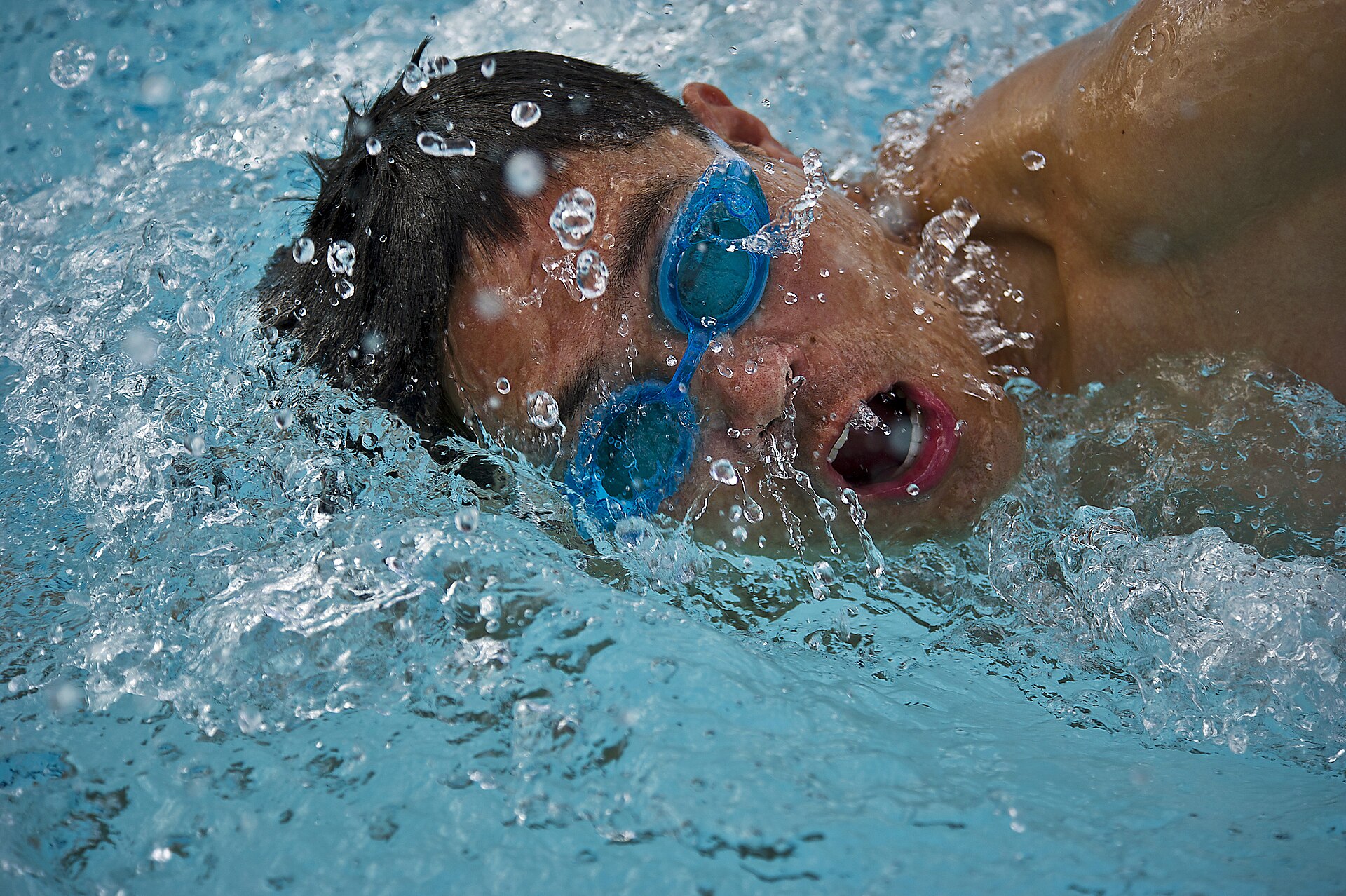
Freestyle is the stroke most swimmers practice most, so it deserves the most drill time. These freestyle swimming drills target the high-elbow catch, a relaxed recovery, and proper body rotation.
Catch-Up Drill
Swim freestyle with one hand always extended in front. Start your next pull only when the recovering hand “catches up” and touches the lead hand. This drill teaches patience in the catch phase, encourages a long body line, and improves balance. Keep your head still, eyes on the pool bottom, and press your chest gently into the water. Do 4 x 50 metres, focusing on a strong catch rather than speed.
Fingertip Drag Drill
As your hand recovers over the water, drag your fingertips lightly across the surface. This keeps the recovery relaxed, the elbow high, and the hand close to the body — eliminating the wide, slapping recovery that kills momentum. If your hips sink while doing this drill, you are probably rushing the recovery; slow down and let your kick support your body position. Try 4 x 50 metres, alternating one length of drill with one length of smooth full-stroke freestyle.
6-Kick Switch Drill
Push off and hold a side-kick position with one arm extended and the other at your side. Take six kicks, then execute one full stroke cycle to rotate to the other side. This drill builds the rotational rhythm of freestyle, teaches you to drive rotation from the hips, and develops a steady kick. Keep your lead arm long and your head neutral. Perform 6 x 50 metres, keeping each switch crisp and controlled.
Backstroke Drills
Backstroke feels awkward for many swimmers because the body position is unfamiliar and the waterline sits close to the face. The double-arm backstroke drill solves both problems. Swim backstroke while moving both arms simultaneously, then pause briefly with your arms at your sides to feel your balance. This drill teaches a continuous, symmetrical pull and a steady flutter kick. Another useful option is the single-arm drill: swim backstroke with one arm while the other rests at your side, which sharpens your catch and rotation. Keep your hips high, your head still with ears just under the surface, and your kick narrow and constant. Aim for 6 x 50 metres of backstroke swimming drills before swimming full-stroke backstroke.
Breaststroke Drills
Breaststroke timing — pull, breathe, kick, glide — is the hardest timing pattern in swimming. The 2-kick, 1-pull drill isolates it beautifully: swim one full breaststroke pull followed by two kicks, holding a tight streamline glide between each. This teaches you to finish your kick, stay streamlined, and avoid pulling too early. Focus on keeping your elbows inside your hands during the pull, driving your heels toward your hips rather than spreading your knees, and snapping into a long glide. The glide is where breaststroke speed lives. These are among the most technical swimming drills in the sport. Perform 8 x 25 metres, making each length quieter and smoother than the last.
Butterfly Drills
Butterfly demands rhythm, and the single-arm butterfly drill builds it. Swim butterfly with one arm, keeping the other extended in front, and take two kicks per stroke — one as the hand enters, one as it exits. This drill teaches the undulating body motion and the timing of the kick without the exhaustion of full butterfly. Keep your chin low, press your chest down on entry, and let your hips rise. Alternate arms by 25 metres. Once comfortable, progress to 3+3+3: three strokes left arm, three right arm, three full stroke. These butterfly swimming drills build rhythm fast. Work up to 8 x 25 metres with plenty of rest.
Breathing Drills
Poor breathing mechanics sink more swims than any other flaw. The 3-5-7 breathing pattern drill trains breath control and bilateral breathing: breathe every 3 strokes for one length, every 5 for the next, and every 7 for the next. This builds lung capacity and evens out your stroke. Another classic is the side-kick breathing drill: kick on your side with your bottom arm extended, rotating just your head to breathe, which teaches you to keep one goggle in the water and avoid lifting your head. Finish with hypoxic 25s — no breathing at all for one length — but only if you are comfortable, and never push through dizziness. Spend 200 metres of every session on breathing-focused swimming drills.
How to Build a Drill Workout
A great drill workout is simple: warm up, drill, swim, cool down. Here is a 30-minute template you can use three times a week. Warm up with 200 metres of easy freestyle. Then do 8 x 50 metres of swimming drills — pick two drills from the list above and alternate them, resting 15 seconds between each 50. Follow with 4 x 100 metres of full-stroke swimming at a moderate pace, thinking about the drill skill you just practiced. Cool down with 100 metres of easy backstroke. As you improve, reduce the rest and add volume, but never sacrifice form for distance. For structured progression and technique benchmarks, resources from USA Swimming offer excellent drill progressions for every level.
Common Mistakes to Avoid
The biggest mistake swimmers make with drills is rushing them. Drills are not about speed; they are about precision. If you sprint through a catch-up drill, you reinforce the same bad habits you are trying to fix. Other common errors include holding your breath during drills, which tenses the whole body, and doing drills only once — technique needs repetition over weeks, not a single session. Finally, avoid doing every drill every session. Pick two or three that target your weakest skill and master them before moving on. Quality always beats quantity.
Frequently Asked Questions
How often should I do swimming drills?
Include drills in every session. Devote 15 to 20 percent of your total distance — roughly 300 to 500 metres of a 2,000-metre workout — to drill work, and rotate the drills weekly.
Are swimming drills good for beginners?
Yes. Beginners benefit the most because drills build correct movement patterns before bad habits form. Start with catch-up, fingertip drag, and side-kick drills.
Do I need equipment for these drills?
No equipment is required for the drills in this guide. A kickboard and pull buoy can add variety, but every drill here can be done with nothing but a swimsuit and goggles.
How long until I see results from swimming drills?
Most swimmers feel a difference within two to three weeks of consistent drill work, with measurable improvements in pace and efficiency over six to eight weeks.
Can swimming drills help me swim faster?
Absolutely. Faster swimming comes from reducing drag and improving propulsion — exactly what drills target. Many swimmers drop seconds per 100 metres through technique gains alone.
Conclusion
Swimming drills are the most efficient investment you can make in your swimming. Twelve drills, practiced consistently, will transform your catch, your kick, your rotation, and your breathing — the four pillars of fast, effortless swimming. Start with the freestyle drills above, add one stroke per week, and build your 30-minute drill workout into a regular habit. Grab your goggles, pick two drills, and make your next session a technique session. Your future self — gliding past your old personal bests — will thank you.
