

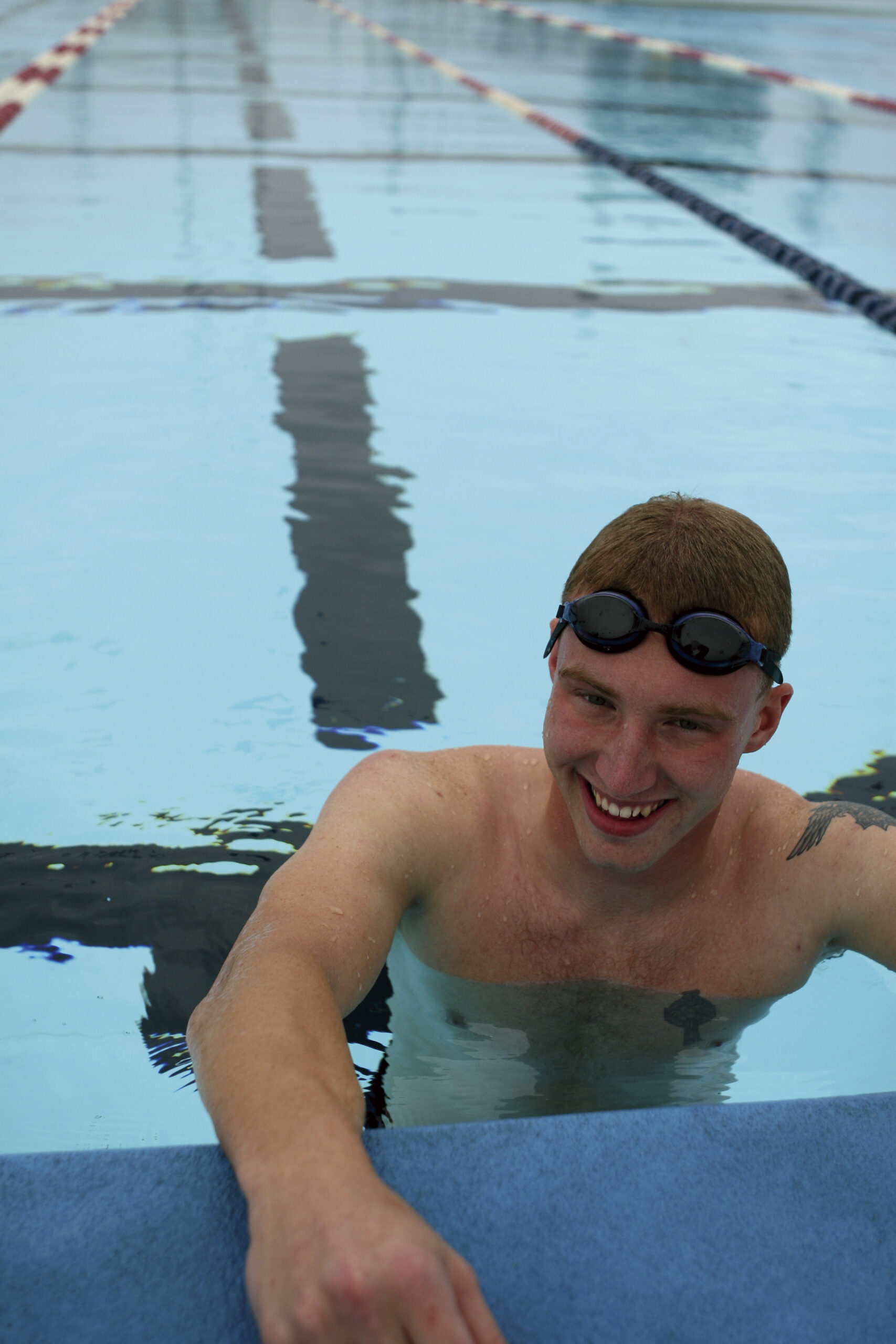
If you’ve ever wondered, “does swimming build muscle?”, you’re not alone. It’s one of the most common questions in fitness: can laps in the pool actually build noticeable muscle, or is swimming purely a cardio exercise? The short answer is yes — swimming builds muscle. Water is roughly 800 times denser than air, so every stroke forces your muscles to push against constant resistance. That resistance works your entire body at once, from your shoulders and back to your core and legs. While you won’t get a bodybuilder’s physique from the pool alone, consistent swimming absolutely builds lean, functional muscle and sculpts an athletic frame. In this guide, we’ll break down the science behind how swimming builds muscle, which muscles each stroke targets, and how to structure your sessions for maximum growth.
The Direct Answer: Yes, Swimming Builds Muscle
Swimming is a form of resistance training. Every time you pull your arm through the water, push off the wall, or kick to propel yourself forward, your muscles contract against resistance — the same fundamental stimulus that makes muscles grow in the weight room. According to Swim England, the national governing body for swimming in England, swimming works the whole body at once, and research on aquatic exercise consistently shows improvements in muscular strength and endurance, particularly in the upper body.
That said, swimming primarily builds muscular endurance and lean, toned muscle rather than maximum size. The resistance of water is constant but relatively moderate compared to heavy barbells, so hypertrophy — muscle growth — happens more slowly and produces a defined, athletic look rather than bulk. Competitive swimmers famously develop broad shoulders, strong lats, and powerful legs precisely because of this full-body resistance.
If your goal is to build serious muscle mass, swimming works best as part of a broader program. But for building functional strength, improving muscle tone, and developing an athletic physique while going easy on your joints, few exercises beat the pool.
How Swimming Builds Muscle
To understand how swimming builds muscle, it helps to know what actually makes muscles grow: mechanical tension, metabolic stress, and muscle damage followed by recovery. Swimming delivers all three — just in a different way than lifting weights.
Water Resistance: Nature’s Weight Room
Water is about 800 times denser than air, which means every movement you make in the pool meets resistance from all directions. Unlike a dumbbell, which only resists gravity in one direction, water pushes back against your limbs no matter which way you move. This multi-directional resistance keeps your muscles under near-constant tension throughout each stroke.
The faster you move, the harder water pushes back. Resistance in water increases with the square of your velocity, so swimming harder literally multiplies the load on your muscles. Sprint intervals in the pool are therefore a genuine form of high-intensity resistance training — short, explosive efforts that recruit fast-twitch muscle fibers, the fibers with the greatest growth potential.
Full-Body Muscle Recruitment
Swimming is one of the few exercises that genuinely works the entire body in a single session. Your arms and shoulders drive each stroke, your back and lats power the pull, your core stabilizes your body position, and your legs kick to keep you moving. Even muscles you rarely think about — like the hip flexors, forearms, and neck — get constant work.
Because so many muscle groups fire at once, swimming triggers a strong hormonal response, including the release of growth hormone and testosterone, both of which support muscle repair and growth. This systemic effect is one reason swimmers develop such balanced, symmetrical physiques.
Which Muscles Does Each Stroke Work?
Each swimming stroke emphasizes different muscle groups, which is why varied swimmers develop such well-rounded physiques. Here’s a breakdown:
Freestyle (Front Crawl)
Primarily works the lats, shoulders (deltoids), triceps, and core. The flutter kick engages the quadriceps, hamstrings, glutes, and calves. Freestyle is the best all-rounder for upper-body muscle.
Backstroke
Targets the lats, upper back, shoulders, and biceps more than freestyle, since the pull motion is reversed. The constant kick hammers the quads, glutes, and hip flexors while the core keeps your body aligned.
Breaststroke
The most leg-dominant stroke. The whip kick heavily works the inner thighs, glutes, hamstrings, and calves, while the arm pull targets the chest (pectorals), shoulders, and biceps.
Butterfly
The most demanding stroke for muscle building. The powerful dolphin kick and sweeping arm motion recruit the chest, shoulders, lats, core, and legs simultaneously. Butterfly burns the most calories and places the greatest muscular demand on the body.
Mixing strokes across your sessions ensures balanced development and prevents overuse of any single muscle group.
Swimming vs Weight Training: Which Builds More Muscle?
If maximum muscle size is the goal, weight training wins. Lifting heavy weights allows progressive overload — steadily increasing the load — which is the most reliable driver of hypertrophy. You can simply add more plates; in the pool, you can’t make the water heavier.
But swimming has unique advantages. It’s low-impact, so your joints, tendons, and ligaments take far less punishment than they do under a loaded barbell. That makes swimming an excellent muscle-building option for people with joint issues, older adults, or anyone recovering from injury. Swimming also builds muscular endurance and cardiovascular fitness simultaneously — something a biceps curl will never do.
The smartest approach? Combine them. Use the weight room for progressive overload and the pool for active recovery, conditioning, and balanced full-body development. Many elite athletes swim on rest days precisely because it builds muscle-supporting fitness without the joint stress of another heavy session.
How to Maximize Muscle Growth in the Pool
You can’t just float around and expect results. To build muscle in the pool, you need to train with intent — here’s how.

Train With Sets and Intervals
Structure your swim like a gym workout: warm up, then perform sets with defined rest periods. For example, swim 8 x 50 meters at a hard effort with 20 seconds of rest between each. Short rest periods keep metabolic stress high, while sprint efforts recruit the fast-twitch fibers most responsible for growth.
Aim for 2–4 sessions per week, gradually increasing either distance or intensity, or reducing rest times. This is the pool equivalent of progressive overload. Track your times so you know you’re improving — if your 100-meter sprint gets faster, your muscles are adapting and growing.
Use Equipment: Paddles, Kickboards, and Fins
Swim equipment increases resistance and isolates muscle groups, making the pool far more effective for muscle building. Hand paddles enlarge your pulling surface, forcing your lats, shoulders, and triceps to work harder on every stroke — they’re the closest thing to adding weight in the pool. A pull buoy between your legs isolates the upper body for a focused arm and back workout.
Kickboards do the opposite, isolating your legs so your quads, glutes, and calves take the full load. Short-blade fins add resistance to your kick while letting you maintain speed. Use equipment for 20–30% of your session, and build up gradually — paddles in particular can stress the shoulders if you overdo them.
Nutrition Basics for Swimmers
Muscles don’t grow in the pool — they grow during recovery, fueled by what you eat. Aim for roughly 1.6–2.2 grams of protein per kilogram of body weight per day, spread across 3–4 meals, with a protein-rich meal or snack within a couple of hours after swimming. Lean meats, fish, eggs, dairy, legumes, and protein shakes all work.
Don’t fear carbohydrates: swimming burns a lot of energy, and carbs replenish the glycogen your muscles need to train hard again. Stay hydrated too — you sweat in the pool even if you don’t notice it. Finally, prioritize sleep. Most muscle repair happens overnight, so 7–9 hours of quality sleep is as important as any workout.
Frequently Asked Questions About Swimming and Muscle Growth
Here are answers to the most common questions about swimming and muscle growth.
Does swimming build muscle faster than running?
Swimming generally builds more muscle than running because water provides resistance in every direction, while running is mostly a lower-body cardio exercise with minimal resistance. Swimmers typically develop stronger upper bodies, backs, and shoulders than runners. That said, hill sprints and trail running do build leg muscle effectively.
How long does it take to build muscle by swimming?
With 3–4 focused sessions per week, most beginners notice improved muscle tone within 4–6 weeks and visible changes in definition within 8–12 weeks. As with any training, consistency, intensity, and nutrition determine how quickly you see results.
Is swimming enough to build muscle without weights?
For beginners and general fitness, yes — swimming alone can build noticeable lean muscle, especially in the upper body. Advanced lifters chasing maximum size will eventually need the progressive overload that only heavier resistance provides. Combining both delivers the best of both worlds.
Does swimming build abs?
Yes — swimming is excellent for core development. Every stroke requires your abdominal and oblique muscles to stabilize your body in the water, and strokes like butterfly place intense demands on the core. You won’t get a six-pack from swimming alone without a good diet, but the pool builds a strong, functional midsection.
What is the best stroke for building muscle?
Butterfly builds the most muscle overall because it demands explosive power from the chest, shoulders, back, core, and legs at once. However, it’s technically difficult and exhausting. For most people, a mix of freestyle sprint intervals and breaststroke delivers the best balance of muscle building and sustainability.
The Bottom Line
So, does swimming build muscle? Absolutely. The water’s constant resistance works your entire body, building lean, functional muscle while improving cardiovascular fitness and sparing your joints. It won’t replace heavy lifting for maximum size, but as a muscle-building exercise, swimming is one of the most effective and sustainable options available.
Ready to dive in? Start with two to three sessions per week, mix up your strokes, and add sprint intervals as your fitness improves. For more structured pool workouts, check out our guide to building muscle as a swimmer. Grab your goggles, hit the pool, and start building a stronger body — one lap at a time.
Disclaimer: This article is for general wellness information only and is not a substitute for professional medical advice — consult a qualified professional before starting a new exercise program.
