An egg free meal plan sounds simple until you sit down to build one. Eggs turn up in far more places than breakfast: they bind burgers, enrich fresh pasta, glaze bread, thicken sauces and hold cakes together. Cutting them out can leave even a confident cook staring into the fridge, unsure what is left to make. This plan fixes that. It gives you seven full days of breakfasts, lunches and dinners that are completely egg-free, plus the swaps, shopping list and label-reading skills you need to keep going long after the week is over.
Whether you are cooking for a child with an egg allergy, managing an intolerance, or simply trying a new way of eating, every meal below uses ordinary supermarket ingredients and most take 30 minutes or less. If you want a quick reference for baking without eggs, Healthline’s guide to egg substitutes is a useful starting point, and this article puts those swaps to work in real meals rather than leaving them as theory. You will not find a single omelette or quiche here, just filling, everyday food that happens to leave eggs out.
Why People Go Egg-Free
Egg allergy is one of the most common food allergies in childhood, affecting around 2 in every 100 children. For most of them it is a childhood condition: the majority outgrow it by the time they reach their teens, though a small number carry it into adult life. Reactions can range from itchy skin and hives to stomach pain, and in rare cases anaphylaxis, which is why families with an allergic child learn to check every label and every menu. Adults can develop an egg allergy too, but it is much less common than in children.
Allergy is not the only reason people cut eggs out. Some people have an egg intolerance, which tends to cause digestive discomfort rather than an immune reaction, and find life easier without them. Others follow a vegan diet, which excludes eggs along with all animal products. A few cut back because of cholesterol: one large egg contains around 186 mg of cholesterol, and while current dietary advice no longer treats that as the problem it was once thought to be, some people still prefer to limit it. Cost plays a part as well. Egg prices have jumped sharply in recent years, and a household that gets through a dozen eggs a week can save a noticeable amount by leaning on cheaper proteins such as beans and lentils instead.
Whatever the reason, dropping eggs does not have to mean dropping protein. One large egg provides about 6 grams of protein and 70 calories, along with vitamin B12, vitamin D and choline. All of those nutrients are available elsewhere: dairy foods and fortified plant milks cover B12 and vitamin D, while beans, lentils, tofu, nuts and whole grains cover protein. The plan below is built around those foods, so no day leaves you short.
Egg Substitutes That Actually Work
The trick to cooking without eggs is matching the substitute to the job. In most recipes the egg is doing one of three things: binding ingredients together, adding moisture, or helping the mixture rise. No single swap does all three perfectly, so use the guide below and expect a little trial and error the first time you try a new recipe.
- Flax egg: Mix 1 tablespoon of ground flaxseed with 3 tablespoons of water and leave it for 10 to 15 minutes until it turns thick and gel-like. One flax egg replaces one egg in muffins, pancakes, cookies and veggie burgers.
- Chia egg: The same ratio as flax, 1 tablespoon of chia seeds to 3 tablespoons of water, rested for 15 minutes. It works well in dense bakes and porridge, but the seeds stay visible, so it suits rustic recipes better than pale sponge cakes.
- Mashed banana: A quarter of a cup of mashed banana, roughly half a medium banana, replaces one egg and adds moisture and sweetness. Best for pancakes, banana bread and muffins, where the flavour fits.
- Unsweetened applesauce: A quarter of a cup replaces one egg in cakes and muffins. It keeps bakes moist but adds no binding, so pair it with a little extra baking powder if the recipe needs lift.
- Silken tofu: A quarter of a cup of blended silken tofu replaces one egg in dense cakes, brownies and creamy dishes. It adds protein and a smooth texture without much flavour of its own.
- Aquafaba: Three tablespoons of the liquid from a tin of chickpeas replaces one egg, and it is the only plant-based swap that whips up like egg white. Use it for meringues, mousses and light batters, and save the chickpeas for dinner.
- Bicarbonate of soda and vinegar: One teaspoon of bicarbonate of soda mixed with one tablespoon of vinegar replaces one egg and gives light, fluffy cakes a lift. Mix it in last and get the tin in the oven quickly.
- Shop-bought egg replacer: Follow the packet, which usually means whisking a spoonful of powder with water. These are designed for baking and give the most consistent results across different recipes.
- Yoghurt or buttermilk: A quarter of a cup of plain yoghurt or buttermilk replaces one egg in muffins and quick breads, adding moisture and a gentle tang.
One honest warning: substitutes replace what an egg does, not what an egg is. A flax egg will never whip into stiff peaks, and a banana will always taste faintly of banana. That is fine for everyday cooking, but if a recipe depends on eggs for its structure, such as a souffle or a meringue, choose a different recipe rather than forcing a swap. The meals in the plan below are written around swaps that work, so you will not run into that problem.
The 7-Day Egg Free Meal Plan
Use this plan as written for one week, or treat it as a template and repeat the days you like best. Portions are sized for one adult; scale them up for the family and double the batch cooking where you can. Cooking a big pot of grains or soup on Sunday and using it across two or three days is the single easiest way to make the week feel effortless.
Day 1: Monday
Breakfast: Porridge made with oat milk, topped with sliced banana, a handful of blueberries and a spoonful of peanut butter. Oats are naturally filling, and the peanut butter adds protein that keeps you full until lunch.
Lunch: Chickpea and avocado wraps. Mash chickpeas with lime juice, cumin and chopped coriander, spread over a wholemeal tortilla with sliced avocado, and add carrot sticks on the side.
Dinner: Tomato, basil and white bean pasta. Fry garlic in olive oil, add a tin of chopped tomatoes and a tin of drained cannellini beans, simmer for 10 minutes and stir through fresh basil and a handful of spinach. Serve over dried pasta, which is almost always egg-free, with a green salad.
Day 2: Tuesday
Breakfast: Overnight oats. Stir rolled oats with oat milk, a tablespoon of chia seeds and a drizzle of maple syrup the night before, then top with raspberries in the morning. No cooking, no washing up beyond a jar.
Lunch: Lentil and roasted vegetable soup with crusty bread. Red lentils cook in about 20 minutes, so this is a genuine weeknight soup: simmer them with carrots, celery, onion and cumin, then blend half for a thick texture.
Dinner: Tofu stir-fry with rice noodles. Press and cube firm tofu, fry until golden, then toss with peppers, broccoli and a sauce of soy sauce, ginger, garlic and a little honey. Rice noodles cook in five minutes and are egg-free.
Day 3: Wednesday
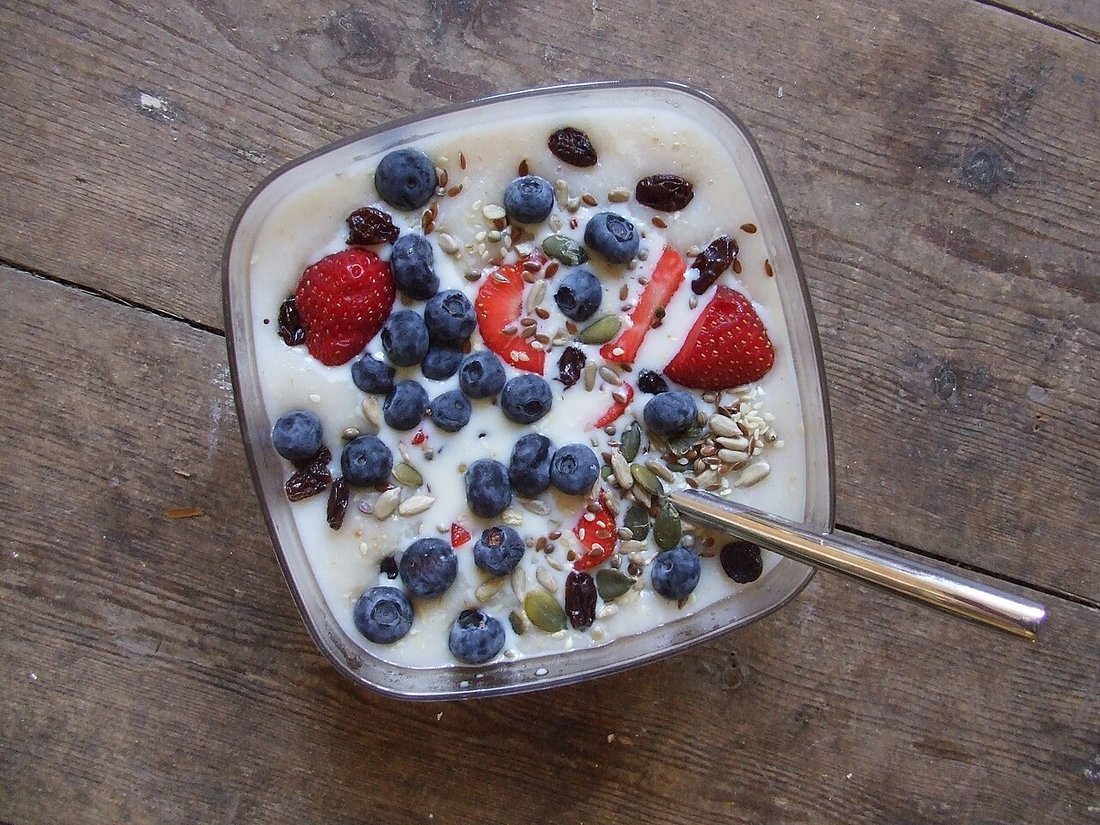
Breakfast: Berry smoothie bowl. Blend frozen berries, half a banana and oat milk until thick, pour into a bowl and top with granola and a spoonful of mixed seeds. It tastes like dessert and takes five minutes.
Lunch: Hummus, roasted red pepper and rocket sandwich on sourdough, with an apple on the side. Sourdough is almost always egg-free and keeps well, making it a reliable lunchbox bread.
Dinner: Bean chilli with brown rice. Simmer kidney beans, black beans, chopped tomatoes, onion, garlic and smoked paprika for 25 minutes, then serve with brown rice, sliced avocado and a spoonful of dairy-free yoghurt.
Day 4: Thursday
Breakfast: Avocado on sourdough toast with halved cherry tomatoes, a squeeze of lemon and a sprinkle of pumpkin seeds. Add a pinch of chilli flakes if you like heat in the morning.
Lunch: Quinoa salad with roasted sweet potato, black beans and sweetcorn, dressed with lime juice and olive oil. Make a double batch: it keeps in the fridge for two days and works as a side dish for dinner too.
Dinner: Mushroom and spinach risotto with peas and lemon. Stir arborio rice with hot stock a ladle at a time, fold in sliced mushrooms and spinach near the end, and finish with lemon zest and grated hard cheese.
Day 5: Friday
Breakfast: Flax-egg pancakes with berries and maple syrup. Use the flax egg from the substitutes section above, and rest the batter for five minutes before cooking so the pancakes hold together. Friday deserves a proper breakfast.
Lunch: Baked sweet potato with black beans, salsa and guacamole. A sweet potato takes about 45 minutes in the oven, so start it before you sit down to work, or microwave it in eight minutes if you are in a hurry.
Dinner: Coconut and chickpea curry with basmati rice. Simmer chickpeas in coconut milk with curry paste, ginger and tomatoes for 20 minutes, and serve with rice and a flatbread. Check the flatbread label: most are egg-free, but a few contain egg, so look before you buy.
Day 6: Saturday
Breakfast: Peanut butter and banana on wholemeal toast with a drizzle of honey, plus a glass of milk or fortified oat milk. Simple, fast, and the kind of breakfast children will actually eat.
Lunch: Mediterranean pasta salad with olives, sun-dried tomatoes, cucumber and crumbled feta, dressed with lemon and olive oil. Another one that improves after a night in the fridge.
Dinner: Black bean and oat burgers with sweet potato wedges and salad. Mash black beans with oats, cumin, garlic and a flax egg, shape into patties and fry for four minutes a side. The wedges roast in the oven while the burgers cook.
Day 7: Sunday
Breakfast: Warm cinnamon apple porridge with chopped walnuts. Cook diced apple into the oats with a pinch of cinnamon and the house will smell like a bakery before you have even sat down.
Lunch: Tomato and roasted pepper soup with a grilled cheese toastie. Blend tinned tomatoes with roasted peppers and a clove of garlic, and serve with a cheese toastie made on egg-free bread. It is the kind of lunch that makes a grey Sunday feel sorted.
Dinner: Roast vegetable and lentil traybake with herby couscous. Toss courgette, peppers, red onion and cherry tomatoes in olive oil, roast for 30 minutes, stir in cooked green lentils for the last five, and serve over couscous with chopped parsley.
Snacks for the week: Keep it simple. Fruit, a small handful of nuts, rice cakes with hummus, popcorn, dairy-free yoghurt with berries, and carrot or cucumber sticks with dip will cover the gaps between meals without adding cooking to your day.
Egg Free Shopping List
One shop covers most of the week. Buy the fresh items twice if you prefer, once on Sunday and once midweek, so the vegetables stay crisp.
- Grains and bread: rolled oats, brown rice, basmati rice, dried pasta, rice noodles, couscous, quinoa, wholemeal tortillas, sourdough, wholemeal bread.
- Protein: tinned chickpeas, kidney beans, black beans, cannellini beans, red lentils, green lentils, firm tofu, silken tofu, peanut butter, mixed nuts and seeds.
- Dairy and dairy-free: milk or fortified oat milk, plain yoghurt or dairy-free yoghurt, hard cheese, feta, butter or dairy-free spread.
- Fruit and vegetables: bananas, apples, berries, avocado, lemons, limes, tomatoes, peppers, courgette, red onion, sweet potatoes, carrots, celery, spinach, rocket, mushrooms, broccoli, sweetcorn, cucumber, olives, sun-dried tomatoes.
- Pantry: tinned chopped tomatoes, coconut milk, vegetable stock, soy sauce, curry paste, smoked paprika, cumin, cinnamon, ground flaxseed, chia seeds, maple syrup, honey, hummus, salsa, olive oil.
How to Read Labels for Hidden Egg
In the UK, egg is one of 14 major allergens that food businesses must highlight on the label. On prepacked food it is emphasised in the ingredients list, usually in bold, so scanning for the word “egg” in bold is a good first step. Loose food, such as a sandwich from a deli counter, should come with allergen information too, so ask for it. The Food Standards Agency requires this by law, which makes the UK one of the easier countries to shop egg-free in.
The tricky part is that egg hides behind other names. Watch for albumin, ovalbumin, globulin, livetin, lysozyme (E1105), lecithin (E322, which can come from egg or soya), egg powder, dried egg and ovovitellin. A “may contain egg” warning means the food was made in a factory that handles egg, and people with a severe allergy usually avoid those products too. Also check foods that do not look eggy at all: fresh pasta and egg noodles, brioche and challah, some breads and rolls, cakes, biscuits and meringues, mayonnaise, Caesar dressing and hollandaise sauce, some ice creams and marzipan, and certain meat-free products, where egg white is sometimes used as a binder. When eating out, tell staff about the allergy before ordering, ask about batters, glazes and fresh pasta, and check the allergen menu rather than guessing from the dish name.
Frequently Asked Questions
Is an egg free meal plan nutritionally complete?
Yes, as long as it is varied. Eggs provide protein, vitamin B12, vitamin D and choline, but all of those are available elsewhere. Beans, lentils, tofu, dairy foods, nuts and whole grains cover protein, while fortified plant milks and breakfast cereals cover B12 and vitamin D. If you also avoid dairy, pay attention to calcium from fortified milks, tahini and leafy greens. A varied plan like the one above does not leave gaps, but anyone with a diagnosed allergy should check their diet with a dietitian.
Can I still bake without eggs?
Yes. Most everyday baking works well with a substitute matched to the recipe: flax or chia eggs for muffins and cookies, mashed banana or applesauce for moist cakes, and aquafaba for anything that needs whipping. Delicate recipes that rely on eggs for structure, such as angel cake or souffle, are harder to adapt, so start with forgiving recipes and build confidence from there.
What can I eat for breakfast without eggs?
More than you might think. Porridge, overnight oats, smoothie bowls, toast with peanut butter or avocado, pancakes made with a flax egg, chia pudding, and yoghurt with fruit and granola are all egg-free. Breakfast is the meal people worry about most when they give up eggs, but it is also the easiest to replace, because so many breakfast foods never contained egg in the first place.
Are all breads and pastas egg-free?
Most are, but not all. Dried pasta is usually made from just durum wheat and water, and most sliced bread is egg-free. Fresh pasta, egg noodles, brioche, challah and some enriched rolls do contain egg, as do some flatbreads and naan. Check the ingredients list, where egg must be highlighted in bold, rather than assuming from the type of bread.
How do I handle an egg allergy when eating out?
Tell the staff before you order, and ask to see the allergen menu or folder, which restaurants are required to keep. Mention that it is an allergy rather than a preference, so the kitchen takes cross-contact seriously. Watch out for dishes where egg is hidden: batters, glazes, fresh pasta, some sauces and desserts. When in doubt, choose a simply cooked dish and ask the kitchen to confirm it.
A Week Without Eggs Is Easier Than It Looks
Seven days of egg-free eating comes down to three habits: a reliable substitute for baking, a short list of protein-rich staples, and the confidence to read a label. Once those are in place, the plan runs itself, and most people find they stop missing eggs within a week. If you want a system for planning the rest of your weeks, our guide to healthy meal planning shows how to build a repeatable weekly routine around the same ideas. Save this plan, try one new egg-free breakfast this week, and tell us in the comments which recipe your household liked best.
This article is for general information only and is not medical advice; if you have an egg allergy or another medical condition, speak to your GP or a registered dietitian before changing your diet.