

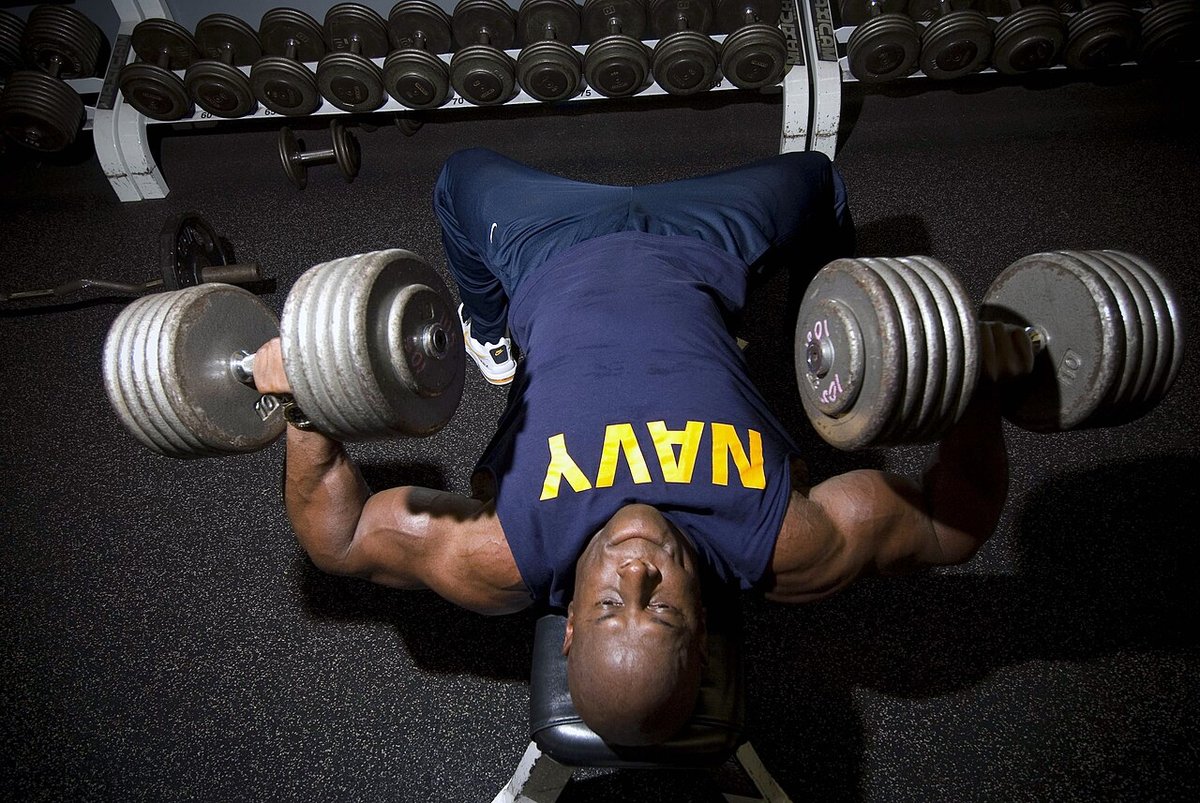
An upper body dumbbell workout is a practical way to build strength in your chest, back, shoulders and arms using only a pair of dumbbells and a small amount of floor space. Unlike machines that fix your path of movement, dumbbells let each arm work independently, which helps expose and correct strength imbalances, improves coordination and allows a more natural range of motion. You can train at home, in a garage or in a hotel room, and you can adjust the load in small steps as you get stronger. This guide gives you a complete routine, clear form cues and sensible ways to progress, so you can train with confidence whether you are starting out or returning to strength training after a break.
Strength training is not only about appearance. Regular resistance exercise supports muscle mass, bone health, posture and everyday function, from carrying groceries to lifting a suitcase overhead. The American Council on Exercise explains that well-designed resistance programs can improve muscular strength and endurance when they are performed with good technique and progressive overload. That principle sits at the heart of this routine: choose a weight you can control, use a full but comfortable range of motion, and increase the challenge gradually rather than jumping to heavy weights before your joints and technique are ready.
You do not need a full gym. A pair of adjustable dumbbells or two fixed pairs, a sturdy bench or step if you have one, and a mat are enough. If you have no bench, floor presses and floor-based rows work well, and a stable chair can support some seated movements, although you should check that it cannot tip or slide. Keep water nearby, wear shoes with a firm sole, and leave enough space to extend your arms fully in every direction without hitting furniture.
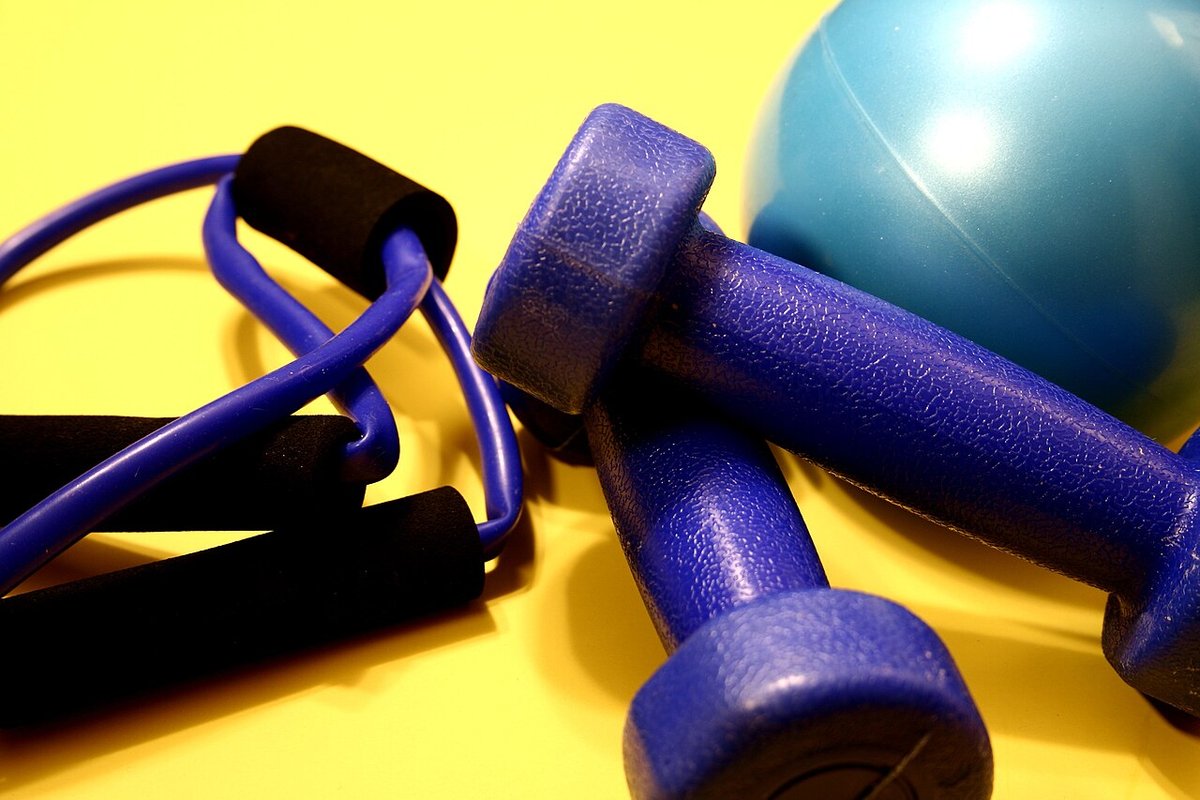
Why dumbbells work so well for the upper body
Dumbbells are especially useful for upper-body training because they demand stability. When you press two dumbbells overhead, your shoulders, core and smaller stabilising muscles must work to keep the weights steady, whereas a barbell can hide a weaker side. Unilateral training, where each side works on its own, tends to improve balance and control. Dumbbells also make it easier to change grip, angle and range of motion. A neutral grip, with palms facing each other, often feels kinder on the shoulders during presses and rows, while a wider grip can change the emphasis of a chest movement. That flexibility is valuable for home training, where equipment is limited but good programming still matters.
Warm up for five to ten minutes
Never start with your heaviest set. A warm-up raises your body temperature, increases blood flow to working muscles and gives you a chance to practise the movement patterns you are about to load. Spend five to ten minutes on easy, general movement, then do one light set of your first two exercises before the working sets.
- March in place or walk briskly around the room for two minutes.
- Do 20 arm circles in each direction, starting small and getting larger.
- Do 10 shoulder rolls, 10 scapular squeezes and 10 gentle thoracic rotations.
- Do five to eight knee push-ups and 10 light dumbbell rows per side with a very light weight.
- Finish with 30 seconds of arm swings across the chest and overhead reaches.
How to choose the right weight
Choose a weight that makes the last two repetitions of a set challenging while your form stays clean. A useful guide is to finish most sets with one or two repetitions in reserve, meaning you could have done one or two more good repetitions but not five more. If you can finish every set easily and feel no effort in the target muscles, the weight is too light. If your shoulders rise toward your ears, your lower back arches heavily, or you must swing the weights to move them, the weight is too heavy. Many beginners start with 2 to 5 kilograms for isolation moves such as lateral raises and curls, and 4 to 10 kilograms for compound moves such as presses and rows, but individual strength varies widely, so treat those figures as a starting point, not a rule. Test a weight for one set, rest, and adjust before committing to the full workout.
The complete routine at a glance
Do this routine two or three times per week, with at least one rest day between sessions. Start with the larger compound movements, when you are freshest, and finish with smaller isolation moves. Rest 60 to 90 seconds between sets of presses and rows, and 45 to 60 seconds between sets of raises, curls and extensions. The whole session, including warm-up and cool-down, should take about 40 to 50 minutes.
- Dumbbell floor press: 3 sets of 8 to 12 repetitions, rest 60 to 90 seconds.
- One-arm dumbbell row: 3 sets of 10 to 12 repetitions per side, rest 60 seconds.
- Dumbbell chest fly: 3 sets of 10 to 12 repetitions, rest 60 seconds.
- Seated or standing dumbbell overhead press: 3 sets of 8 to 10 repetitions, rest 75 seconds.
- Reverse fly: 3 sets of 12 to 15 repetitions, rest 45 to 60 seconds.
- Lateral raise: 3 sets of 12 to 15 repetitions, rest 45 seconds.
- Dumbbell biceps curl: 3 sets of 10 to 12 repetitions, rest 45 to 60 seconds.
- Overhead triceps extension: 3 sets of 10 to 12 repetitions, rest 60 seconds.
Chest: floor press and chest fly
For the floor press, lie on your back with knees bent and feet flat, holding a dumbbell in each hand at chest height. Keep your elbows at about 45 degrees from your torso, press both weights up until your arms are straight but your elbows are not locked, then lower slowly for two to three seconds until your upper arms touch the floor. The floor limits how far your elbows drop, which makes this a shoulder-friendly choice at home. For the fly, keep a slight bend in your elbows, open your arms in a wide arc until you feel a stretch across your chest, then bring the weights back together above your chest without letting them crash together.
Back: one-arm row and reverse fly
For the one-arm row, place one knee and hand on a bench or sturdy chair, keep your back flat and your hips level, and let the dumbbell hang below your shoulder. Pull the weight toward your hip, driving your elbow back, pause briefly, then lower it with control. Avoid rotating your torso to lift a heavier weight. For the reverse fly, hinge forward from your hips with a flat back and a slight bend in your knees, hold a light dumbbell in each hand, and lift your arms out to the sides until they are roughly in line with your shoulders. This move strengthens the upper back and rear shoulders, which helps balance the pressing work and supports better posture.
Shoulders: overhead press and lateral raise
For the overhead press, hold dumbbells at shoulder height with palms facing forward or slightly inward. Brace your core, keep your ribs down rather than arching your lower back, and press straight overhead until your arms are extended. Lower the weights to shoulder height with control. If standing feels unstable, sit on a bench or chair with back support. For the lateral raise, stand tall with a slight bend in your elbows and lift the weights out to the sides, leading with your elbows, until your hands reach about shoulder height. Keep the movement slow, avoid shrugging your shoulders toward your ears, and use a lighter weight than you expect: small shoulder muscles fatigue quickly.
Arms: biceps curl and overhead triceps extension
For the biceps curl, stand with your elbows close to your sides and your palms facing forward. Curl one or both dumbbells toward your shoulders without swinging your torso, pause at the top, then lower for two seconds. Keep your wrists straight. For the overhead triceps extension, hold one dumbbell with both hands overhead, keep your elbows close to your head, lower the weight slowly behind your head, then extend your arms back up. If this position bothers your shoulders, use a lighter weight or do a lying triceps extension instead, lying on the floor and lowering the weights toward your forehead with your elbows pointing up.
Beginner and intermediate versions
Beginners should do two sessions per week, two sets of each exercise, and use the lower end of each repetition range. Focus on learning the positions, breathing out on the effort and keeping every repetition controlled. You may also split the routine in half on very busy days, doing chest and shoulders one day and back and arms another, provided you still rest between sessions. Intermediate lifters can train three times per week, do three or four sets of the main lifts, and add tempo work, such as a three-second lowering phase, or a one-second pause at the hardest point. Intermediates can also use heavier weights, provided they can still complete the target repetitions with good form and at least one repetition in reserve on most sets.
Common form mistakes to avoid
- Arching the lower back heavily during overhead presses instead of bracing the core and keeping the ribs down.
- Letting elbows flare wide during presses and flies, which can irritate the shoulders.
- Shrugging during lateral raises and rows, which shifts work away from the target muscles.
- Using momentum to swing curls and raises rather than controlling the lowering phase.
- Skipping back work and training only chest and arms, which can worsen rounded posture over time.
- Rushing between sets and losing form when fatigued; rest properly and reduce the weight if technique breaks down.
How to progress over four to eight weeks
Progress gradually. When you can complete all sets at the top of the repetition range with good form, first add one repetition per set, then increase the weight by the smallest available step, often 1 to 2 kilograms, or about 5 to 10 percent. Keep a simple log of exercise, weight, sets and repetitions, because progress is easy to forget from week to week. After six to eight weeks of steady training, take a lighter week at about 60 percent of your usual load to allow recovery, then build again. If you are still building a base, our Beginner Workout Plan gives you a simple four-week structure that pairs well with this upper-body routine. Stop a set if you feel sharp pain, joint clicking with pain, numbness or dizziness, and seek advice before training through it.
Recovery, sleep and everyday support
Muscles adapt between sessions, not during them, so recovery matters as much as the workout itself. Leave about 48 hours before training the same muscles hard again, and expect some soreness for 24 to 72 hours after a new or harder session. Aim for seven to nine hours of sleep most nights, drink water through the day, and eat enough protein across your meals, with a protein-rich food at most meals if that fits your usual diet. Finish each session with five minutes of easy movement and gentle stretching for the chest, shoulders, upper back and arms. Walking, light mobility work and normal daily activity on rest days usually support recovery better than complete inactivity.
Frequently asked questions
How many days per week should I do this workout?
Two or three upper-body sessions per week work well for most people. Two sessions are enough to build a habit and improve strength, while three sessions allow more practice and volume. Leave at least one rest day between upper-body sessions so the same muscles can recover, and add lower-body training, walking or other activity on other days if you want a fuller weekly routine.
How heavy should my dumbbells be?
Use a weight that makes the last two repetitions hard but still controlled. If you finish a set and could easily do five more repetitions, increase the weight at your next session. If your form breaks down before the target repetitions, reduce the weight. Adjustable dumbbells are ideal at home because you can use a lighter pair for raises and a heavier pair for presses and rows in the same workout.
Can I build muscle with dumbbells alone?
Yes, provided you train consistently, use enough resistance, and progress over time. Muscle growth depends mainly on training close to failure with good form, eating enough protein and total food to support recovery, and sleeping well. Dumbbells can provide that stimulus for the upper body for a long time, especially when you use tempo changes, extra sets and heavier adjustable weights as you get stronger.
How long will it take to see results?
Many people notice better strength, coordination and confidence within four weeks, because the nervous system learns the movements quickly. Visible muscle changes usually take longer, often eight to twelve weeks of consistent training, and depend on your starting point, nutrition, sleep and training history. Track your weights and repetitions rather than judging progress by one mirror check, because strength records show improvement earlier and more reliably.
Should I train my upper body every day?
No. Training the same muscles every day leaves little time for recovery and can increase soreness and fatigue without adding benefit. Alternate upper-body days with rest days, lower-body training or light activity. If you enjoy daily movement, use rest days for walking, gentle mobility and stretching rather than another hard upper-body session.
Start with a simple, strong first week
Pick two training days this week, set out your dumbbells in advance, and run through the routine with lighter weights while you learn the form. Write down what you lift, rest properly between sets, and keep the same exercises for at least four weeks before changing the program. Small, repeatable sessions beat one exhausting workout followed by a week off. Build the habit first, add weight second, and let steady progress do the rest.
This article provides general wellness information only and is not professional medical advice. Talk to a qualified health professional before starting a new exercise program, especially if you have an injury, a medical condition, or concerns about your health.
