

If you are awake at midnight scrolling, revising, or replaying the day in your head, you are not alone. Many teenagers get far less sleep than they need, and the fix is rarely just going to bed earlier. These sleep hygiene tips for teens focus on small, repeatable habits that make it easier to fall asleep, stay asleep, and wake up feeling rested, even with homework, training, and a busy social life.
Sleep is not wasted time. While you sleep, your brain consolidates what you learned during the day, clears out the mental clutter from lessons and practice, and helps regulate mood and appetite. Growth hormone is mainly released during deep sleep, and the immune system does much of its repair work overnight. When sleep is short or broken for weeks, schoolwork feels harder, tempers shorten, and even simple decisions take longer. That is why a steady routine matters more than any single trick.
How much sleep do teens actually need?
Teenagers aged 13 to 18 generally need 8 to 10 hours of sleep per night, according to the Centers for Disease Control and Prevention guidance on teen sleep. That is more than most adults need, and for a clear biological reason: during adolescence, the body clock shifts later, so feeling alert at 10 pm and groggy at 7 am is common, not a sign of laziness. The problem is that school start times, buses, and morning routines have not shifted with it.
Most teens fall well short of that range. Surveys in the United States and the United Kingdom repeatedly find that only a minority of secondary-school pupils regularly get 8 hours on a school night, with many averaging 6 to 7 hours. A shortfall of 1 to 2 hours a night adds up quickly: after five school nights, that is roughly a full night of missed sleep. You cannot always feel that debt building, but teachers often notice it first in concentration, memory, and mood.
A useful test is your weekend wake-up time. If you sleep 2 or 3 hours later on Saturday than on a school day, your weekday schedule is probably leaving you short. The aim is not perfection every night. It is to close that gap so your body is not constantly playing catch-up, and to protect the deep sleep in the first part of the night and the dream-rich sleep in the early morning, both of which have different jobs to do.
Screens and blue light: what actually helps
Screens do not ruin sleep by themselves, but how and when you use them matters a lot. Bright light, especially blue light, signals to the brain that it is still daytime and can delay the release of melatonin, the hormone that helps you feel sleepy. Fast-moving games, group chats, and short videos also keep the brain alert and make it harder to wind down, even after the phone is put away. It is the combination of light and stimulation, not one factor alone, that pushes bedtime later.
A practical rule is to stop stimulating screen use 30 to 60 minutes before bed. That does not mean sitting in silence. Switch to something low-key: reading a paper book, stretching, listening to calm music or a podcast, or getting tomorrow ready. If you must use a phone, turn the brightness down, switch on night mode, and avoid starting a new game, argument, or endless scroll. Charging the phone outside the bedroom, or at least across the room, removes the temptation to check one more message at 1 am.
A realistic screen wind-down
Try a 20-minute wind-down you can actually keep. First, finish messages and set an alarm for the morning. Next, plug the phone in away from the bed and switch it to silent. Then do a calm activity that does not involve a feed: shower, tidy your bag, or read a few pages. Teens who make this a habit often find they fall asleep 20 to 30 minutes faster within a week or two, simply because the brain learns that those steps mean sleep is coming.
Keep a consistent sleep schedule
The single most effective habit is also the least exciting: go to bed and get up at roughly the same time every day. Your body clock, or circadian rhythm, works best with regularity. When bedtime jumps by 2 hours from one night to the next, the clock gets confused, and you can feel jet-lagged without leaving home. Aim to keep wake-up time within about an hour on most days, including weekends if you can.
Work backwards from your wake-up time. If you need to be up at 7 am and want 9 hours in bed, you need to be asleep by 10 pm, which means starting to wind down around 9.15 pm. Build in a buffer: set a bedtime alarm, not just a morning alarm. If 10 pm feels impossible right now, move bedtime earlier by 15 minutes every few nights rather than trying to change it by 2 hours in one go. Small shifts stick, while sudden changes usually fail by Wednesday.
Morning light helps lock the schedule in place. Open the curtains as soon as you wake, eat breakfast near a window, or step outside for a few minutes on the way to school. Bright light in the morning tells the clock that the day has started, which makes it easier to feel sleepy about 14 to 16 hours later. On dark winter mornings, even turning on room lights and getting moving helps more than lying in bed checking a phone.
Make your bedroom work for sleep
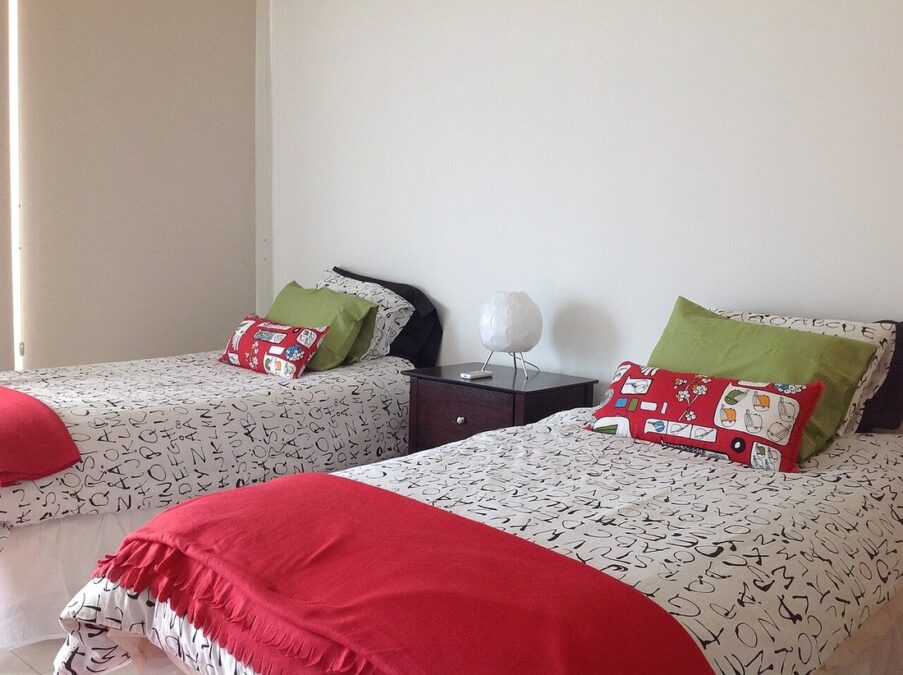
Your bedroom should send one clear message to your brain: this is where you sleep. Keep it cool, dark, and reasonably quiet. Most people sleep best at around 16 to 19 degrees Celsius, so a cooler room with a light duvet usually beats a warm room with heavy bedding. Blackout curtains or an eye mask can make a real difference if streetlights or early sunrise leak in, and earplugs or steady background noise can help if the house is noisy at night.
For the basics that sit behind these ideas, see our wider guide to sleep hygiene tips. It covers the same foundations in a general form, while this guide looks at how they apply when school, sport, and social life pull in different directions. The point is the same in both cases: a room that is used for sleep, rather than for hours of gaming and homework in bed, makes it easier to switch off when the lights go out.
Keep homework and gaming at a desk if you have one, and keep the bed mainly for sleep. That separation sounds small, but the brain forms strong associations. If you revise, eat, watch videos, and scroll in bed all day, the bed stops feeling like a place to sleep. A tidy bed, a pillow you like, and a
regular place for your phone charger away from the pillow all help the routine feel settled rather than chaotic.
Caffeine, food, and late-night study
Caffeine is the most common sleep problem teenagers do not notice. A standard energy drink can contain 80 to 160 milligrams of caffeine, roughly the same as a cup of coffee, and cola, chocolate, and some pre-workout drinks add more. Caffeine has a half-life of about 5 to 6 hours, which means half of an afternoon drink is still active in your body in the early evening. A 4 pm energy drink can still be affecting your sleep at 10 pm, even if you no longer feel wired.
The simplest rule is to avoid caffeine after midday, and to skip energy drinks altogether on school nights if you can. If you enjoy coffee or tea, have it in the morning. Eat a proper evening meal rather than snacking heavily late at night, and avoid very spicy, fatty, or large meals close to bedtime, which can cause discomfort and reflux. A small snack such as toast, yoghurt, or a banana is usually fine if you are genuinely hungry before bed.
Late-night study needs a plan, not just willpower. Work in focused blocks of 25 to 40 minutes with short breaks, and stop revising at least 30 minutes before bed so your brain can cool down. Cramming until 2 am rarely pays off: tired brains recall less, make more mistakes, and need longer to learn the same material the next day. A short review in the morning, after a full night of sleep, is often more effective than an extra hour of exhausted late-night reading.
Weekend catch-up sleep: what it can and cannot fix
Sleeping in on Saturday feels wonderful, and a lie-in of an extra hour can help you feel less tired. But weekend catch-up sleep does not fully repay a week of short nights. Research on sleep debt shows that extra weekend sleep can improve alertness and mood in the short term, yet it does not restore all the memory, attention, and metabolic effects of regular short sleep. Worse, a very late weekend lie-in shifts your body clock later, which makes Sunday night and Monday morning harder.
Think of weekend sleep as a top-up, not a reset button. If you are short during the week, allow yourself up to an extra hour in bed at the weekend, but try not to sleep until midday. Get up, get daylight, and go to bed at a more normal time on Sunday. If you regularly need 3 or 4 extra hours at the weekend to feel human, that is a sign your weekday routine, rather than your willpower, needs fixing.
A simple nightly routine that actually sticks
Good sleep hygiene is not a long checklist. It is a short routine you repeat until it feels automatic. Pick five steps and do them in the same order each night. For example: pack your bag, shower, put your phone on charge outside the bedroom, read for 15 minutes, and lights out. Doing the same steps in the same order teaches your brain what comes next, which is why athletes and musicians use routines before performance.
- Set a bedtime alarm 45 minutes before you want to be asleep.
- Dim the lights and stop stimulating screens during that wind-down.
- Do one calm activity, such as reading, stretching, or listening to music.
- Keep wake-up time within an hour, even at the weekend.
- If you cannot sleep after about 20 minutes, get up, do something calm in low light, and return when you feel sleepy.
Exercise helps too, but timing matters. Regular daytime activity, especially outdoors, is linked to deeper sleep and faster sleep onset. Try to finish vigorous training at least 2 to 3 hours before bed if you can, because a raised heart rate and body temperature can delay sleep. A gentle walk or stretch in the evening is different and usually helps you unwind rather than waking you up.
Frequently asked questions
How can a teen fall asleep faster?
Keep a regular wake-up time, get morning light, and wind down for 30 minutes before bed without stimulating screens. A cool, dark room and a short, repeated routine help your brain recognise that it is time to sleep. If worries keep you awake, write them down on paper before bed with one next step for tomorrow, so they are less likely to loop in your head.
Is 6 hours of sleep enough for a teenager?
No, not on a regular basis. Teens need 8 to 10 hours, so 6 hours leaves a daily shortfall of 2 to 4 hours. You might cope for a day or two, but concentration, mood, reaction time, and memory all suffer over time. Occasional short nights happen, especially before exams, but they should be the exception, not the normal pattern.
Should teens nap during the day?
Short naps can help if you are very tired, but keep them to 20 to 30 minutes and before mid-afternoon. Longer or later naps reduce sleep pressure at night and can make it harder to fall asleep, which creates a cycle of late nights and daytime tiredness. If you need a nap every day to get through school, your nighttime sleep probably needs attention first.
Do blue-light glasses or night mode fix screen problems?
They can reduce some blue light, but they do not remove the stimulation from games, videos, and messages. Night mode and lower brightness are useful, but they work best alongside a screen wind-down, not instead of one. The most reliable step is still to stop engaging content well before bed and to keep the phone away from the bed overnight.
When should a teen get help for sleep problems?
Talk to a parent, school nurse, or doctor if sleep problems last more than a few weeks, if you snore loudly, stop breathing during sleep, feel very sleepy during the day despite a full night in bed, or if low mood and anxiety are regularly keeping you awake. Those signs can point to a sleep disorder or another health issue that a routine alone will not fix, and getting help early usually makes treatment simpler.
Conclusion
Better sleep for teenagers rarely comes from one dramatic change. It comes from a steady wake-up time, a calm wind-down, a bedroom that is cool and dark, caffeine kept to the morning, and a weekend routine that does not undo the whole week. Pick two changes from this guide, try them for two weeks, and notice what improves first: often it is mood and focus in the morning, rather than falling asleep instantly.
Start tonight by setting a bedtime alarm, charging your phone away from your bed, and reading for 15 minutes instead of scrolling. Small, boring habits are what make sleep feel easier over time, and they leave you with more energy for school, sport, and the people you enjoy spending time with.
This article is for general wellness information only and is not medical advice. If you have ongoing sleep problems or a health concern, speak to a qualified healthcare professional.
