

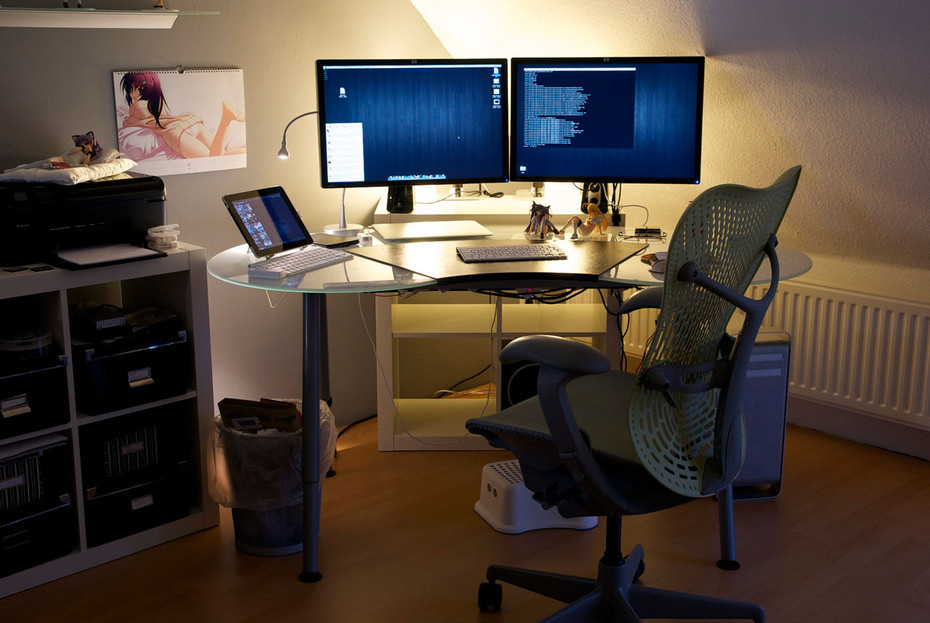
These bedroom office ideas will help you build a workspace that fits your room, your budget and the way you actually work, without turning the place where you sleep into a storage cupboard for cables and paperwork. The trick is not to buy a bigger desk first. It is to decide where work stops and rest starts, then choose furniture and lighting that respect that line.
Start by looking at rooms that already solve this problem well. The Houzz home office ideas gallery shows built-in desks, window seats converted into workstations and small corners that stay tidy because everything has a home. You do not need to copy a whole room. Borrow one detail, such as a shelf at eye level, a desk facing sideways to a window, or a closed cupboard that hides office clutter at 6 p.m.
1. Measure first, then choose the desk
Measure the wall you plan to use, the width of the door swing, and the space you need to pull a chair out. A standard office chair needs about 75 to 90 centimetres behind a desk to roll back comfortably, and a walkway of at least 75 centimetres is the minimum most people find comfortable. If your bedroom is under 12 square metres, a desk 100 to 120 centimetres wide usually works better than a 140-centimetre model, because it leaves room for a bedside table, a wardrobe door and a clear path to the bed.
Sketch the room on paper before you shop. Mark the window, radiator, plug sockets and the bed. A desk against a blank wall gives you the most usable surface and the fewest distractions, while a desk perpendicular to a window gives you daylight without glare on your screen. Avoid putting your back to the door if video calls make you uneasy, and avoid facing a blank wall for eight hours if a side view of the window is possible.
Desk shapes that work in bedrooms
- Straight desk, 100 to 120 centimetres: the safest choice for most bedrooms, and easy to move later.
- Corner desk: useful in an L-shaped alcove or a dead corner, but check that the return does not block a wardrobe.
- Wall-mounted folding desk: ideal for a room under 10 square metres. Fold it down for work, fold it up at night, and keep the floor clear.
- Writing desk with drawers: looks like bedroom furniture, so the room still feels like a bedroom after work.
2. Use light the way your eyes want it
Good lighting is the cheapest upgrade in a bedroom office. Natural daylight should come from the side, not from directly behind you, which makes your face dark on video calls, and not from directly behind the screen, which causes glare. If your only window is behind the desk, use a sheer curtain to soften the light and add a desk lamp with a warm-white bulb for cloudy days.
For evening work, aim for two layers of light rather than one bright overhead bulb. A desk lamp at 400 to 500 lumens for reading and paperwork, plus a soft room light, reduces eye strain and makes the room feel less like an office at night. Choose bulbs around 3000 to 4000 Kelvin: warm enough to relax in the evening, cool enough to stay alert during the day. A lamp with an adjustable arm lets you direct light onto the desk, not onto the screen.
3. Storage that hides work at the end of the day
A bedroom office fails when paperwork, chargers and notebooks spread onto the bed. Give every category a closed home. A two-drawer unit under the desk holds files and stationery, a shelf above the desk holds books you use weekly, and a lidded box on top of the wardrobe holds rarely used cables and manuals. Closed storage matters more than open shelving in a bedroom, because you see it when you are trying to rest.
Use vertical space before you buy floor-standing units. A pegboard or a rail above the desk keeps scissors, headphones and a small plant off the work surface, while a magnetic strip or a slim tray keeps loose pens from migrating. Label the inside of one drawer for charging: a short power strip, one cable per device, and a cable clip on the desk edge will stop the familiar tangle behind the desk.
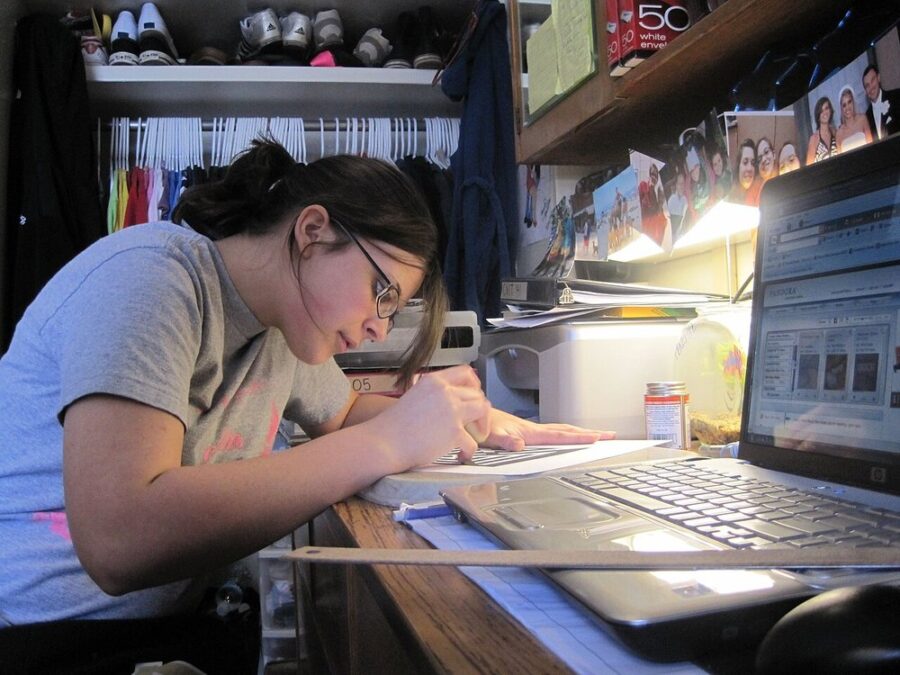
4. Set up the chair and screen properly
Ergonomics is not about an expensive chair. It is about heights and angles you can repeat every day. Sit with your feet flat on the floor, your knees at roughly 90 degrees, and your lower back supported. If your feet do not reach the floor, a footrest or a stack of books under the desk is better than dangling legs for hours. The top of your monitor should sit at or just below eye level, about an arm’s length away, roughly 50 to 70 centimetres.
A laptop on its own forces most people to look down, so a laptop stand and a separate keyboard are worth the small cost if you work more than two hours a day. A chair with adjustable height is more useful than one with extra padding, and a cushion only helps if it does not push you forward off the backrest. Take a short break every 50 to 60 minutes: stand, stretch your shoulders, look across the room for 20 seconds, and refill your water. Those small resets do more for back pain than a single weekend furniture purchase.
5. Keep it a bedroom first
The best bedroom offices use bedroom materials. A wooden desk that matches the bed frame, a chair in a fabric that echoes the bedding, and a rug that defines the work zone without shouting office will make the room calmer. If you cannot afford new furniture, paint or stain a second-hand desk, swap harsh plastic trays for a woven basket, and add one plant that tolerates low light, such as a pothos or a snake plant.
Sound and sight boundaries help too. A room divider, a tall bookshelf turned sideways, or even a curtain on a ceiling track can separate the desk from the bed in a studio-style room. At the end of work, close the laptop, put papers in a drawer, and turn the desk lamp off. That five-minute closing routine trains your brain to leave work behind, which is the point of working in a bedroom rather than living in an office.
6. A realistic budget and shopping order
Buy in this order: desk, chair height solution, lighting, then storage. A usable setup can cost under 200 pounds if you buy a second-hand desk, a laptop stand and a lamp, while a new desk, an adjustable chair and closed storage usually run from 400 to 800 pounds. Spend the most on the chair and the screen height, because those affect your body every day. Once the layout is settled, the next step is to keep it organised, and this guide to how to organize office furniture covers zones, cable control and storage in more detail.
Frequently Asked Questions
What is the best desk size for a small bedroom?
For most small bedrooms, a desk 100 to 120 centimetres wide and 50 to 60 centimetres deep is enough for a laptop, a notebook and a lamp. Go narrower only if the room is under 10 square metres, and use wall shelves for books rather than widening the desk.
Should the desk face the window or the wall?
Sideways to the window is usually best, because it gives daylight without screen glare and without a dark face on video calls. Facing the wall works if you need focus and you add a good desk lamp, but facing directly into bright sun will strain your eyes.
How do I stop a bedroom office from ruining my sleep?
Close the laptop, clear the desk and switch the work light off at a set time each evening. Closed storage helps more than willpower, because an open pile of work is a visual reminder. Keep work papers out of sight from the bed if you can.
Do I need a separate office chair in a bedroom?
Not always. If you work under two hours a day, a dining chair with a cushion and a laptop stand can be enough. For full-time work, an adjustable chair that lets your feet rest flat and your back stay supported will pay for itself in comfort.
How can I hide cables in a bedroom office?
Put a power strip in a drawer or a cable box, clip cables to the back of the desk, and use one short cable per device. Route the strip close to a socket so cables do not cross a walkway, and label chargers if several people share the room.
Conclusion: start with one corner
You do not need a spare room to work well at home. Measure one wall, choose a desk that leaves a clear path to the bed, add side daylight and a lamp you can adjust, and give every work item a closed home. Do that one corner well this weekend, live with it for a week, and only then buy the extras. A bedroom that still feels restful at night is the real test of a good bedroom office, and it is a test you can pass without a large budget.
