

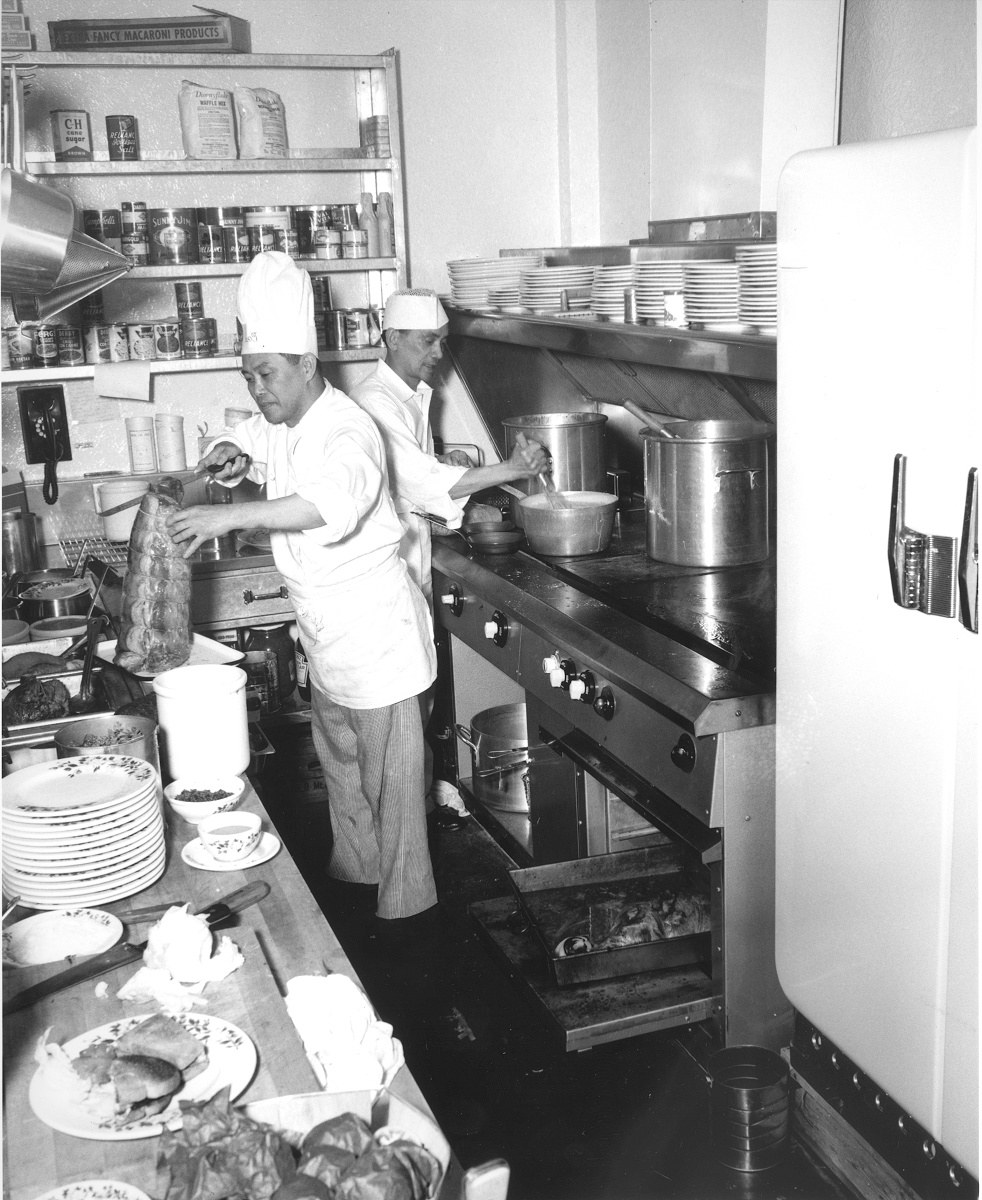
A 1950s kitchen is easy to picture even if you never cooked in one: pale mint cabinets, a speckled Formica counter, a chrome-edged table with vinyl chairs tucked into a sunny corner, and a refrigerator humming quietly in the background. The look was not an accident. It grew out of postwar prosperity, faster building methods, cheaper manufacturing and a strong belief that the home, and the kitchen above all, should feel modern, clean and efficient. As the Smithsonian National Museum of American History explains, the modern postwar kitchen became a symbol of an idealized American way of life, stocked with processed foods and filled with labour-saving electric appliances.
The timing mattered. After the Second World War, millions of returning service members married, started families and moved into new suburbs. Builders needed houses that could be put up quickly and sold at a price ordinary families could afford, and the kitchen was central to that sales pitch. In Levittown, New York, one of the most famous postwar developments, thousands of small houses were built between 1947 and 1951 with compact, fitted kitchens as a standard feature rather than a luxury. A bright, well-equipped kitchen told buyers that life after wartime rationing and shortages would be easier, more comfortable and more modern.
Why the 1950s Kitchen Looked So Different
Before the war, many kitchens were dark, cramped workrooms tucked at the back of the house. They often had a freestanding stove, a separate icebox or early refrigerator, a sink on one wall and very little continuous worktop. The 1950s changed that arrangement. Designers began treating the kitchen as a planned workspace, with the sink, cooker and refrigerator placed in a triangle so the cook did not have to cross the room for every task. Continuous counters joined those points together, and fitted cabinets replaced a collection of freestanding cupboards and shelves.
Cleanliness was part of the appeal, and it was also a practical response to new materials. Smooth laminate, painted metal, glazed tile and linoleum could be wiped down in seconds, which mattered in a decade when convenience foods, canned goods and packaged mixes were filling the pantry. Fluorescent ceiling lights made the room brighter than the single bulb of an older kitchen, while large windows over the sink brought in daylight and a view of the garden. The result was a room that looked cheerful, felt orderly and was genuinely easier to keep clean.
Colours, Patterns and Materials That Defined the Decade
A pastel palette, used with confidence
If one feature defines the decade, it is colour. Mint green, butter yellow, baby pink, turquoise, aqua and coral were used on cabinets, walls, appliances and even small accessories, usually against cream, white or soft grey. The effect was deliberate: after years of drab wartime interiors, colour signalled optimism. Manufacturers sold matching sets, so a pink refrigerator could sit beside a pink stove, while a turquoise mixer echoed the shade of the wall tiles. Used in moderation, the palette still works today, especially when one strong colour is balanced by plenty of white and natural wood.
Formica, linoleum and chrome
Formica, a plastic laminate first developed in the early twentieth century, became a household name in the 1950s because it was hard-wearing, heat-resistant enough for everyday use and available in a huge range of colours and patterns. Boomerang, cracked-ice and speckled designs turned an ordinary counter into a feature. On the floor, linoleum and later vinyl tiles were often laid in black-and-white checkerboard or in alternating pastel squares. Chrome provided the finishing touch: chair legs, table edges, cabinet handles and appliance trim all gleamed, giving even a modest kitchen a polished, almost diner-like finish.
Cabinets, Counters and Storage
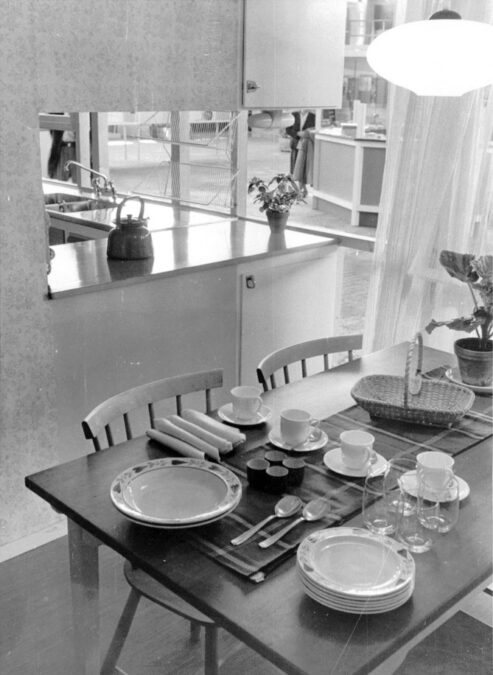
Metal cabinets were a familiar sight in the 1950s. Companies such as Youngstown Kitchens made steel units with rounded corners, sliding drawers and built-in features such as bread boxes, flour bins and cutting boards. Wood cabinets remained popular too, often painted in a pastel shade or finished in warm birch, with simple slab or shallow-panel doors and long metal pulls. Above the counter, wall cabinets were usually shallower than the base units below, leaving enough room to work without feeling boxed in. A standard counter height of about 36 inches and a base cabinet depth of about 24 inches became the norm, dimensions that still shape kitchen design today.
Storage was planned rather than improvised. Corner cabinets, pull-out shelves, divided drawers for cutlery and built-in spice racks all helped keep counters clear. The breakfast nook was another hallmark: a small table, often with a Formica top and chrome edge, fitted into a corner with bench seating or a set of vinyl chairs. It was a practical answer to smaller postwar houses. Families could eat casual meals in the kitchen without needing a separate dining room, and children could do homework at the table while dinner was being prepared.
Appliances That Changed Daily Cooking
The 1950s refrigerator was a status symbol in its own right. Earlier iceboxes and small electric models gave way to larger units with a separate freezer compartment, automatic defrosting in better models and enough space for a week’s shopping. Electric ranges with built-in ovens, four burners and warming drawers replaced coal and wood stoves in many new homes. On the counter, the Sunbeam Mixmaster and similar stand mixers, electric toasters, blenders and coffee percolators turned tasks that had once taken real effort into a matter of pressing a switch.
Food changed just as quickly. Frozen vegetables, fish sticks, cake mixes and instant coffee became supermarket staples, and in 1954 Swanson introduced the TV dinner, a complete frozen meal in a divided aluminium tray that could be heated in the oven and eaten in front of the television. Tupperware, sold at home parties from the late 1940s onward, gave leftovers a neat, stackable home in the new refrigerator. Dishwashers, by contrast, remained a luxury for most families during the decade, and many kitchens still relied on a draining board, a dish rack and a willing pair of hands.
Layouts: From Closed Room to Family Hub
Two layouts dominated the decade: the U-shape, which wrapped counters around three walls, and the L-shape, which left one side open for a table or a passage into the dining area. A peninsula, a counter extending from one wall, often marked the boundary between cooking and eating without building a full wall. Windows were placed over the sink wherever possible, both for light and for a view, while wall ovens were sometimes installed at waist height so the cook did not have to bend down to a low oven door. Small details, such as a telephone nook, a wall-mounted can opener and a clock with a matching pastel face, completed the picture.
Bringing a 1950s Kitchen Into a Modern Home
A retro kitchen works best when it is edited, not copied room-for-room. Choose one hero colour, for example mint or butter yellow, and let white, chrome and wood do the rest of the work. A reproduction Formica-style counter, a checkerboard floor in a small area and a chrome dinette set can carry the theme without making the room feel like a film set. If you are planning the practical side first, a guide to kitchen base cabinets with drawers is a useful starting point for storage, because deep drawers suit modern pans and small appliances far better than the shallow cupboards of the original era.
Original appliances need care. A vintage refrigerator or stove may look wonderful, but it should be checked by a qualified electrician, and its energy use and food-safety performance will not match a modern equivalent. Many homeowners therefore mix old and new: a retro-look refrigerator with modern insulation and cooling, a reproduction range with up-to-date safety controls, and genuine vintage pieces limited to items that do not carry electrical risk, such as a bread bin, a clock or a set of canisters. Avoid piling on too many patterns at once. One bold floor, one patterned counter or one strong colour is usually enough.
Frequently Asked Questions
What colours are most typical of a 1950s kitchen?
Mint green, butter yellow, baby pink, turquoise and aqua are the classic choices, usually paired with cream, white or soft grey and finished with chrome. Pink and turquoise appliances were sold as matching sets, so colour was often coordinated across the whole room rather than added as a single accent.
What is a 1950s dinette set?
A dinette set is a small kitchen table with matching chairs, most often with a Formica top, a chrome edge and vinyl-covered seats. It was designed for casual meals in a breakfast nook or a corner of the kitchen, and it remains one of the easiest ways to bring a 1950s feel into a modern home.
Were steel cabinets really common in the 1950s?
Yes. Steel cabinets with rounded corners and smooth, wipe-clean surfaces were widely sold in the postwar years, alongside painted and wood cabinets. They suited the decade’s interest in hygiene, durability and modern manufacturing, and surviving sets are now sought after by renovators.
Why did Formica become so popular?
Formica was hard-wearing, easy to clean and available in bright colours and bold patterns such as boomerang and cracked ice. It gave ordinary families a counter that looked new and modern at a reasonable cost, and it could be used for tables and other surfaces as well.
Can I mix a 1950s style with modern appliances?
Yes, and that is usually the safest approach. Retro-look refrigerators and ranges now offer modern safety, insulation and energy performance, while genuine vintage pieces can be used for low-risk items such as canisters, clocks and bread bins. Keep the colour palette restrained so the room feels stylish rather than crowded.
Conclusion
The 1950s kitchen endures because it was built around ideas that still matter: a practical layout, surfaces that are easy to clean, storage that keeps counters clear and colour used with confidence. It was a room designed for real family life, from quick weekday breakfasts at a dinette table to Sunday meals cooked with new appliances that genuinely saved time. Start with one change, whether that is a pastel accent, a chrome-edged table or better drawer storage, and let the rest of the room follow. The result should feel bright, welcoming and useful, just as the original did.
