

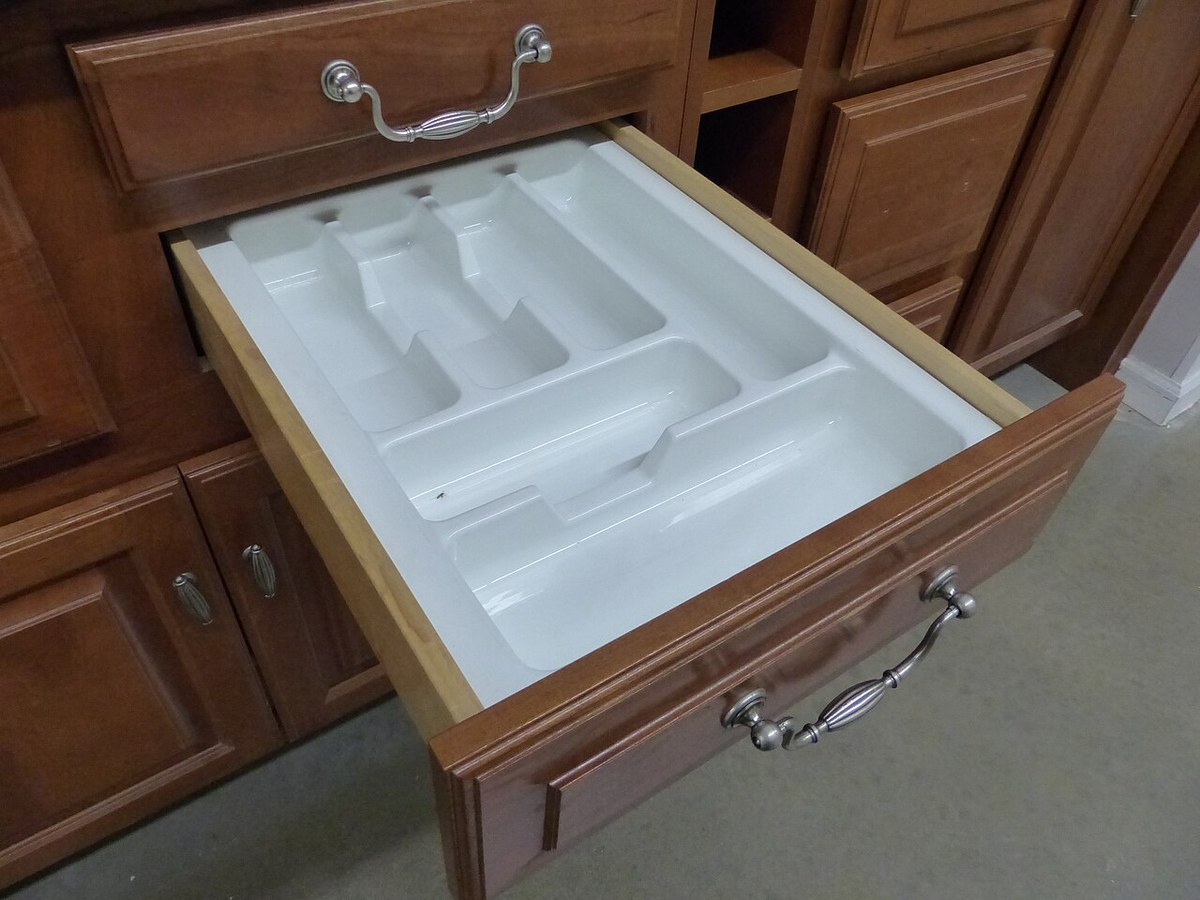
A deep drawer organizer is the difference between a drawer you avoid and one you actually use. When a drawer is 8 inches or deeper, small items sink to the bottom, pans stack awkwardly, and the back half becomes a place where things disappear. The right insert stops that slide, keeps weight balanced, and lets you see what you own at a glance. Guides from This Old House explain why full-extension slides matter for deep storage, because a drawer you cannot pull fully out is hard to organize no matter what you put inside it.
Deep drawers are common in modern kitchens, bathroom vanities, dressers, and home offices. They hold more than shallow drawers, but that extra height is also the problem. Without dividers, a tall space invites stacking, and stacking hides the item at the bottom. This guide looks at the organizer types that work best, how to measure correctly, which materials last, what to expect to pay, and when a simple do-it-yourself divider makes more sense than a bought insert.
What Counts as a Deep Drawer?
Most people call a drawer deep when the inside height is about 8 to 12 inches. A standard kitchen base drawer is often 10 to 12 inches tall on the outside, with roughly 8 to 10 inches of usable interior height once the drawer bottom and slide clearance are taken into account. Bathroom vanity drawers are usually shallower, at 6 to 8 inches inside, while dresser drawers can run 7 to 9 inches. The label matters less than the behavior: if items tip over, roll to the back, or need to be lifted out in layers, the drawer needs a taller organizer than a flat cutlery tray.
Depth also means front-to-back length. Many kitchen base cabinets are 24 inches deep, so a drawer box may be 21 to 22 inches long inside. That is useful for pots and baking trays, but it also means a short organizer placed at the front will leave a dead zone behind it. Good deep-drawer systems either run the full length of the drawer or combine a front section for daily items with a rear section for larger, less-used pieces.
Types of Deep Drawer Organizers
Adjustable Dividers and Spring-Loaded Separators
Adjustable dividers are the most flexible starting point. They are usually flat panels that expand from side to side, or peg-and-board systems where wooden dowels hold plates, bowls, and lids upright. Spring-loaded dividers press against the drawer walls and can be moved in seconds, which makes them a good choice for rented homes. They typically cost $12 to $35 for a set, and they work best when the drawer is not overloaded, because a very heavy pot can push a light divider out of place.
Tall Bins and Deep Trays
Tall bins use the height of the drawer instead of fighting it. A bin 6 to 8 inches high can hold spice jars, cleaning bottles, hair tools, or folded sweaters without letting them fall sideways. In a kitchen, a tall bin is ideal for upright baking sheets, cutting boards, and pot lids. In a bathroom, the same shape keeps tall bottles from toppling when the drawer closes. Look for bins with a flat base and a slight taper, so they sit firmly and can still be lifted out for cleaning. Sets of two to four bins usually cost $18 to $45.
Pegboard and Plate Organizers
Pegboard organizers use a flat base with holes and movable pegs. They are especially useful for dishes, because plates stand on edge and take up less floor space than a stack. A typical pegboard for a 24-inch-wide drawer costs $25 to $55 and can be trimmed to fit. The same idea works for pot lids: two pegs hold each lid upright, so you can pull one out without lifting the whole stack. Pegboards need a drawer at least 7 inches deep inside to hold dinner plates safely.
Best Deep Drawer Organizers by Room
Kitchen: Pots, Pans, and Everyday Cooking Gear
In the kitchen, weight is the first constraint. A cast-iron skillet can weigh 7 to 8 pounds on its own, and a drawer full of pans can quickly reach 40 to 60 pounds. That is why drawer slides matter as much as the insert. Most standard slides are rated for 75 to 100 pounds per drawer, but it is worth checking the rating before loading a deep drawer with cast iron. Use a pegboard or a sturdy metal divider for pans, keep lids upright in a separate section, and put the heaviest items at the bottom of the stack or closest to the drawer front, where the slide bears the load best.
For utensils, a two-level system works well in a deep drawer. A shallow tray on top can hold spatulas and tongs, while the space below stores less-used gadgets. If you do not want a two-level tray, use a tall divider to separate a narrow utensil channel from a wider pan zone. Keep cooking zones in mind: put everyday pans near the stove, baking trays near the oven, and food storage containers near the fridge or pantry, so you are not crossing the kitchen for a lid.
Bathroom: Tall Bottles and Small Essentials
Bathroom drawers fail for a different reason: bottles are tall, narrow, and top-heavy. A shampoo bottle that is 9 inches tall will fall over in a shallow tray, but a bin with 6-inch sides will hold it upright through a normal drawer close. Separate the drawer into three zones: daily skincare and medicines at the front, hair tools and cords in a heat-resistant pouch or bin in the middle, and spare supplies at the back. Small cups or silicone liners stop cotton pads, clips, and nail tools from migrating under larger bottles.
Bedroom and Office: Clothes, Cables, and Paper
In a dresser, the mistake is folding clothes too loosely and then stacking them. Folded sweaters and T-shirts stay visible when they are filed upright in a fabric bin, like books on a shelf, rather than laid flat in a pile. A deep dresser drawer can hold two rows of upright files, with socks and underwear in a smaller divider at the front. In a home office, the same drawer depth is useful for hanging files, chargers, and notebooks, but cables need their own small box or they will tangle with everything else in the drawer.
How to Measure Your Drawer Before You Buy
Measure the inside of the drawer, not the outside of the cabinet. Take three measurements for width: at the front, middle, and back, because older drawers are not always square. Do the same for length, and measure height from the drawer bottom to the top of the drawer side, then subtract about half an inch for clearance so the organizer does not rub the cabinet frame when the drawer closes. Write down all three numbers in inches, and note any slide hardware, screws, or notches that stick into the space.
Next, list what will actually live in the drawer, with the height of the tallest item. A spice jar may be 4 inches tall, a stockpot lid may be 11 inches across, and a hair dryer may need a 7-inch-wide slot. If the tallest item is taller than the drawer, it does not belong there, no matter how good the organizer is.
Finally, leave a small gap, about a quarter inch on each side, so an insert can be removed for cleaning. An organizer that fits so tightly that it jams is harder to maintain than one that moves slightly.
Materials Compared: Bamboo, Plastic, Metal, and Fabric
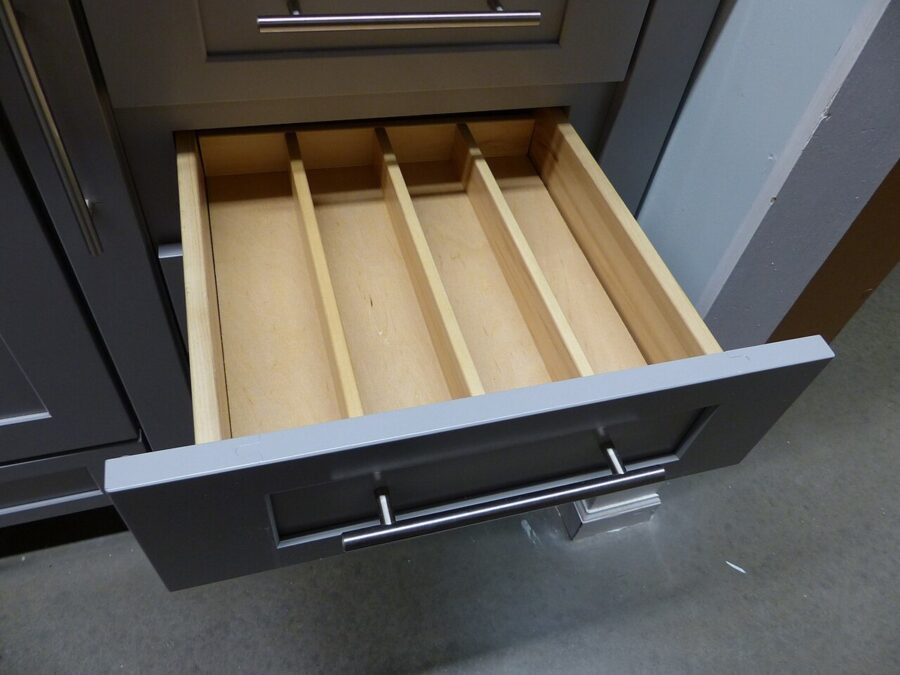
Bamboo is the most popular material for drawer dividers and trays. It is light, strong for its weight, and looks good in a kitchen, but it can stain if it stays wet and it should not be soaked. A bamboo organizer for a standard drawer usually costs $20 to $45. Solid wood, especially birch or maple, is heavier and more durable, and it suits a permanent kitchen fit, but prices run higher, often $35 to $80 for a fitted insert.
Plastic is the practical choice for bathrooms and cleaning drawers. It wipes clean, resists moisture, and is often the cheapest option, at $10 to $30 for a set. The trade-off is that thin plastic can flex under heavy pans and may crack over time. Metal organizers, usually steel wire or powder-coated mesh, handle heat and weight well and are easy to wipe down, but they can scratch drawer bottoms unless they have rubber feet or a liner. Fabric bins are best for bedrooms: they are soft, light, and collapsible, but they offer little support for heavy items and are not a good fit for a damp bathroom.
Best Options by Use
For heavy kitchen pans, choose a metal divider or a pegboard with a solid base, and check that the drawer slide rating covers the total load. For dishes, a pegboard is hard to beat, because it stops plates from chipping against each other. For a bathroom, choose plastic bins with high sides and a non-slip base. For clothes, choose fabric bins that can be pulled out like files. For a mixed junk drawer, start with one adjustable divider and two small bins, then add more only after you have lived with the layout for a week. Buying a full set before you know how you use the drawer often leaves one or two pieces unused.
DIY vs. Bought Organizers
A do-it-yourself divider can be made from plywood, foam board, or even sturdy cardboard for a trial layout. Cut panels to the inside height of the drawer, leaving a small clearance at the top, and join them with wood glue or small screws. A plywood divider set for one drawer usually costs $10 to $25 in materials and takes about an hour, not counting drying time. The advantage is a perfect fit for an odd-sized drawer. The disadvantage is finish: raw edges can snag clothes and unfinished wood absorbs spills.
Bought organizers win on finish, adjustability, and time. They come with smooth edges, non-slip feet, and sizes made for common drawer widths such as 18, 21, and 24 inches. They also make sense if you rent, because a spring-loaded divider leaves no marks. A good rule is to buy for drawers you use every day, and use a DIY trial divider for a drawer you are still sorting out. If the trial layout works for a month, you can replace it with a fitted bought version in the same shape.
When you are planning a wider kitchen change, it helps to think about the cabinet as well as the insert. Our guide to kitchen base cabinets with drawers explains how drawer depth, slide quality, and cabinet layout affect what an organizer can do, and why a deep drawer is often more useful than a door cabinet for heavy items.
Frequently Asked Questions
What size deep drawer organizer do I need?
Measure the inside width, length, and height of your drawer, then choose an organizer that is slightly smaller, with about a quarter inch of clearance on each side. Adjustable dividers are the safest choice if your drawer is an unusual width, because they expand to fit.
Are deep drawer organizers worth it for rental homes?
Yes, especially spring-loaded dividers and removable bins, because they need no screws and leave no damage. They also travel well: you can take a good set to your next home if the drawer sizes are similar.
How do I stop organizers from sliding when I open the drawer?
Use a non-slip drawer liner under the organizer, choose a bin with rubber feet, or pick a divider that presses firmly against both walls. If a bin still moves, it is probably too small for the drawer, and a wider bin or a second bin to fill the gap will fix it.
Can I put pots and pans in a deep drawer?
Yes, if the slides are rated for the weight. Keep the total load under the slide rating, usually 75 to 100 pounds per drawer, put lids upright in their own section, and avoid stacking more than two or three pans in one slot.
How do I clean a drawer organizer?
Lift the organizer out, wipe it with a damp cloth and mild soap, and dry it before putting it back. Bamboo and wood should not be soaked, plastic can be rinsed, and fabric bins can usually be spot-cleaned or machine-washed on a gentle cycle if the label allows it.
Conclusion
A good deep drawer organizer does not add space; it makes the space you already have usable. Measure first, match the material to the room, put heavy items where the slides can support them, and leave room to lift things out without a shuffle. Start with one drawer, test the layout for a week, and then repeat what worked in the next drawer. That small, practical approach is what turns a deep drawer from a storage problem into one of the most useful spots in the house.
Ready to start? Measure your deepest drawer today, clear out what you no longer use, and fit one organizer to the items you reach for most. Once that drawer works, the rest of the house is much easier to sort.
