

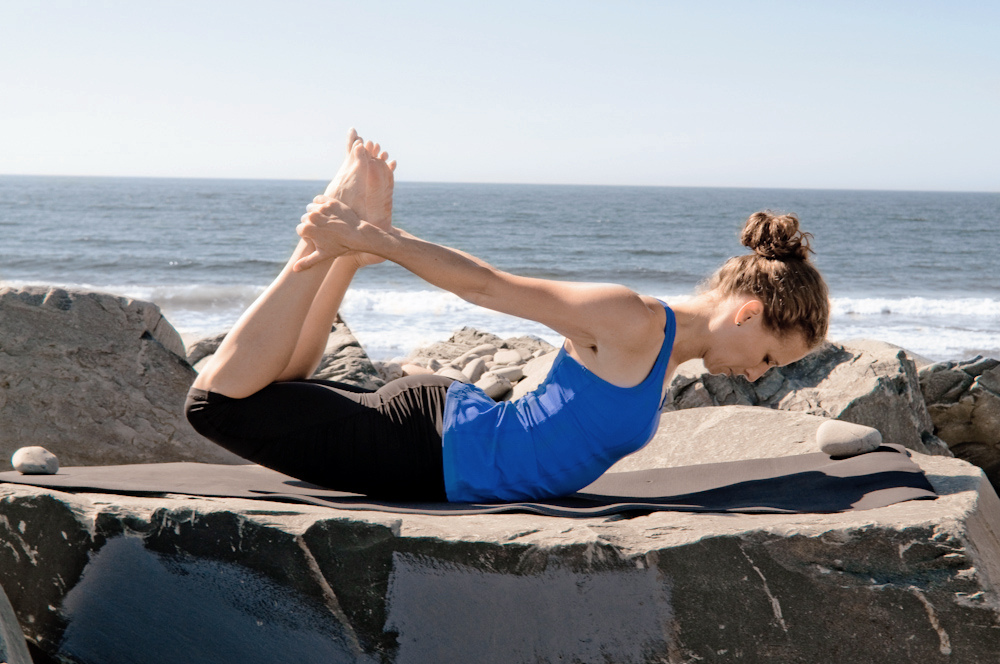
Dolphin pose yoga is one of those shapes that looks simple from the side and feels surprisingly demanding once you are in it. It is an inverted, forearm-supported version of Downward-Facing Dog, with the forearms on the mat, the hips lifted high, and the head hanging between the upper arms. Done well, it builds shoulder strength, opens the backs of the legs, and teaches the body how to hold weight without collapsing into the neck or lower back.
Many people meet this pose in a flowing class, where it flashes past in a few breaths, and that is exactly why it deserves a slower look. The details matter here: where the elbows sit, how the shoulder blades move, and whether the legs are doing their share of the work. Get those right and the pose feels steady and spacious. Get them wrong and it can feel pinched, wobbly, or hard on the shoulders. This guide breaks it down step by step, with practical cues, common mistakes, and ways to make it easier or harder.
What Dolphin Pose Is
In Sanskrit, the pose is called Ardha Pincha Mayurasana, which is often translated as half feathered peacock pose. The full version, Pincha Mayurasana, is forearm stand, so dolphin is literally the halfway house: the same forearm base, but with the feet still on the floor and the hips up. That relationship is useful to keep in mind, because almost every alignment point in dolphin carries straight across to the inversion that follows it.
Unlike a handstand, where the wrists take the load, dolphin spreads the work across both forearms. The elbows stay roughly shoulder-width apart, the hands can clasp or press flat, and the head stays off the floor. The spine lengthens from the tailbone toward the crown, the chest moves toward the thighs, and the heels work toward the mat without forcing the issue. For a clear second reference, see Yoga Journal’s Dolphin Pose guide, which shows the classic form and its benefits.
Teachers often use dolphin as preparation rather than as a peak pose in its own right. It appears in vinyasa sequences, in Iyengar-style classes that hold poses longer, and in strength-focused practices where the goal is to build the upper back and shoulders gradually. A typical hold is five to eight slow breaths, which is long enough to feel the muscles working but short enough to keep the form clean. Beginners often start with three breaths and build up.
Which Muscles It Works
The most obvious work is in the shoulders. The deltoids and the muscles around the shoulder blades, including the serratus anterior and the trapezius, have to stabilise the whole upper body while it is upside down in a partial sense. If those muscles switch off, the chest sinks toward the floor and the neck takes over, which is the first sign that the hold has gone on too long or the base needs adjusting.
The core is the quiet hero of the pose. The abdominals and the deep muscles along the spine keep the ribs from flaring and the lower back from sagging. Think of the belly drawing gently in and up, not gripped hard, so you can still breathe fully. The legs are far from passive either: the quadriceps lift the kneecaps, the calves lengthen as the heels reach down, and the hamstrings get a strong stretch along the backs of the thighs.
That combination is why dolphin is often described as both a strength pose and a stretch. It asks the shoulders and core to work while the hamstrings, calves, and upper back lengthen. It also gives a mild inversion effect: the head is below the heart, so many people notice a feeling of calm focus afterwards, though the pose should never be held if it brings on dizziness, pressure in the head, or pain.
How to Get Into Dolphin Pose, Step by Step
Start on all fours with a mat that will not slide. If your elbows are sensitive, fold a blanket under them or use a thicker mat. Take your time with the set-up, because a careful base makes the rest of the pose much easier.
- Come to hands and knees, with the wrists under the shoulders and the knees under the hips. Spread the fingers wide.
- Lower one forearm at a time to the mat, keeping the elbows directly under the shoulders and about shoulder-width apart. Press the whole forearm down, from elbow to wrist.
- Clasp the hands if that feels stable, or keep the palms flat and the forearms parallel. If you clasp, keep the little-finger side of the hands grounded so the wrists do not roll outward.
- Tuck the toes under and lift the knees, then lift the hips up and back, as you would for Downward-Facing Dog.
- Walk the feet in a little at a time, keeping the legs as straight as you comfortably can. Stop when the back stays long; do not sacrifice the spine to get the heels down.
- Let the head hang freely between the upper arms, with the gaze toward the legs or the navel. Do not rest the head on the floor and do not force it toward the mat.
- Press the forearms down and lift the shoulders away from the ears. Imagine the shoulder blades spreading across the back and slightly down toward the hips.
- Breathe steadily for five to eight breaths. To come out, lower the knees to the mat and sit back into Child’s Pose for a few breaths.
The exact distance between the hands and feet will vary with your proportions and hamstring length. A useful check is that the hips should be the highest point of the shape, not the shoulders or the lower back. If the hips will not lift because the legs are very tight, bend the knees a little and focus on lengthening the spine first; straight legs can come later.
Alignment Cues and Common Mistakes
Small adjustments change this pose a lot. The most common problem is the elbows sliding wider than the shoulders. When that happens, the chest drops and the shoulders lose their support. If you struggle to keep the elbows in place, loop a strap around the upper arms, just above the elbows, and keep gentle outward pressure against it. Another option is to place a block between the hands to stop them drifting apart.
Another frequent mistake is letting the head press into the floor or jut forward. The neck should stay long and free, with no weight on the crown. If you catch yourself pushing the head down to feel more inverted, lift it a fraction and press more firmly through the forearms instead. The inversion feeling should come from the hips being high, not from the head being low.
- Do not let the shoulders collapse toward the ears. Press down and lift the shoulder blades away from the neck.
- Do not lock the knees if the hamstrings are tight. A soft bend protects the lower back and keeps the spine long.
- Do not hold the breath. If you cannot breathe smoothly, shorten the hold or come out and rest.
- Do not shift all the weight into the forearms and forget the legs. Press the thighs back and the heels down to share the load.
- Do not walk the feet in so far that the back rounds. A longer, straighter spine is worth more than heels on the floor.
Breathing is a good diagnostic tool here. In a well-set-up dolphin, you should be able to take a full inhale into the back of the ribs and a slow exhale without the shape falling apart. If the breath becomes shallow and strained, that is information, not failure: it usually means the hold is too long, the feet are too close, or the shoulders need a rest.
Easier Modifications and Props
Dolphin does not have to be done in its full form to be useful. In fact, most people get more from a well-supported version than from a strained full version. Start with the knees bent and the hips high, and only straighten the legs as far as the back allows. You can also practise with the forearms on a block or with the hands holding a strap, which helps keep the elbows from splaying.
For tight shoulders, try placing the forearms on a folded blanket near a wall and walking the feet in slowly, keeping the chest open. For tight hamstrings, keep a generous bend in the knees and focus on the spine: lift the sitting bones up and back, press the forearms down, and let the heels be wherever they land. A wall can also help with confidence. Face away from the wall, set up as usual, and let the heels press lightly into the wall for feedback, without leaning on it.
Rest matters too. Between holds, Child’s Pose is the natural counterpose: it releases the shoulders, lets the neck relax, and gives the blood pressure a moment to settle after the mild inversion. If you are practising for several minutes, alternate one dolphin hold with one rest, rather than stacking holds until
the shoulders tire and the form collapses.
How Dolphin Builds Toward Forearm Stand
Forearm stand looks dramatic, but its base is almost identical to dolphin’s. The elbows stay shoulder-width apart, the shoulders stay lifted, and the ribs stay contained rather than flaring open. The difference is that the hips travel over the shoulders and the legs lift, which demands far more shoulder strength and balance. Dolphin lets you build that base without the balance risk.
A practical progression is to hold dolphin comfortably for eight steady breaths, several times a week, before adding any kicking up. From there, practise lifting one leg at a time in dolphin, keeping the hips level and the standing leg strong. Next, try dolphin at the wall with one foot stepping up, or practise short hops with control, always landing softly. If the shoulders sink or the elbows slide, go back a step. Strength built slowly tends to last, and it keeps the shoulders safer than rushing to the full inversion.
It is worth being honest about timelines. Some people progress to forearm stand in months; others take a year or more, and some prefer to stay with dolphin itself. That is not a shortcoming. Dolphin is a complete pose in its own right, with real strength and flexibility benefits, and it can stay in a practice for years without ever becoming a stepping stone to something else.
A Short Practice Sequence
Try this 15-minute sequence two or three times a week. Warm up first with gentle neck rolls, shoulder circles, and a few rounds of Cat-Cow, then move through the poses below, resting in Child’s Pose whenever you need it.
- Downward-Facing Dog, five breaths, to warm the shoulders and hamstrings.
- Plank, three breaths, then lower to the forearms for a 20-second forearm plank if that feels steady.
- Dolphin pose, five to eight breaths, then Child’s Pose, five breaths. Repeat dolphin once.
- One-legged dolphin, three breaths each side, only if the base stays stable.
- Standing forward fold, five breaths, to release the backs of the legs.
- A gentle seated twist and a short Savasana to finish.
On quieter days, pair this with a slower practice. For example, a short session of yin yoga poses afterwards can balance the effort of dolphin with longer, supported holds for the hips and spine. The contrast is useful: dolphin builds active strength, while yin work lets the tissues release without force.
Frequently Asked Questions
Is dolphin pose suitable for beginners?
Yes, with modifications. Beginners often do best with bent knees, a shorter hold of three to five breaths, and a strap to keep the elbows in place. The key is to keep the spine long and the neck free, rather than chasing a picture-perfect shape.
How long should I hold dolphin pose?
Five to eight breaths is a sensible target for most people, which works out at roughly 30 to 60 seconds depending on your breathing pace. Build up gradually, and come out as soon as the shoulders sink or the breath becomes strained. Two clean holds beat one long, collapsing hold.
Why do my shoulders hurt in dolphin pose?
Shoulder discomfort often comes from elbows that are too wide, a chest that has sunk toward the floor, or holding the pose for too long. Check the elbow width, press firmly through the forearms, lift the shoulder blades, and shorten the hold. Sharp or persistent pain is a reason to stop and get advice rather than pushing through.
Can I do dolphin pose if my hamstrings are tight?
Yes. Bend the knees as much as you need to keep the back long, and let the heels stay off the floor. Over weeks and months, regular practice, along with forward folds and other hamstring stretches, usually improves the range, but forcing straight legs will only round the back and strain the lower back.
What is the difference between dolphin pose and Downward-Facing Dog?
The shapes are similar, but the base is different. Downward-Facing Dog is supported by the hands, while dolphin is supported by the forearms, which changes the shoulder work and makes it a direct preparation for forearm stand. Dolphin also tends to feel more intense in the shoulders and upper back, even though the legs are in a similar position.
Conclusion
Dolphin pose rewards patience. Set the forearms carefully, lift the hips, keep the neck free, and let the breath stay easy, and the pose starts to feel less like a struggle and more like a stable, energising shape. It strengthens the shoulders and core, stretches the backs of the legs, and gives you an honest measure of the strength you will need for forearm stand, without requiring you to balance upside down.
If you practise it regularly, keep the holds clean and the progress gradual, and mix in rest and gentler work on other days, dolphin can become a reliable part of your routine. Try the sequence above this week, notice which cue helps most, and build from there. This article offers general wellness information only; skip or modify the pose if you have neck, shoulder, or high blood pressure issues, and check with a qualified professional before starting a new practice.
