

If you are planning a bedroom refresh, the different types of closet doors available today give you far more choice than most people expect. From space-saving bifold panels to elegant French doors, each style changes how your closet looks, how much room it needs, and how easy it is to reach your clothes. Because you open these doors every single day, picking the right one is worth a little thought. In this complete guide, we compare the six most popular types of closet doors, break down the pros and cons of each, and share practical tips to help you choose the perfect match for your space and budget.
Closet doors do more than hide clutter. They affect airflow inside the wardrobe, the amount of natural light in the room, and even how big a small bedroom feels. A mirrored sliding door can make a compact room look twice its size, while louvered panels keep clothes fresh in a humid climate. Below, we look at each option in detail so you can weigh style, cost, and practicality before you buy or install.
Bifold Closet Doors
Bifold closet doors consist of two or more narrow panels hinged together that fold as they glide along an overhead track. They are the most common choice in modern homes because they are affordable, easy to find, and simple to install. When fully open, the folded panels stack to one side, giving you access to most of the closet’s width. This makes them ideal for standard reach-in closets where you want wide access without the swing space a hinged door requires.
Pros of Bifold Doors
- Affordable: usually the cheapest option for a standard closet opening.
- Wide access: folds back to reveal almost the entire closet width.
- Space saving: needs no floor clearance in front, unlike swinging doors.
- DIY friendly: most homeowners can install a set in an afternoon.
Cons of Bifold Doors
- The folded panels slightly narrow the clear opening.
- Hinges and pivot hardware can loosen with heavy daily use.
- Small gaps between panels offer less privacy and let in dust.
- Can look plain unless you upgrade to a nicer finish.
Sliding Closet Doors
Sliding closet doors, sometimes called bypass doors, hang from an overhead track and glide horizontally past each other. Because they never swing out, they are perfect for tight bedrooms where furniture sits close to the closet. They come in a wide range of materials, from simple hollow-core panels to frosted glass and mirrored finishes. If you decide to fit them yourself, this guide to installing sliding closet doors from Family Handyman walks through the process step by step.
Pros of Sliding Doors
- Zero swing space: ideal for small rooms and tight layouts.
- Modern look: clean lines suit contemporary bedrooms.
- Versatile materials: available in wood, glass, mirror, and composite.
- Quiet operation: quality rollers glide smoothly and silently.
Cons of Sliding Doors
- You can only open one half of the closet at a time.
- Tracks collect dust and need regular cleaning.
- Panels can jump the track if pushed too hard.
- Thick or heavy panels may need a sturdier, costlier track system.
Mirrored Closet Doors
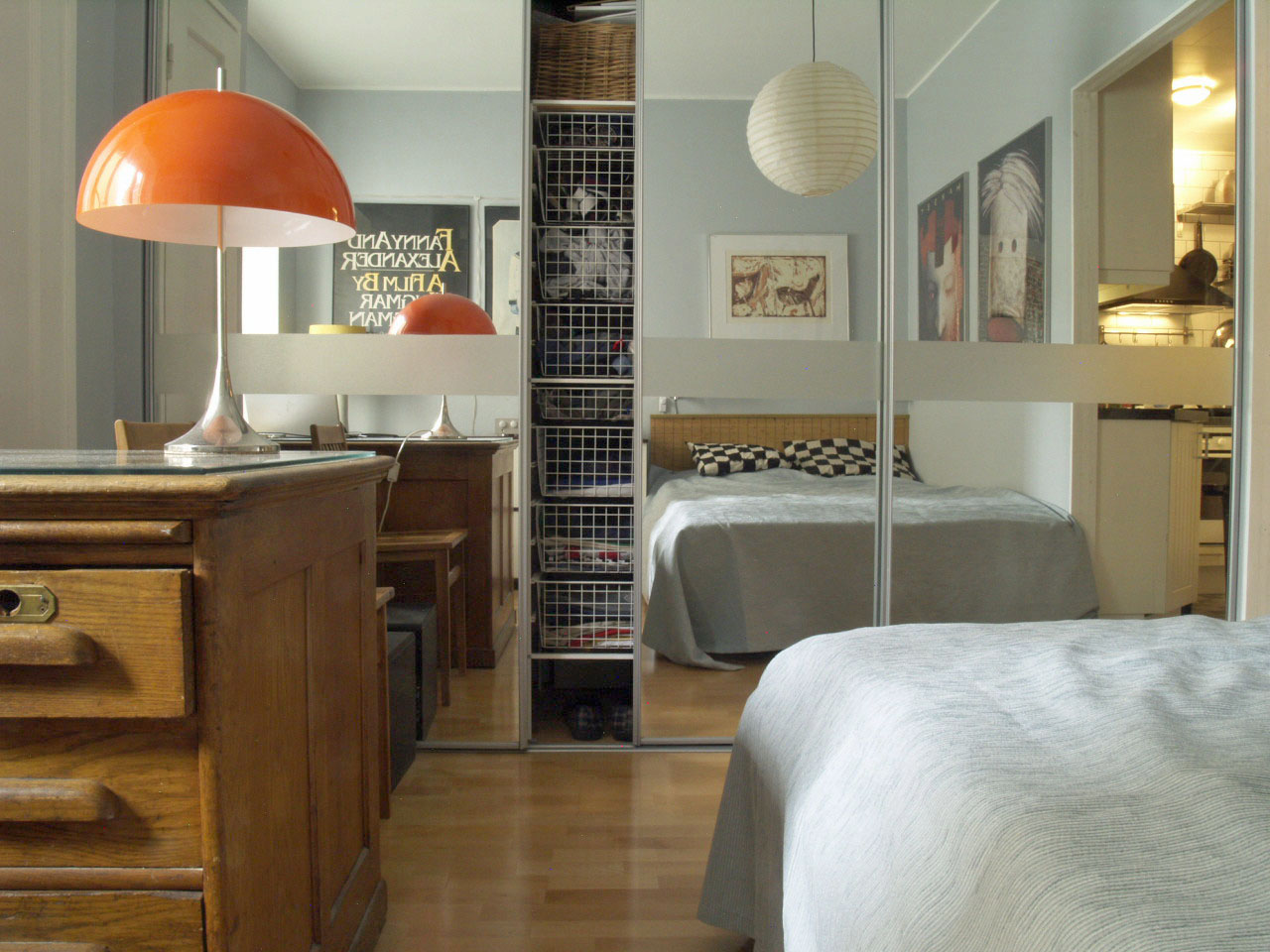
Mirrored closet doors are usually sliding panels covered with full-length mirrors. They are a favorite for small or dark bedrooms because the reflective surface bounces light around the room and creates the illusion of more space. They also remove the need for a separate full-length mirror, which is handy in a master bedroom or dressing area. Most mirrored doors use the same bypass track system as standard sliding doors, so the installation process is very similar.
Pros of Mirrored Doors
- Makes rooms feel bigger: mirrors visually double the space.
- Brighter rooms: reflective glass bounces natural light around.
- Built-in mirror: no need for a separate full-length mirror.
- Affordable upgrade: adds a premium look at a modest price.
Cons of Mirrored Doors
- Shows fingerprints and smudges, so expect frequent cleaning.
- Mirrors can chip or crack and are costly to replace.
- Some people find full-length mirrors distracting in a bedroom.
- Heavier than plain panels, so tracks and rollers wear faster.
French Closet Doors
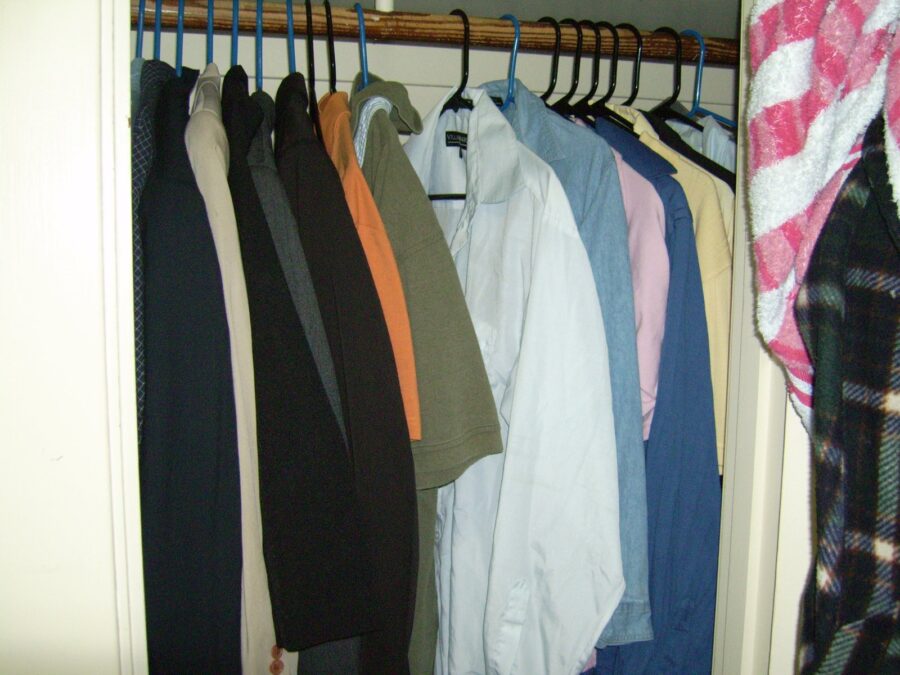
French closet doors are elegant double doors that swing open from the center, often featuring glass panes or decorative panels. They give a walk-in closet or a large wardrobe the feel of a boutique dressing room and let you see your entire wardrobe at a glance. Because they swing outward, they need clear floor space in front, so they suit larger bedrooms rather than compact ones. Many homeowners choose them when style is the top priority.
Pros of French Doors
- Elegant, high-end look that suits traditional and modern homes.
- Full access to the entire closet when both doors open.
- Glass panes let you see your wardrobe without opening the doors.
- Adds character and can increase the perceived value of a home.
Cons of French Doors
- Needs clear floor space to swing open.
- Usually the most expensive option to buy and install.
- Glass panes need regular cleaning to stay smudge-free.
- Heavier doors may need stronger framing and hinges.
Louvered Closet Doors
Louvered closet doors feature angled slats that allow air to flow through while still hiding the contents of the closet. This ventilation makes them an excellent choice for humid climates or for closets that store shoes, gym gear, or rarely worn clothes, since moving air helps prevent musty smells and mildew. They work in both bifold and swinging configurations and are often made from wood or wood-look composite.
Pros of Louvered Doors
- Ventilation keeps clothes fresh and prevents musty odors.
- Lightweight panels are easy to open and close.
- Classic look that suits coastal, cottage, and traditional decor.
- Flexible formats: available as bifold, sliding, or hinged styles.
Cons of Louvered Doors
- Slats collect dust and are fiddly to clean.
- Less privacy, since you can glimpse through the slats at an angle.
- Offers less insulation against noise than solid doors.
- Can look dated in ultra-modern interiors.
Accordion Closet Doors
Accordion closet doors work like bifold doors but with more, narrower panels that fold into a very compact stack. They are a practical solution for extra-wide closet openings, laundry areas, and room dividers where a standard door would be awkward. Vinyl accordion doors are inexpensive and resist moisture, which is why they are popular for laundry rooms and utility closets. Wooden versions offer a warmer, more refined appearance.
Pros of Accordion Doors
- Covers very wide openings without multiple door sets.
- Folds into a slim stack, maximizing the open space.
- Vinyl versions are cheap and moisture resistant.
- Can double as a lightweight room divider.
Cons of Accordion Doors
- Vinyl models can look and feel cheap.
- Many small panels mean more hinges to maintain.
- Less sturdy than solid wood or framed doors.
- Limited style options compared with other door types.
How to Choose the Right Type of Closet Door for Your Space
Start by measuring your opening and the floor space in front of it. If furniture sits close to the closet, sliding or bifold doors are the safest choice because they need no swing clearance. For a small or dark room, mirrored doors add light and the illusion of space, while louvered doors are the best pick for humid areas or shoe storage. Match the door style to your decor: French doors elevate a master suite, whereas simple bifold panels blend into a hallway. Set a budget early, since prices range from inexpensive vinyl accordion doors to premium French sets. Finally, think about who uses the closet, because kids and pets are kinder to sturdy sliding panels than to glass or mirror. If you are reorganizing nearby storage at the same time, our guide to cabinet door storage has clever ideas for making the most of every door in your home.
Maintenance Tips for Closet Doors
A little upkeep keeps any closet door gliding smoothly for years. Vacuum or wipe the tracks of sliding and bifold doors every few months, since dust and pet hair are the main cause of sticking. Tighten loose screws on hinges, pivots, and handles once a year, and apply a silicone-based lubricant, not oil, which attracts grime, to rollers and tracks. Clean mirrored and glass panels with a streak-free glass cleaner and a microfiber cloth. For wooden doors, dust the panels regularly and touch up scratches with a matching stain pen. If a door starts dragging, check the track alignment before forcing it, as most sticking problems come from a shifted track rather than a broken door.
Frequently Asked Questions
Which type of closet door is best for a small bedroom?
Sliding or mirrored sliding doors are usually the best choice for a small bedroom. They need no swing space, and the mirrored versions make the room feel larger and brighter. Bifold doors are a good runner-up because they fold compactly and cost less.
Are sliding closet doors more expensive than bifold doors?
Generally, yes. Basic bifold doors are among the cheapest options, while sliding doors cost more because of the track hardware and larger panels. Mirrored and glass sliding doors sit at the higher end of the price range.
Can I replace bifold closet doors with sliding doors?
In most cases, yes, as long as the opening is wide enough for two overlapping panels and you can mount a new track. You will need to remove the old bifold hardware, patch any holes, and install the bypass track level and square.
Do mirrored closet doors really make a room look bigger?
They do. A full-length mirror reflects light and the opposite wall, which tricks the eye into perceiving more depth. The effect is strongest in small or dimly lit bedrooms.
How do I stop my closet doors from sticking or squeaking?
Clean the tracks thoroughly, tighten any loose hardware, and apply a silicone-based lubricant to the rollers. If the door still sticks, check that the track is level, since a shifted track is the most common cause of dragging doors.
Conclusion
There is no single best choice among the types of closet doors. The right pick depends on your space, budget, and style. Bifold and sliding doors suit compact rooms, mirrored panels brighten dark spaces, French doors add elegance, louvered doors improve airflow, and accordion doors handle wide openings. Measure your space, weigh the pros and cons above, and choose the style that fits how you live. Ready to start your project? Explore more practical home improvement guides here on Tech Beacon and turn your closet into a space you enjoy using every day.
