

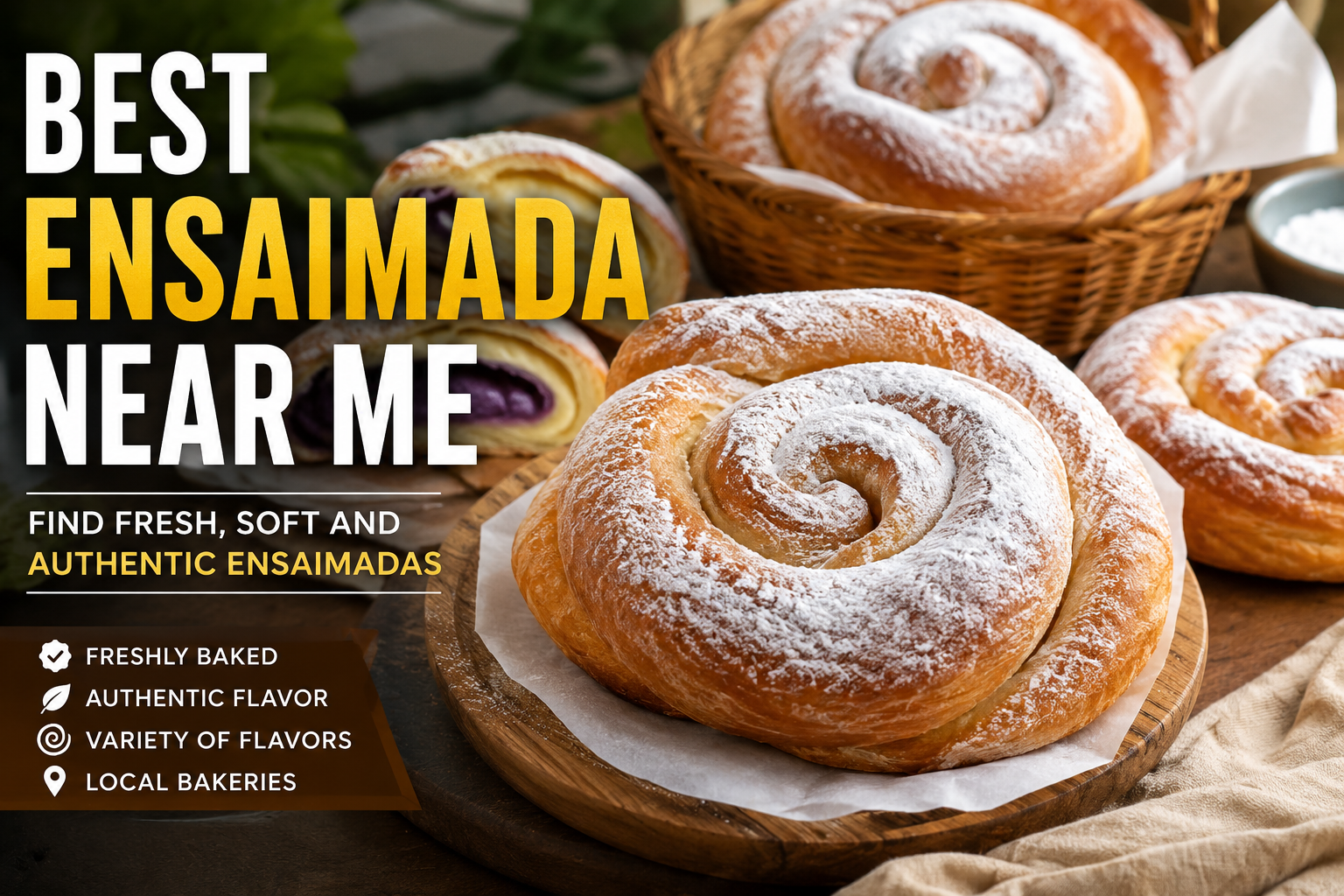
Searching for the best ensaimada near me usually means you want more than an ordinary pastry. You are looking for something fresh, soft, lightly sweet, and made with the delicate layered texture that gives a traditional ensaimada its distinctive character.
A good ensaimada should feel airy rather than heavy. Its golden spiral should pull apart easily, while the inside remains tender, slightly chewy, and full of buttery flavor.
However, not every bakery prepares ensaimadas in the same way. Some follow traditional recipes, while others offer modern versions filled with cream, chocolate, cheese, or fruit.
This guide explains how to choose the right bakery, what quality signs to look for, which flavors are worth trying, and how to make sure your next ensaimada is genuinely fresh and satisfying.
What Is an Ensaimada?
An ensaimada is a soft, spiral-shaped pastry traditionally associated with Mallorca, Spain. It is usually made from flour, eggs, sugar, yeast, water, and a type of fat that helps create its signature layered structure.
The dough is stretched very thin, rolled into a long strip, and shaped into a loose spiral. After proofing, it is baked until lightly golden and often finished with powdered sugar.
Unlike a dense sweet bun, a properly prepared ensaimada should be light and delicate. The layers separate gently when pulled apart, similar to a soft ribbon of bread.
As one pastry lover might describe it, “A great ensaimada feels rich without feeling heavy, and sweet without becoming overwhelming.”
Today, many bakeries offer both traditional and filled varieties, making it easier to find an option that matches your preferred flavor and sweetness level.
What Makes the Best Ensaimada Near Me Stand Out?
The best ensaimada near me should have a balanced combination of freshness, texture, flavor, and aroma. It should never feel dry, greasy, overly dense, or excessively sugary.
A high-quality ensaimada normally has a lightly crisp outer surface. The inside should remain fluffy, elastic, and soft enough to pull apart without crumbling.
The flavor should be buttery and gently sweet. Powdered sugar may add sweetness, but it should not hide the actual taste of the pastry.
Freshness is equally important. An ensaimada baked that morning will usually have a softer texture and more noticeable aroma than one that has been sitting on display for several days.
Look for these key signs:
- Light golden exterior
- Soft, layered interior
- Fresh buttery aroma
- Balanced sweetness
- No oily or stale aftertaste
- A loose, well-formed spiral
A beautiful appearance is helpful, but texture and flavor are stronger indicators of quality.
How to Search for the Best Ensaimada Near Me
When searching online for the best ensaimada near me, start with specific phrases rather than a broad search for bakeries.
You can search for terms such as:
- Traditional ensaimada bakery near me
- Fresh ensaimada near me
- Mallorcan bakery near me
- Spanish pastry shop near me
- Filled ensaimada near me
- Authentic ensaimada delivery near me
Search results may show bakeries, cafés, specialty food stores, Filipino bakeries, Spanish restaurants, and home-based pastry businesses.
Do not choose the first result automatically. Compare several options, check recent photos, read customer comments, and confirm whether ensaimadas are baked daily.
It is also helpful to search on maps and social platforms. Small local bakers sometimes offer exceptional products even when they do not have a large website or many online listings.
Read Recent Customer Reviews Carefully
Reviews can help you locate the best ensaimada near me, but only when you read them carefully.
Focus on recent comments that mention the product directly. A bakery may have excellent reviews for cakes or coffee but average feedback for its ensaimadas.
Look for repeated descriptions such as:
- Fresh and fluffy
- Soft even after several hours
- Authentic flavor
- Not overly sweet
- Generous filling
- Baked fresh daily
- Worth ordering again
Be cautious when several reviewers mention dryness, limited filling, excessive oil, or inconsistent freshness.
Photos uploaded by customers can also be more useful than professional bakery images. They show the actual size, texture, filling, and presentation customers received.
A helpful review gives specific details. “The pastry was good” tells you very little, while “The outer layer was lightly crisp and the center was soft and buttery” gives you a clearer idea of quality.
Check Whether the Ensaimadas Are Baked Fresh
Fresh baking is one of the biggest factors when choosing the best ensaimada near me.
Ask the bakery when its ensaimadas are prepared. Some bakeries bake them early in the morning, while others produce small batches throughout the day.
An ensaimada is often at its best on the day it is baked. It can remain enjoyable later, but the soft layered texture may gradually become firmer.
Useful questions include:
- Are the ensaimadas baked daily?
- What time does the fresh batch come out?
- Are they made in-house?
- Do I need to preorder?
- Are filled varieties prepared fresh?
- How should they be stored?
A bakery that answers clearly and confidently is usually more trustworthy than one that cannot explain when or where its pastries are made.
For the freshest experience, try visiting shortly after the day’s first batch is displayed.
Traditional Versus Modern Ensaimadas
Traditional ensaimadas are usually simple, lightly sweet, and topped with powdered sugar. They allow you to appreciate the dough, texture, and delicate buttery flavor.
Modern ensaimadas may contain fillings or toppings such as:
- Pastry cream
- Whipped cream
- Chocolate
- Caramel
- Cheese
- Fruit jam
- Custard
- Ube
- Dulce de leche
- Nut spreads
Neither style is automatically better. The right choice depends on whether you prefer a simple pastry or a richer dessert.
When trying a bakery for the first time, order one traditional ensaimada and one filled version. This makes it easier to judge the quality of the basic dough and compare the bakery’s creativity.
A strong bakery should be able to make the plain version taste satisfying without relying on heavy fillings.
Popular Ensaimada Flavors Worth Trying
The search for the best ensaimada near me becomes more enjoyable when you explore different flavors.
Classic Powdered Sugar
The classic version is the best option for judging the bakery’s dough and baking quality. It should taste light, buttery, and gently sweet.
Because there is no filling to hide imperfections, dryness or excessive density will be easy to notice.
Cream-Filled Ensaimada
Cream-filled ensaimadas are soft, rich, and dessert-like. The cream should taste fresh and smooth rather than overly sugary.
A good filling should complement the pastry without making it soggy.
Chocolate Ensaimada
Chocolate versions are popular with people who prefer a richer flavor. Look for smooth chocolate that spreads evenly through the pastry.
The chocolate should not overpower the delicate dough completely.
Cheese Ensaimada
Cheese adds a lightly salty contrast to the sweetness of the pastry. This combination is especially satisfying when the cheese is creamy, mild, and well balanced.
Some bakeries also add grated cheese on top for a stronger savory finish.
Ube Ensaimada
Ube-filled ensaimadas are common in Filipino-style bakeries. They combine the soft spiral pastry with a sweet, earthy purple yam filling.
A good ube ensaimada should have a noticeable filling without becoming too dense or overly sweet.
Fruit-Filled Ensaimada
Apricot, strawberry, apple, and citrus fillings can add brightness to the pastry.
Fruit fillings work best when they have a natural flavor and slight acidity to balance the sweetness.
How to Judge Texture and Freshness
Texture is one of the easiest ways to decide whether you have found the best ensaimada near me.
Start by gently pressing the pastry. A fresh ensaimada should feel soft and spring back slightly rather than staying flattened.
When pulled apart, the inside should reveal thin, tender layers. It should not break into dry crumbs like an old bread roll.
The pastry should feel light for its size. A surprisingly heavy ensaimada may contain too much filling, too much fat, or dough that has not risen properly.
Take note of the surface as well. A slight golden crust is desirable, but a dark or hard exterior may suggest overbaking.
“The best pastries do not need to shout with sugar,” as an experienced baker might say. “Their texture tells the story before the filling does.”
Aroma Is an Important Quality Sign
A freshly baked ensaimada should have a warm, slightly sweet, buttery aroma.
If it smells strongly oily, artificial, or stale, the ingredients or storage conditions may not be ideal.
Filled versions should also smell clean and fresh. Dairy cream should not have a sour aroma, while fruit filling should smell natural rather than strongly artificial.
A bakery with fresh batches often has a noticeable bread and butter aroma near the pastry display. This is usually a positive sign.
However, aroma alone is not enough. It should match the freshness and flavor you experience when eating the pastry.
Check the Ingredient Quality
The best ensaimada near me is usually made with carefully selected ingredients.
High-quality flour helps create a soft, elastic dough. Fresh eggs improve richness, while good-quality butter or traditional fat affects the layers and aroma.
Ask about ingredients when you have dietary concerns. Some ensaimadas may contain dairy, eggs, gluten, nuts, or animal-based fats.
Important questions may include:
- Does it contain dairy?
- Is the pastry suitable for vegetarians?
- Does the filling contain nuts?
- Are artificial flavors used?
- Is there a gluten-free option?
- Does the bakery handle common allergens?
Traditional preparation methods can vary, so never assume every ensaimada has the same ingredients.
A professional bakery should be able to provide clear allergen information.
Bakery Cleanliness and Presentation Matter
Cleanliness does not directly determine flavor, but it can tell you a lot about how carefully the bakery handles its products.
The pastry display should look clean, organized, and protected. Filled ensaimadas containing cream or custard should be stored at an appropriate temperature.
Packaging should also prevent the pastry from being crushed or exposed to moisture.
A carefully packed ensaimada is more likely to reach your home with its spiral shape and soft texture intact.
Pay attention to whether staff use clean utensils, handle pastries properly, and clearly label different flavors.
These small details show whether the bakery treats its products professionally.
Compare Price With Size and Quality
The cheapest bakery does not always offer the best value, and the most expensive ensaimada is not automatically the best.
Compare the price with the pastry’s size, freshness, ingredient quality, and amount of filling.
A slightly higher price may be reasonable when the ensaimada is made fresh in small batches using premium ingredients.
However, an expensive pastry should still meet basic expectations. It should be soft, flavorful, well shaped, and properly filled.
Some bakeries offer individual pastries, boxes of four or six, and larger celebration-size ensaimadas.
Buying a small box can be more economical when sharing with family, but try one first before placing a large order.
Ask Local Communities for Recommendations
Online search results are useful, but local recommendations can lead you to hidden bakeries that do not appear near the top of search pages.
Ask friends, coworkers, neighbors, or community groups where they buy fresh ensaimadas.
Food-focused local groups often share detailed recommendations, including which flavor to order and what time to visit.
You can ask a simple question such as, “Where can I find a freshly baked, authentic ensaimada nearby?”
People are more likely to give helpful answers when your request is specific.
Local recommendations are especially valuable when home bakers accept preorders or operate through social media rather than a physical storefront.
Should You Buy from a Bakery or Home Baker?
Both bakeries and home-based sellers can offer excellent ensaimadas.
A traditional bakery may provide convenient opening hours, walk-in availability, professional packaging, and a wider selection.
A home baker may offer fresher small batches, customized flavors, larger sizes, and more personal service.
When ordering from a home baker, check customer feedback, product photos, ingredient details, pickup arrangements, and payment policies.
Ask whether the images are recent and whether the baker can show the inside texture of the pastry.
For large or custom orders, request a small trial box before committing to several dozen pieces.
The best ensaimada near me may come from a popular bakery, but it can just as easily come from a skilled local baker working in small batches.
How to Order Ensaimadas for Delivery
Delivery is convenient, but ensaimadas must be packaged carefully to preserve their texture and shape.
Choose a seller located close enough to avoid a long delivery time. Extended travel in hot or humid weather can affect cream-filled varieties.
Ask whether the bakery uses sturdy boxes and inserts that prevent the pastry from sliding around.
For filled ensaimadas, confirm whether they require refrigeration immediately after delivery.
Before ordering, check:
- Estimated delivery time
- Delivery fee
- Minimum order requirement
- Packaging quality
- Temperature control
- Refund or replacement policy
- Same-day availability
When the order arrives, inspect the box before accepting it if possible. The pastries should not look crushed, melted, or exposed.
Best Time of Day to Buy Ensaimadas
Morning is often the best time to search for the best ensaimada near me, especially when the bakery prepares one main batch each day.
Arriving early gives you a better chance of receiving a pastry at its softest and freshest.
Popular flavors may sell out before afternoon, particularly on weekends and holidays.
Some bakeries prepare a second batch later in the day. Calling ahead can save you an unnecessary trip.
For special occasions, preorder at least one or two days in advance. Large ensaimadas and custom-filled versions may require additional preparation time.
Freshness is often about timing. A good pastry purchased at the right time can taste noticeably better than the same pastry bought near closing.
How to Store an Ensaimada at Home
A plain ensaimada can usually be kept in a sealed container at room temperature for a short period.
Avoid leaving it uncovered because exposure to air will make it dry more quickly.
Cream, custard, or dairy-filled ensaimadas should normally be refrigerated. Follow the bakery’s storage instructions for food safety.
To refresh a plain ensaimada, warm it gently for a few seconds. Do not overheat it, as this can make the pastry tough or melt the filling.
You can also freeze plain ensaimadas when properly wrapped. Let them thaw at room temperature before warming them lightly.
The goal is to protect the pastry from air, heat, and excess moisture.
Common Mistakes to Avoid When Choosing an Ensaimada
One common mistake is selecting a bakery only because its product looks attractive in promotional photos.
Beautiful toppings cannot compensate for dry dough or poor-quality filling.
Another mistake is assuming that more filling always means better value. Too much filling can overpower the pastry and make it heavy or soggy.
Avoid ordering a large quantity before tasting the bakery’s product. Start with one or two flavors.
Do not ignore recent negative reviews, especially when several customers mention the same quality problem.
Finally, do not wait until late afternoon when freshness matters most. A quick call about baking times can improve your experience significantly.
How to Choose the Right Ensaimada for an Occasion
For breakfast or coffee, a classic powdered sugar ensaimada is often the best choice.
For dessert, cream, chocolate, caramel, or fruit-filled versions feel more indulgent.
Cheese ensaimadas work well for people who enjoy sweet and savory flavors together.
For birthdays, family gatherings, or office events, consider a larger sharing-size ensaimada or a mixed flavor box.
When ordering for a group, include at least one classic option and several popular filled varieties.
Also ask about allergens and dietary preferences before placing the order.
A thoughtful selection makes the pastry table more enjoyable for everyone.
Questions to Ask Before Buying
Before choosing the best ensaimada near me, ask the seller a few direct questions.
You do not need a long conversation. A few clear answers can reveal a lot about freshness and quality.
Ask:
- When were these baked?
- Are they made in-house?
- Which flavor is your bestseller?
- Which option is closest to the traditional recipe?
- How long will they stay fresh?
- Do filled varieties need refrigeration?
- Can I preorder for a specific pickup time?
- Do you offer smaller tasting boxes?
A knowledgeable seller should be able to answer these questions comfortably.
Their recommendations can also help you avoid choosing a flavor that does not match your preferences.
Final Thoughts on Finding the Best Ensaimada Near Me
Finding the best ensaimada near me becomes much easier when you know what to look for.
Prioritize freshness, soft layered texture, balanced sweetness, quality ingredients, clean handling, and reliable customer feedback.
Start with a traditional ensaimada to judge the bakery’s basic technique. Then explore filled options such as cream, chocolate, cheese, fruit, or ube.
Check baking times, compare recent reviews, ask local communities, and contact the seller before making a large order.
The perfect ensaimada should be enjoyable from the first touch to the final bite. It should feel soft, smell fresh, pull apart in delicate layers, and leave you wanting another without feeling overly heavy.
As the saying goes, “A truly memorable pastry is not defined by decoration alone; it is remembered for the care hidden inside every layer.”
