

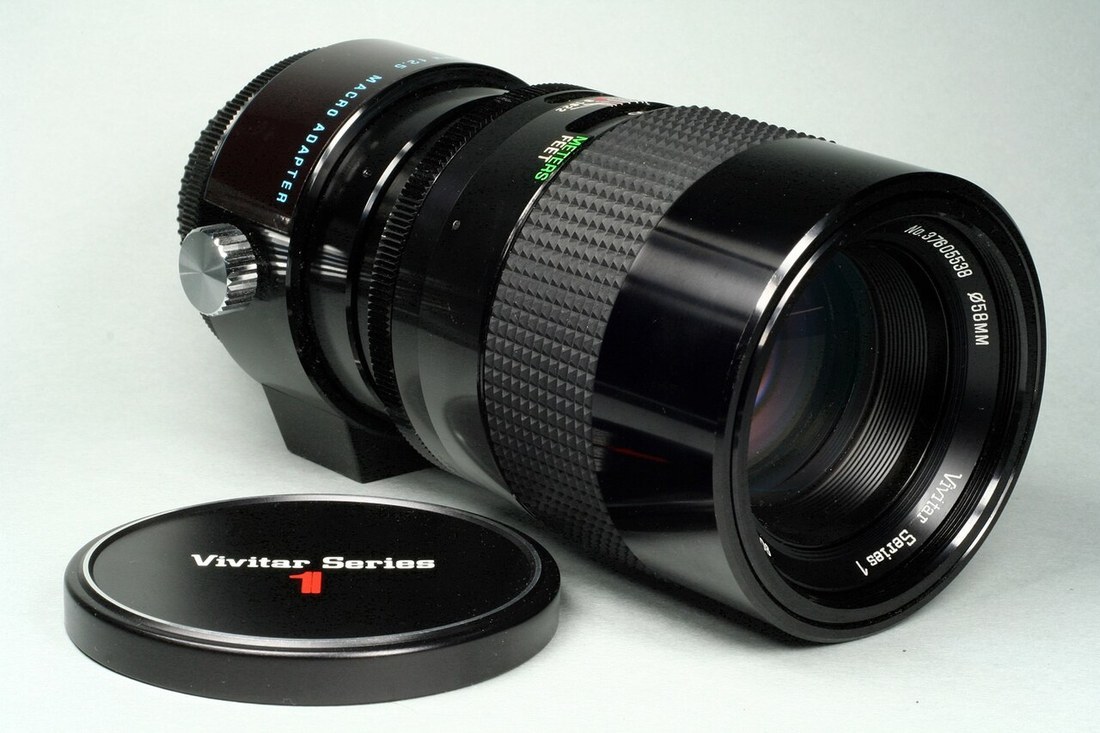
A macroscopic lens is a lens built to photograph very small subjects at close range, so details that the eye can barely see become large, sharp and easy to study. It is the tool behind close-up pictures of insects, flowers, coins, watch parts, circuit boards and water drops, where a normal lens would simply refuse to focus close enough or would render the subject too small in the frame.
The key difference is not only how close you can stand, but how large the lens can project the subject onto the sensor. Cambridge in Colour’s guide to macro lenses explains the relationship between magnification, focal length and working distance in clear terms, and it is a useful reference if you want the optics behind the pictures in this guide.
In everyday language, people often say macro lens when they mean this kind of optic. A true close-up lens is corrected for use at short distances, where ordinary lenses lose sharpness, show more distortion and struggle with flatness of field. That correction matters when you photograph a flat stamp, a printed page or the face of a watch, because the centre and the edges need to stay sharp at the same time.
What a macroscopic lens actually does
Magnification ratio is the simplest way to compare close-up lenses. A ratio of 1:1, also called life-size, means a 10 millimetre subject is projected as 10 millimetres on the camera sensor. A ratio of 1:2 means the same subject is projected at 5 millimetres, or half life-size, while 2:1 means it is projected twice life-size. Most dedicated lenses sold as macro lenses reach at least 1:1, and a few specialist lenses reach 2:1 or even 5:1 for extreme work.
Sensor size changes how that ratio looks in the final picture. On a full-frame camera, a 1:1 image of a 24 millimetre subject fills the 36 by 24 millimetre frame from edge to edge in one direction. On an APS-C camera, with a sensor roughly 24 by 16 millimetres, the same 1:1 lens fills the frame with a smaller subject, so the picture looks more magnified even though the lens itself has not changed. This is one reason crop-sensor cameras are popular for insect and flower photography.
Magnification, focal length and working distance
Focal length controls the angle of view and, crucially, how far you stand from the subject at maximum magnification. A 60 millimetre lens at 1:1 may leave only about 90 millimetres between the front of the lens and the subject, while a 100 millimetre lens at the same magnification typically leaves around 150 millimetres. A 180 millimetre lens can leave more than 250 millimetres. Those extra centimetres are valuable with live insects, because they reduce the chance of casting a shadow on the subject or startling it, and they leave room for a diffuser or a small reflector.
Minimum focusing distance is a different number from working distance, and the distinction trips up many buyers. Minimum focusing distance is measured from the sensor plane, inside the camera, to the subject. Working distance is measured from the front element to the subject, and it is the figure that tells you whether you can light the subject properly. Always check the working distance at 1:1 before buying, especially if you plan to photograph jewellery, food or small products in a light tent.
Dedicated lenses versus other ways to get closer
Dedicated macroscopic lenses
A dedicated lens is the most reliable route. It focuses from infinity to 1:1 without accessories, keeps autofocus and aperture control, and is designed to stay sharp at close range. Popular focal lengths include 60 millimetres for general use, 90 to 105 millimetres as an all-round choice, and 150 to 200 millimetres for shy wildlife. Many of these lenses are also excellent portrait lenses, because a 90 or 105 millimetre focal length flatters faces and gives a pleasing background blur, so the purchase is easier to justify if you shoot people as well.
Extension tubes
Extension tubes are hollow rings that fit between the camera and an ordinary lens, moving the lens farther from the sensor so it can focus closer. A 12 millimetre tube, a 20 millimetre tube and a 36 millimetre tube are common sizes, and they can be stacked. They contain no glass, so they do not by themselves reduce optical quality, but they do reduce the amount of light reaching the sensor and they remove the ability to focus at infinity while fitted. A 25 millimetre tube on a 50 millimetre lens can take you close to 0.5x magnification, which is enough for flowers, food and larger insects, and a full set is often cheaper than a dedicated lens.
Close-up filters, reversal rings and bellows
Close-up filters screw onto the front of a lens like a filter, and their strength is measured in dioptres, with +2, +4 and +10 among the usual values. A single-element filter can soften the edges, while a two-element achromatic filter, such as the well-known Raynox DCR-250, performs much better and is a sensible low-cost experiment. Reversal rings mount a lens backwards, which can give high magnification very cheaply, but you lose automatic aperture control and the rear element is exposed. Bellows offer the finest control of all, with a rail that lets you change extension in millimetres, and they are still used for studio and copy work, but they are slow to use outdoors and need a tripod.
Choosing a focal length
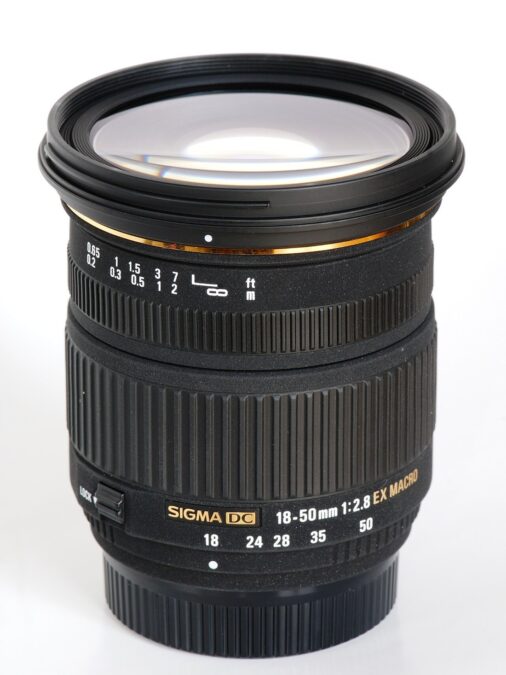
For tabletop work, documents, coins and food, a shorter lens is often the best value. A 50 or 60 millimetre lens is lighter, cheaper and easier to hold steady, and the short working distance is no problem when the subject cannot move. For flowers and garden insects, a 90 to 105 millimetre lens is the sweet spot for most photographers: it gives enough working distance for natural light, it is not so long that camera shake becomes a constant battle, and it can double as a portrait lens. For butterflies, dragonflies and other subjects that will not tolerate a close approach, a 150 or 180 millimetre lens is worth the extra weight and cost.
Stabilisation helps, but it does not solve the main problem in close-up work, which is depth of field. At 1:1 and f/2.8, the sharp zone may be less than a millimetre deep. Stopping down to f/8 or f/11 gives a more usable slice of sharpness, and many photographers work between f/8 and f/16. Beyond f/16, diffraction begins to soften the whole image, even though depth of field keeps increasing, so f/22 is rarely the best choice unless you are focus stacking or you need every millimetre of depth for a product shot.
Phone macro options
Modern phones have changed the entry point completely. Several flagship phones now include a dedicated macro mode or an ultra-wide camera that can focus at 2 to 4 centimetres, and some allow focus distances as short as 20 millimetres. The results can be striking for social media, flowers and food, because computational processing sharpens detail and balances exposure. The limits show up quickly, however: small sensors produce more noise in low light, digital cropping cannot match true optical magnification, and the very short working distance makes lighting difficult, since the phone itself often blocks the light.
Clip-on phone lenses are a cheap next step. A good clip-on achromatic lens can produce a genuine close-up, while a poor single-element clip-on will show soft corners and colour fringing. If you shoot macro on a phone regularly, clean the lens, tap to focus on the nearest detail, shoot in bright but diffused daylight, and avoid the digital zoom, which only enlarges the pixels you already have. For serious print work, insects in flight or focus-stacked product images, a dedicated camera lens still has a clear advantage.
Settings and technique that make the difference
Manual focus, or autofocus followed by small movements of your whole body, usually beats trusting autofocus alone at high magnification. Many photographers set the magnification they want, then rock gently forwards and backwards until the eye of the insect or the centre of the flower snaps into focus, and take the shot at that moment. Focus peaking, which highlights sharp edges on the screen, and magnified live view are both valuable aids, and a tripod removes most of the frustration when the subject is still.
Light matters more than megapixels. A small flash with a diffuser, a ring light or even a sheet of white paper used as a reflector can lift shadows without creating harsh highlights on shiny wings or metal. Indoors, a simple LED panel placed at 45 degrees gives a soft, controllable result. Focus stacking, where you take a series of shots at slightly different focus distances and blend them in software, is the standard solution when a single shot cannot cover the depth of a beetle, a watch movement or a flower head, and most modern cameras now include a built-in bracketing mode for it.
What to buy first
If you already own a camera, start with extension tubes if your budget is tight, and move to a 90 to 105 millimetre dedicated lens when you know you will use it often. If you are buying from scratch, put the lens ahead of the camera body: a good close-up lens on an older body will outperform a new body with a poor lens. Check that the lens mount matches your camera, that it reaches 1:1 rather than only 1:2, and that spare parts such as a lens hood and front cap are easy to replace. For a wider look at keeping camera gear working at home, see our guide on fixing a Nest camera that keeps going offline.
Frequently asked questions
What magnification do I need for a true macroscopic lens?
Look for 1:1, or life-size, as the standard for a true close-up lens. Lenses that only reach 1:2 or 1:3 can still be useful, but they will not enlarge a small insect or a coin to the same extent, and you will need to crop more heavily to fill the frame.
Can a phone replace a macroscopic lens?
For casual flowers, food and social media, a phone with a good macro mode is often enough. For large prints, focus stacking, shy wildlife and work in poor light, a dedicated camera lens gives better detail, more working distance and far more control over depth of field.
Is a 100 millimetre lens better than a 60 millimetre lens?
Neither is better in every situation. A 60 millimetre lens is lighter, cheaper and ideal for still subjects on a table, while a 100 millimetre lens gives more working distance, which helps with live subjects and lighting. Choose based on what you photograph most, not on the focal length alone.
Do extension tubes lose light?
Yes, extension tubes reduce the effective light reaching the sensor, because the lens is farther from the sensor. The loss is usually between one and two stops with a typical set, so you may need a slower shutter speed, a higher ISO or a flash to compensate.
Do I need a flash for close-up photography?
You do not always need one, especially outdoors in bright, diffused light, but a flash with a diffuser is one of the most useful accessories for this kind of work. It freezes small movements, lets you use a smaller aperture for more depth of field, and keeps ISO low for cleaner detail.
Conclusion
A macroscopic lens rewards patience more than expensive gear. Understand magnification, choose a focal length that gives you enough working distance for your subjects, stop down enough to hold the important details sharp, and light the subject softly rather than harshly. Start simple, practise on still subjects such as flowers and coins, and move to live insects once your focusing and lighting feel natural. If this guide helped you choose, share it with another photographer, and tell us in the comments which lens, focal length or phone setup you use for your own close-up work.
