

A beginner workout plan should feel doable, not intimidating. If you have not trained regularly before, or you are returning after a long break, the goal for the next four weeks is simple: build a habit, learn the basic movements, and leave each session feeling better than when you started. You do not need a gym membership, expensive equipment, or two hours a day to make real progress.
This guide gives you three training days a week, plus walking and mobility on other days. It mixes strength work, cardio, and recovery so your body adapts gradually. For a clear benchmark, the CDC physical activity guidelines for adults recommend at least 150 minutes of moderate-intensity aerobic activity each week, along with muscle-strengthening activity on two or more days. This plan works toward that target without asking you to do everything at once.
Think of the first month as practice. Your muscles, joints, tendons, and coordination all need time to adjust. Strength gains in the early weeks often come from your nervous system learning how to use muscle you already have, which is why movements that feel awkward in week one can feel much smoother by week three. Be patient, track what you do, and focus on showing up consistently.
Before You Start: The Basics That Make Training Safer
Start with a short health check. If you have chest pain, dizziness, a heart condition, diabetes, joint problems, or another medical condition, talk to a clinician before beginning a new exercise program. The same applies if you are pregnant, recovering from surgery or injury, or taking medication that affects heart rate or blood pressure. A quick conversation can help you choose safe starting loads and avoid setbacks.
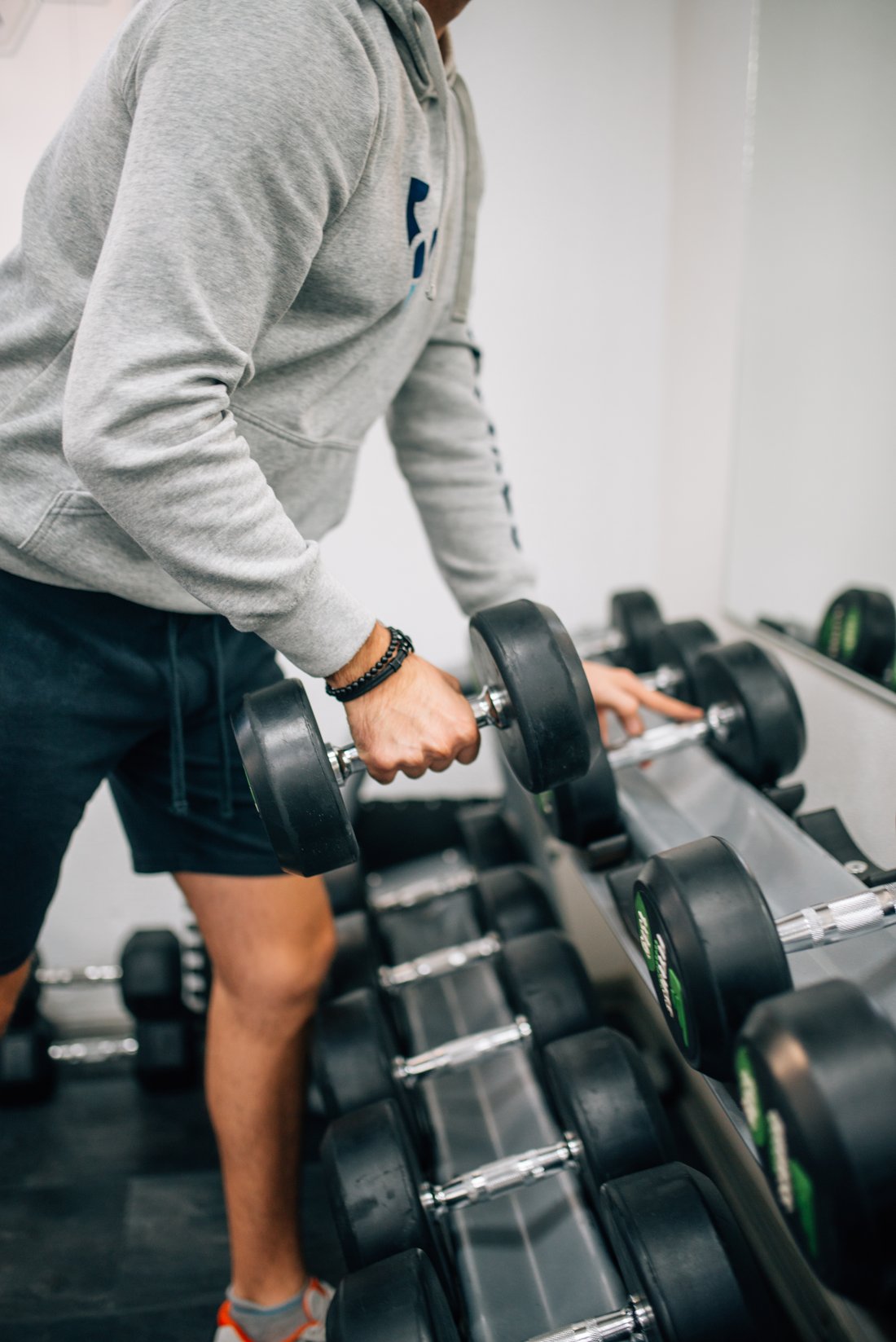
You need very little equipment. A pair of supportive trainers, comfortable clothes, a water bottle, and a mat or towel will cover most of this plan. A set of light dumbbells or resistance bands is useful, but bodyweight exercises alone are enough for week one. If you train at home, clear enough space to step sideways, lie down, and raise your arms overhead without hitting anything.
Warm up for five to ten minutes before every session. Walk in place, march, do arm circles, leg swings, and a few easy bodyweight squats. A warm-up raises your heart rate gradually, increases blood flow to working muscles, and gives you a chance to notice stiffness or soreness before you load a movement. Finish each session with five minutes of easy walking and gentle stretching for the hips, chest, shoulders, and calves.
The 4-Week Beginner Workout Plan at a Glance
Train on three non-consecutive days, such as Monday, Wednesday, and Friday. On at least two other days, walk for 20 to 30 minutes at a pace where you can talk but not sing. Keep one or two days genuinely easy. Each strength session should take 35 to 50 minutes, including the warm-up and cool-down, and you should finish feeling worked but not exhausted.
- Week 1: Learn the movements. Use light weights or bodyweight only, do two sets of 10 to 12 repetitions, and rest 60 to 90 seconds between sets.
- Week 2: Add a third set to the main exercises. Keep the same weights unless every set feels very easy, and add five minutes to your walks.
- Week 3: Increase the load slightly on two or three exercises, or add two repetitions per set. Add one short interval walk, alternating two minutes brisk with two minutes easy.
- Week 4: Consolidate the routine. Use the heaviest weights you can lift with good form, aim for three sets of 8 to 12 repetitions, and test whether your resting energy, sleep, and mood have improved.
What a Typical Training Week Looks Like
Each workout follows the same simple template so you can focus on technique instead of remembering a complicated routine. Start with a five to ten minute warm-up, then do six to seven exercises in order. Do all sets of one exercise before moving to the next, or pair an upper-body and a lower-body exercise and alternate them to save time. Finish with easy cardio or stretching.
A sample session is: bodyweight squats, wall or knee push-ups, dumbbell rows, glute bridges, standing overhead press with light dumbbells, dead bugs for core strength, and a 10-minute brisk walk. That session trains legs, chest, back, shoulders, glutes, and core in one balanced workout. Repeat the same session three times in week one, changing only the load or repetitions as you feel more confident.
On non-strength days, walking is your main tool. Brisk walking improves heart health, helps control blood sugar, supports weight management, and is gentle on joints. If walking feels too easy after two weeks, add hills, walk faster for short bursts, or carry a light backpack. Cycling, swimming, dancing, and active play all count as cardio too, so choose the activity you are most likely to repeat.
The Core Exercises, Explained Simply
Beginners get the best return from compound movements, which work several muscles at once. A squat trains the quadriceps, glutes, and core while teaching you to sit and stand with control. A push-up or chest press trains the chest, shoulders, and triceps. A row trains the upper back and biceps and helps counteract hours spent sitting at a desk. A hip hinge, such as a glute bridge or Romanian deadlift with light weight, trains the hamstrings and glutes and teaches safe lifting posture.
- Squat: Feet shoulder-width apart, chest tall, hips back as if sitting into a chair, knees tracking over toes. Stand tall and squeeze your glutes at the top.
- Push-up: Hands under shoulders, body in a straight line from head to heels, lower your chest with control, and press back up without letting your hips sag.
- Row: Hinge slightly forward, keep your back flat, pull the weight toward your hip, and lower it slowly. Avoid shrugging your shoulders toward your ears.
- Glute bridge: Lie on your back with knees bent, feet flat, press through your heels, lift your hips until your body forms a straight line, and pause for one second.
- Overhead press: Hold light dumbbells at shoulder height, brace your core, press overhead without arching your lower back, and lower with control.
- Dead bug: Lie on your back, arms toward the ceiling and knees bent at 90 degrees, extend the opposite arm and leg slowly, then return without letting your lower back lift off the floor.
Form Basics Worth Learning Early
Good form is not about looking perfect. It is about moving in a way that loads the right muscles and protects your joints. Breathe out on the effort, such as standing up from a squat or pressing a weight away, and breathe in as you lower it. Move at a controlled pace, roughly two seconds up and two seconds down, rather than bouncing or rushing. If you cannot keep your back flat, your knees stable, or your core braced, the weight is too heavy or the range is too large for now.
Film yourself from the side once every two weeks, or ask a trainer for a quick form check. Small details matter: in a squat, your heels should stay down; in a row, your torso should not rotate wildly; in a push-up, your neck should stay neutral rather than dropping toward the floor. Fixing one detail at a time is far more effective than trying to perfect everything in a single session.
Rest, Recovery, and How to Progress
Muscles do not grow during the workout. They adapt while you rest, sleep, and eat enough to support repair. Adults generally need seven to nine hours of sleep a night, and poor sleep makes training feel harder and recovery slower. Plan at least one full rest day between strength sessions, and keep easy days easy. A gentle walk, light stretching, or mobility work is enough on recovery days.
Progressive overload is the principle behind lasting gains: gradually ask your body to do a little more than it did before. That can mean adding the smallest available weight, doing one extra repetition, adding a set, or improving your range of motion. A practical rule is to increase total weekly training load by no more than about 10 percent at a time. If you can complete all sets with good form and still have two repetitions left in reserve, you are ready for a small increase next session.
Track your workouts in a notebook or phone app. Write down the exercise, weight, sets, repetitions, and how hard each set felt on a scale from one to ten. After four weeks, this log is more useful than any memory of how fit you felt. It shows whether you are progressing, which exercises stall, and when you need a lighter week. Every six to eight weeks, a deload week with about half the usual volume can help you recover and return stronger.
Common Beginner Mistakes to Avoid
- Doing too much in week one: Six hard sessions, heavy weights, and long runs usually lead to soreness, fatigue, or injury. Start with a load you can control.
- Skipping the warm-up: Cold muscles and stiff joints are more likely to strain. Five minutes of easy movement is a small price for safer training.
- Copying advanced programs: A professional athlete’s routine is built on years of adaptation. Your plan should match your current recovery capacity, not someone else’s highlight reel.
- Changing the plan every week: Progress requires repetition. Give this routine at least four weeks before judging it or switching exercises.
- Chasing soreness: Delayed onset muscle soreness peaks 24 to 72 hours after a new workout and fades as your body adapts. It is not a reliable measure of a good session.
- Ignoring pain: Muscle burn and tiredness are normal, but sharp pain, joint swelling, clicking with pain, or pain that changes how you walk needs rest and, if it persists, professional assessment.
Frequently Asked Questions
How many days a week should a beginner work out?
Three strength sessions a week is a strong starting point for most beginners, plus walking on other days. This frequency gives each muscle group enough stimulus and enough recovery, and it is easier to fit into a busy life than a daily gym routine. If three days feels like too much, start with two full-body sessions and build up after two or three weeks.
How long should a beginner workout last?
Aim for 35 to 50 minutes, including warm-up and cool-down. Shorter sessions of 25 to 30 minutes still count, especially in week one, and they are far better than skipping a workout because you cannot find an hour. As your fitness improves, you can extend sessions to 60 minutes, but longer is not automatically better.
Do I need a gym to follow this beginner workout plan?
No. Bodyweight squats, push-ups, rows with bands, glute bridges, and walking can build a solid foundation at home. A gym becomes useful later, when you need heavier weights for progressive overload or want access to machines and classes. Start where you are, with what you have, and upgrade only when your current tools limit progress.
When will I see results?
Most beginners notice better energy, sleep, and coordination within two to four weeks, and measurable strength gains within four to six weeks. Visible muscle and fat changes usually take eight to twelve weeks of consistent training and adequate nutrition. Early progress is often neurological, meaning your brain learns to recruit muscle more efficiently, so do not be discouraged if the mirror changes slowly at first.
Should I do cardio and strength on the same day?
You can, but separate them when possible. If you must combine them, do strength first so fatigue does not compromise your form, then add 10 to 20 minutes of easy cardio. On strength days, keep cardio light. Save harder intervals or longer runs for non-strength days, so each type of training gets your best effort.
Start This Week, Not Next Month
Choose your three training days, put them in your calendar, and prepare your clothes and water bottle the night before. Do week one exactly as written, even if it feels easy, because easy weeks build the technique and confidence that make harder weeks safe. If you miss a session, do not try to cram two workouts into one day. Simply continue with the next scheduled session and keep your weekly average moving in the right direction.
For more practical ideas once this routine feels comfortable, read Fitness Tips That Actually Work and use its guidance on training frequency, recovery, and nutrition to plan your second month. Small, repeatable steps beat dramatic short-term efforts every time.
Disclaimer: This article provides general wellness information only and is not professional medical advice; consult a qualified health professional before starting a new exercise program.
