

Kathy Ambush is best known as the first wife of Clarence Thomas, the justice of the United States Supreme Court, yet she has lived almost entirely outside public view. Her name appears in biographies of Thomas because their marriage, which began in 1971 and ended in divorce in 1984, covers the years when a young law graduate became a federal official. Beyond those dates, and the birth of their son in 1973, very little about her has been confirmed in reliable public sources. This article sets out what is known, what is not known, and why the gaps in the record matter.
To understand why so much attention falls on such a short public record, it helps to start with Thomas himself. According to Clarence Thomas, he was born on 23 June 1948 in Pin Point, Georgia, graduated with honours from the College of the Holy Cross in 1971, and earned his law degree from Yale Law School in 1974. He went on to serve as an assistant attorney general in Missouri, as Assistant Secretary for Civil Rights, and as chairman of the Equal Employment Opportunity Commission before President George H. W. Bush nominated him to the Supreme Court in 1991. Kathy Ambush was married to him during the first, formative part of that journey, before any of the national offices that later made his name familiar to millions of Americans.
Kathy Ambush: Quick Facts
| Full name | Kathy Grace Ambush |
| Known for | First wife of United States Supreme Court Justice Clarence Thomas |
| Married | 1971 |
| Divorced | 1984 |
| Length of marriage | 13 years |
| Children | One son, Jamal Adeen Thomas, born in 1973 |
| Birth date | Not publicly known |
| Birthplace | Not publicly known |
| Career | Not publicly known |
| Net worth | Not publicly known; no reliable figure exists |
| Current whereabouts | Not publicly known |
| Thomas remarried | 1987, to Virginia Lamp, known as Ginni Thomas |
Who Is Kathy Ambush?
Kathy Ambush, whose full name is given in reliable sources as Kathy Grace Ambush, is the first wife of Clarence Thomas. That single fact is the reason her name is still searched today, more than 40 years after the marriage ended. She did not seek public office, she did not publish a memoir, and she has not given interviews about her former husband. In an age when the spouses of public figures often build public profiles of their own, her absence from the record is itself the most consistent fact about her.
The scarcity of information is not a failure of research. It reflects a deliberate private life. Thomas himself has written and spoken at length about his childhood in Georgia, his grandfather, his education, and his judicial philosophy, but his first marriage occupies only a small part of that public story. His 2007 memoir, My Grandfather’s Son, and the many profiles written around his Supreme Court nomination in 1991 focus on his career, his confirmation hearings, and his second marriage. Kathy Ambush appears in those accounts mainly as a name and a set of dates, not as a voice in her own right.
That distinction matters for readers. A celebrity biography usually tries to answer a long list of questions: where was the person born, where did they go to school, what did they do for a living, and where do they live now? In this case, reliable sources do not answer those questions. To invent answers would be to mislead readers, and to repeat unverified claims from low-quality websites would be worse. The honest approach is to say clearly which facts are confirmed and to leave the rest marked as unknown.
The Marriage to Clarence Thomas
Kathy Ambush married Clarence Thomas in 1971. The year is significant because it was also the year Thomas graduated from the College of the Holy Cross. He graduated cum laude on 4 June 1971, ranked ninth in his class, after four years that had changed him profoundly. He had arrived at Holy Cross in August 1968 as a sophomore transfer student, one of 20 Black students recruited that year, and one of the first Black students at the college. He helped to found the Black Student Union, worked as a waiter to help pay his expenses, and majored in English literature. Marriage, in that same year, marked the start of adult life for a 22-year-old graduate who had just finished college and was about to start law school.
Thomas chose Yale Law School over Harvard Law School, in part because Yale offered him the most financial aid. He was one of only 12 Black law students there. He specialised in accounting, antitrust, and tax law, and he graduated with his Juris Doctor in 1974. Those three years, from 1971 to 1974, were therefore years of intense study and very limited money. Thomas has described himself as financially destitute even after leaving Yale, and he later recalled trying, unsuccessfully, to sell blood to raise money. The marriage began in that context: a young couple, a student husband, and a future that was far from certain.
A Young Family in the 1970s
The 1970s were a decade of movement for Thomas, and Kathy Ambush was part of that life before he became a national figure. After law school, he took a position as an assistant attorney general in Missouri, working for Attorney General John Danforth, and he was admitted to the Missouri bar on 13 September 1974. He held that post from 1974 to 1977, then worked briefly in the legal department of Monsanto in St. Louis, before rejoining Danforth, by then a United States senator, in Washington, D.C., as a legislative assistant from 1979 to 1981.
Each of those moves meant a new city, a new workplace, and a new set of demands on a young family. Missouri in the mid-1970s was a long way, in every sense, from the Georgia community where Thomas had grown up and from the Massachusetts college where he had studied. The work was demanding, the pay was modest by the standards of a Yale law graduate, and the political world Thomas was entering was still new to him. He had switched his party affiliation from Democrat to Republican while working for Danforth in Missouri, a decision that would shape the rest of his career. Through those years, Kathy Ambush was his wife, and their son was growing up, but the public record does not describe her own work, her interests, or her view of those changes.
Their Son, Jamal Adeen Thomas
Kathy Ambush and Clarence Thomas had one child, a son named Jamal Adeen Thomas, born in 1973. He was born while Thomas was still a law student at Yale, two years after the marriage and one year before Thomas graduated. That timing places Jamal at the centre of the family’s early years: he was a toddler when his father started work in Missouri, and he was about 11 years old when his parents divorced in 1984.
Jamal Adeen Thomas has also lived a largely private life as an adult. Reliable public sources confirm his name and his year of birth, and they confirm that he is Thomas’s only child, but they do not provide a detailed public biography of him either. That privacy is consistent with the family’s pattern. The son of a Supreme Court justice could easily have become a public figure, yet Jamal has not. Readers who search for him will find the same pattern as with his mother: a name, a birth year, and very little else that can be verified.
It is worth correcting a common misunderstanding here. Some online articles confuse the children of a famous person’s second marriage with the children of the first. In this case, there is no such confusion to resolve in the other direction: Thomas has one child, Jamal, from his marriage to Kathy Ambush, and no children from his second marriage to Virginia Thomas. The couple later took in Thomas’s six-year-old great-nephew, Mark Martin Jr., in 1997, but Mark is a great-nephew, not a son, and that event took place 13 years after the divorce from Ambush.
The Divorce in 1984
Kathy Ambush and Clarence Thomas divorced in 1984, after 13 years of marriage. The divorce came at a turning point in Thomas’s career. He had served as Assistant Secretary for Civil Rights at the United States Department of Education from June 1981 to May 1982, and he had been chairman of the Equal Employment Opportunity Commission since May 1982. In other words, by 1984 he was no longer a young state lawyer; he was a senior federal official in the Reagan administration, running an agency with a national remit.
No reliable public source gives a detailed, confirmed reason for the divorce, and this article does not offer one. Divorce is a private matter, and in this case neither party has made a public statement explaining the end of the marriage in the terms that would allow a fair account. What can be said, on the record, is that the marriage ended before the most famous chapter of Thomas’s life began. He was 36 years old in 1984. He would remain chairman of the Equal Employment Opportunity Commission until March 1990, serve for 19 months as a judge of the United States Court of Appeals for the District of Columbia Circuit, and then be nominated to the Supreme Court in 1991.
The timing also helps to explain why Kathy Ambush is so rarely mentioned in coverage of Thomas’s Supreme Court years. By the time he was nominated, confirmed, and sworn in, he had been divorced for seven years and had been married to his second wife, Virginia Lamp, since 1987. The confirmation hearings in 1991, including the testimony of Anita Hill, focused on Thomas’s conduct at the Department of Education and the Equal Employment Opportunity Commission in the early 1980s, not on his first marriage. Ambush was not a participant in those hearings, and she has not become one in the decades since.
Clarence Thomas After the Divorce
Thomas’s career after 1984 is well documented, and it provides the context in which Ambush’s marriage is usually remembered. President George H. W. Bush nominated him to the District of Columbia Circuit in October 1989, and the Senate confirmed him in March 1990. He was 42 years old at the time, and the youngest judge on that court. He authored 19 opinions and ruled in 145 cases during his 19 months there.
On 1 July 1991, Bush nominated Thomas to the Supreme Court to succeed Justice Thurgood Marshall, who had announced his retirement on 27 June 1991. The Senate confirmed him on 15 October 1991 by a vote of 52 to 48, the narrowest margin for a Supreme Court confirmation in more than 100 years, and he took office on 23 October 1991. He was 43 years old, the second African American to serve on the Court, after Marshall, and the 106th justice in the Court’s history. As of 2026, he is the second longest-serving justice in the Court’s history, having served for more than 35 years.
Those numbers are important because they show how long the public chapter of Thomas’s life has lasted, and how short, by comparison, the period of his first marriage now seems in retrospect. The marriage lasted 13 years. His time on the Supreme Court has lasted more than two and a half times as long. Yet the marriage still matters to biographers, because it covers the years when Thomas formed the views and habits that he carried onto the Court: his emphasis on hard work and self-reliance, learned from his grandfather; his turn away from the left-wing student politics of his Holy Cross years; and his belief, developed through reading Thomas Sowell and others, in individual effort over government programmes.
Her Private Life Since the Divorce
After the divorce in 1984, Kathy Ambush returned to a private life, and she has remained there for more than 40 years. There are no known interviews, no memoir, no social media presence, and no public appearances that reliable sources can point to. She has not commented publicly on Thomas’s Supreme Court career, on his second marriage, or on the controversies that have surrounded him, including the 1991 confirmation hearings and the later reporting about gifts and travel.
That silence should be respected, not treated as a mystery to be solved. Many people who were once married to a public figure choose, after a divorce, to live quietly and to keep their later lives to themselves. Ambush appears to have made that choice consistently, over four decades, and the absence of information is the evidence of it. It is also a reminder that a person’s life does not become public property because a former spouse becomes famous. The fact that Thomas is one of the most written-about justices of the modern era does not create a right to know where his first wife lives, what work she has done, or how she views the past.
For the same reason, this article does not speculate about a second marriage, a new family, or a later career for Ambush. None of those things has been confirmed in reliable sources, and to present a guess as a fact would be unfair to her and misleading to readers. If reliable information about her later life emerges in future, it should be added with a clear source. Until then, the honest statement is that her life since 1984 is not publicly known.
What Is Not Known About Kathy Ambush
It is useful to list the gaps plainly, because they are so often filled, online, with invented detail. Her date of birth is not publicly known. Her birthplace is not publicly known. Her education is not publicly known. Her career is not publicly known. Her current location is not publicly known. No reliable source confirms that she has remarried, and no reliable source confirms that she has not. The same applies to her health, her family beyond her son, and her views on any public question.
Her net worth is also not publicly known, and this article gives no figure for it. Some websites publish a number for almost every person they profile, whether or not they have evidence for it, and those numbers are then copied from site to site until they look like facts. That process has affected many private figures, and readers should be wary of it here. A net worth figure would require evidence about income, assets, and debts, and no such evidence has been published in a reliable source for Kathy Ambush. Any figure offered without that evidence is an unconfirmed estimate at best, and it should not be treated as a fact.
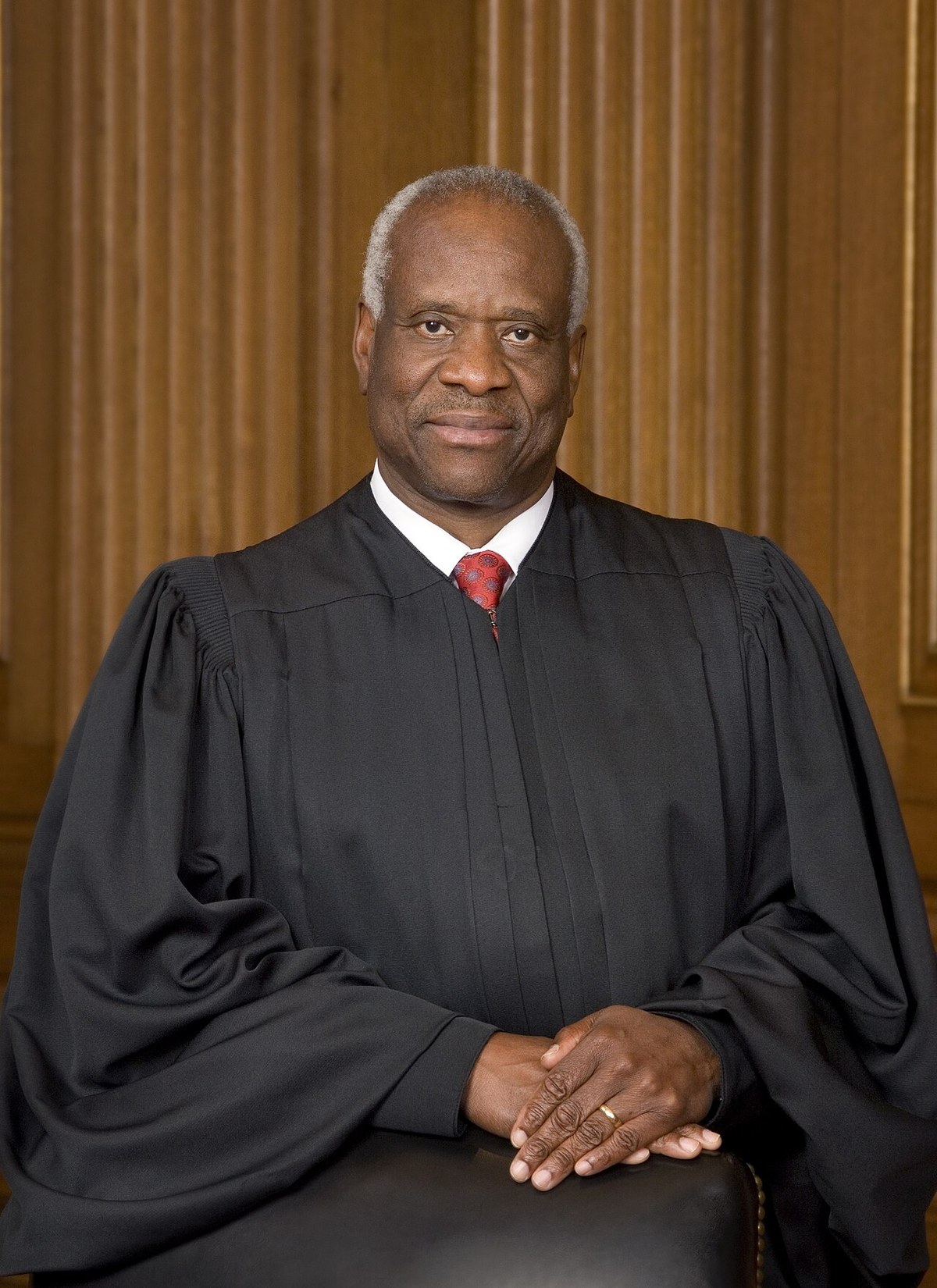
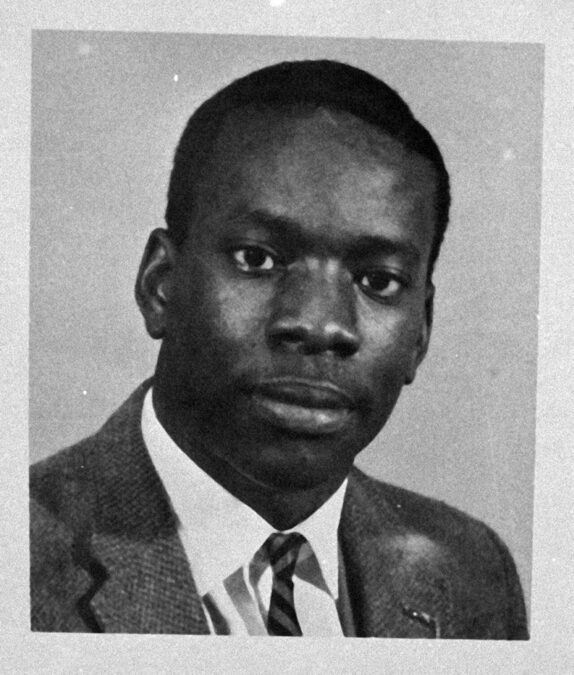
The same caution applies to photographs. No verified photograph of Kathy Ambush is available in the public domain, and the photographs used with this article show Clarence Thomas, not her. The featured image is his official Supreme Court portrait, and the photograph in the body of the article is his 1967 yearbook portrait, taken four years before the marriage. Both are used to illustrate the era and the person she married, not to suggest that they show her. Readers who see a photograph labelled as Kathy Ambush on another site should check its source carefully, because a mislabelled photograph of another person is a common error in this kind of biography.
Why Kathy Ambush’s Story Still Matters
Kathy Ambush matters for two reasons. The first is simple: she was there at the start. She married Clarence Thomas in the year he left college, she was with him through law school and his first jobs, and she is the mother of his only child. A biography of Thomas that omitted her would be incomplete, even if it could only give her name and a few dates. The early years of a public life are often the least documented and the most formative, and Ambush belongs to those years.
The second reason is about how biography should be written. Her story is a test of whether a writer will respect the limits of the evidence. It is easy to write 1,000 words of confident detail about a private person by copying unverified claims, inventing a birthplace, or assigning a net worth. It is harder, and more useful, to write an honest account that says what is known, names the sources for it, and leaves the rest blank. That discipline protects the subject, and it also protects the reader, who deserves to know the difference between a fact and a guess.
That pattern is not unique to her. Tech Beacon’s biography of Margie Washichek, the first wife of Jimmy Buffett, tells a similar story: a woman who married a famous man before the fame, a marriage that ended in the early 1970s, and more than 50 years of private life afterwards. In both cases, the marriage is a matter of public record, and the life after it is not. The comparison is a useful one, because it shows that Ambush is not an exception. She is part of a larger group of people whose names are known because of whom they married, and whose own lives have remained, by choice, out of view.
Frequently Asked Questions About Kathy Ambush
Who was Kathy Ambush?
Kathy Ambush, full name Kathy Grace Ambush, was the first wife of United States Supreme Court Justice Clarence Thomas. They married in 1971 and divorced in 1984. She is the mother of his only child, Jamal Adeen Thomas, born in 1973. Beyond those confirmed facts, very little about her personal life is publicly known.
When did Kathy Ambush marry Clarence Thomas, and when did they divorce?
They married in 1971, the same year Thomas graduated from the College of the Holy Cross, and they divorced in 1984, after 13 years of marriage. Thomas remarried in 1987, to Virginia Lamp, known as Ginni Thomas. He was nominated to the Supreme Court four years after that second marriage, in 1991.
Did Kathy Ambush and Clarence Thomas have children?
Yes. They had one child, a son named Jamal Adeen Thomas, born in 1973. He was born while Thomas was a student at Yale Law School. Thomas has no children from his second marriage, although he and his second wife later took in his six-year-old great-nephew, Mark Martin Jr., in 1997.
What is Kathy Ambush’s net worth?
Her net worth is not publicly known. No reliable source gives a figure for it, and there is no public record of her earnings, assets, or debts that would support one. Any figure published elsewhere without a named, reliable source should be treated as an unconfirmed estimate, not as a fact, and this article does not repeat one.
Where is Kathy Ambush now?
Her current location is not publicly known. After the divorce in 1984, she lived privately for more than 40 years, with no known interviews, memoir, or public appearances. That privacy appears to have been a deliberate choice, and it should be respected rather than treated as a puzzle to be solved by speculation.
Conclusion
Kathy Ambush’s life can be told in a few clear sentences, and those sentences are worth getting right. She was the first wife of Clarence Thomas, married in 1971, the mother of his son Jamal in 1973, and divorced from him in 1984. She was part of his life during the years when he moved from college to law school to his first jobs in Missouri and Washington, and she left public view long before he joined the Supreme Court. Everything else about her – her birth, her education, her career, her later life, and her finances – is not publicly known, and it should be described as such until a reliable source says otherwise.
That is a short biography, but it is an honest one. It does not invent a career, a second marriage, or a net worth, and it does not pretend that a lack of information is a reason to guess. If you found this account useful, share it with someone who is interested in the history of the Supreme Court, and explore more of Tech Beacon’s Lifestyle biographies for other lives told with the same care for the evidence.
