

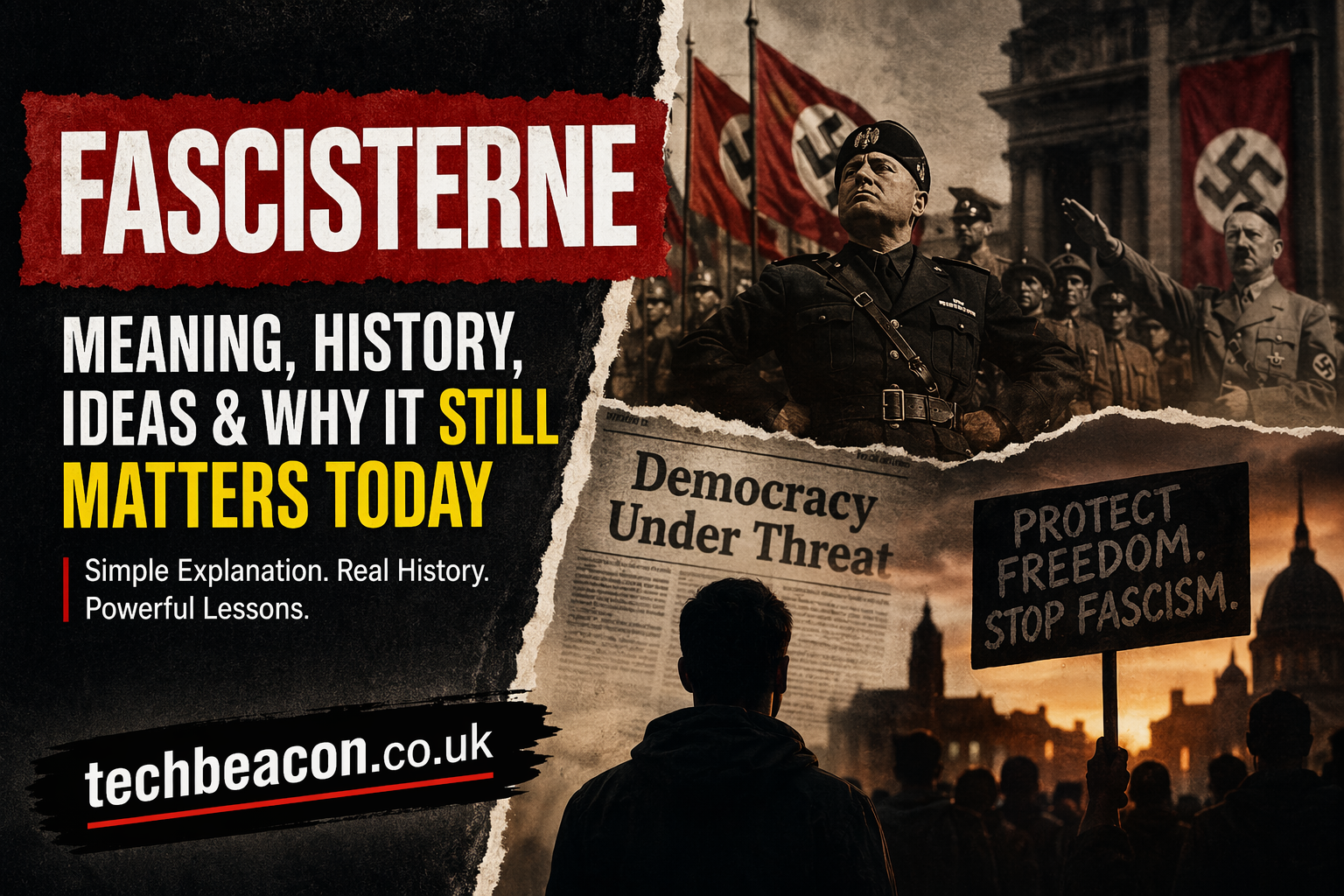
The word fascisterne often appears in political discussions, history lessons, documentaries, and modern debates. Many people see it used online or in news headlines but are not always sure what it truly means.
In simple terms, fascisterne refers to the fascists — groups or individuals connected to fascism, a far-right authoritarian political ideology known for extreme nationalism, control, and suppression of opposition.
Understanding fascisterne is important because history shows what can happen when power grows without limits. As one powerful reminder says, “When fear rules people, freedom fades quietly.”
What Does Fascisterne Mean?
The word fascisterne comes from Scandinavian languages such as Danish or Norwegian, where it translates to the fascists in English.
It is usually used when talking about:
- Historical fascist movements
- Supporters of fascist leaders
- Political groups with authoritarian ideas
- Discussions about World War II history
- Modern comparisons in politics
So if someone says fascisterne, they are generally referring to fascists as a group.
The Origin of Fascisterne
To understand fascisterne, we need to look at the rise of fascism in the early 20th century.
Fascism became widely known in Italy under Benito Mussolini during the 1920s. Later, similar systems appeared in other countries, most famously Nazi Germany under Adolf Hitler.
These movements promoted:
- Strong centralized control
- National superiority
- Militarism
- Obedience to leadership
- Limited personal freedoms
- Crushing political opposition
That is why the term fascisterne carries heavy historical weight even today.
Why Fascisterne Became Feared
People fear fascisterne because fascist governments often removed rights and punished disagreement.
Instead of debate, they used force. Instead of diversity, they demanded uniform thinking. Instead of democracy, they preferred one-party control.
History shows that once leaders silence critics, the damage grows quickly. That is why many historians warn people to recognize early signs.
A simple truth remains: “Freedom is rarely lost in one day—it disappears step by step.”
Common Beliefs Linked to Fascisterne
Not every group is identical, but many fascist movements shared similar beliefs. When discussing fascisterne, these ideas often come up:
1. Extreme Nationalism
They believed their nation was superior and must dominate others.
2. Strongman Leadership
One leader was seen as the answer to all problems.
3. Opposition is Dangerous
Critics, journalists, and rivals were treated as enemies.
4. Militarism
War and military strength were often glorified.
5. Control of Society
Media, education, and public life were tightly controlled.
These patterns help explain why fascisterne remain controversial.
Fascisterne in World War II
The term fascisterne is often connected to World War II because fascist powers played a central role in the conflict.
Italy under Mussolini and Germany under Hitler expanded aggressively across Europe. Their actions led to destruction, occupation, and mass suffering.
Millions died during the war. Entire communities were destroyed. Human rights were ignored on a massive scale.
This period is one reason the word fascisterne is never just casual vocabulary—it reminds people of real consequences.
Why People Still Use the Word Fascisterne Today
Even though classic fascist regimes largely ended, the word fascisterne is still used in modern conversations.
People may use it when they see:
- Anti-democratic behavior
- Attacks on minorities
- Violent nationalism
- Propaganda-driven politics
- Suppression of free speech
- Leader worship over institutions
Sometimes the word is used accurately. Sometimes it is exaggerated for political attacks. That is why context matters.
Important Difference: Real Fascism vs Online Insults
Today, many people throw strong labels around too quickly. Not every strict leader or conservative group equals fascisterne.
Real fascism usually includes a combination of:
- Authoritarian rule
- Nationalist extremism
- Political violence
- Anti-democratic systems
- Organized suppression
Using the word carelessly can weaken its meaning.
It is better to describe facts than rely only on labels.
Real-Life Example to Understand Fascisterne
Imagine a school where one student becomes leader and says:
- Only my supporters can speak
- Anyone who disagrees is punished
- School newspaper can only praise me
- Other groups are blamed for problems
- Rules change to keep me in power
That is a small-scale example of how authoritarian systems grow. It helps explain why people warn against ideas linked to fascisterne.
Warning Signs Often Compared to Fascisterne
Many historians suggest watching for patterns rather than waiting for disaster.
Some warning signs include:
- Leaders demanding total loyalty
- Blaming minorities for every issue
- Constant attacks on journalists
- Violence treated as patriotic
- Courts weakened
- Elections undermined
- Fear used to justify power grabs
These do not automatically mean fascisterne have arrived, but they deserve attention.
How Democracies Protect Themselves
The best defense against ideas associated with fascisterne is strong democratic culture.
That includes:
Free Media
Independent journalism questions power.
Fair Elections
Citizens choose leaders openly.
Independent Courts
Laws apply equally.
Education
People learn history and think critically.
Peaceful Opposition
Disagreement remains legal and protected.
Healthy democracies accept criticism instead of fearing it.
Why History Classes Teach About Fascisterne
Schools study fascisterne not to repeat old arguments, but to learn lessons.
Students often explore:
- How propaganda works
- How fear influences people
- Why rights matter
- How economic crisis can fuel extremism
- Why silence can help injustice grow
History becomes useful when it teaches judgment, not just dates.
Fascisterne in Films, Books, and Media
The topic of fascisterne appears often in entertainment because it represents power, conflict, and resistance.
Popular stories include:
- World War II dramas
- Resistance movements
- Spy thrillers
- Political dystopias
- Historical biographies
These stories remind viewers how ordinary people react under oppressive systems.
Misunderstandings About Fascisterne
Some common myths need correcting.
Myth 1: Fascism Appears Overnight
Reality: It often grows gradually.
Myth 2: Only One Country Experienced It
Reality: Similar movements appeared in multiple nations.
Myth 3: It Only Belongs to the Past
Reality: Elements can return in new forms.
Myth 4: It Starts With Tanks
Reality: Sometimes it starts with words, fear, and division.
Why the Word Feels So Strong
Calling someone linked to fascisterne is serious because the word carries memories of dictatorship, war, and cruelty.
That is why careful language matters.
If something is authoritarian, say authoritarian. If it is racist, say racist. If it truly reflects fascist patterns, then explain why clearly.
Strong words should be used with strong evidence.
Lessons Modern Society Can Learn from Fascisterne
The biggest lessons are surprisingly practical.
- Protect institutions before crisis begins
- Respect facts over propaganda
- Never normalize political violence
- Defend minority rights
- Stay engaged as citizens
- Question leaders who demand blind loyalty
As many historians note, “Democracy survives when ordinary people refuse to sleep through warning signs.”
How Young Readers Should Understand Fascisterne
If you are hearing the term fascisterne for the first time, keep it simple:
It refers to fascists—people or movements that favor extreme control, nationalism, and suppression instead of open democracy.
You do not need to memorize every historical detail at once. Start by learning how power should be balanced, how rights work, and why free societies value disagreement.
That foundation explains everything.
Also read: Garforfans: Powerful Guide to What It Is, Why It’s Trending, and Why People Care
Final Thoughts on Fascisterne
The term fascisterne is more than an old political label. It represents a warning from history.
It reminds us what can happen when fear replaces freedom, when loyalty replaces law, and when one group claims power over all others.
Understanding fascisterne helps people recognize why democratic values matter so much today. History is not only about the past—it is a guide for the future.
When people remember lessons honestly, they become harder to repeat.
