

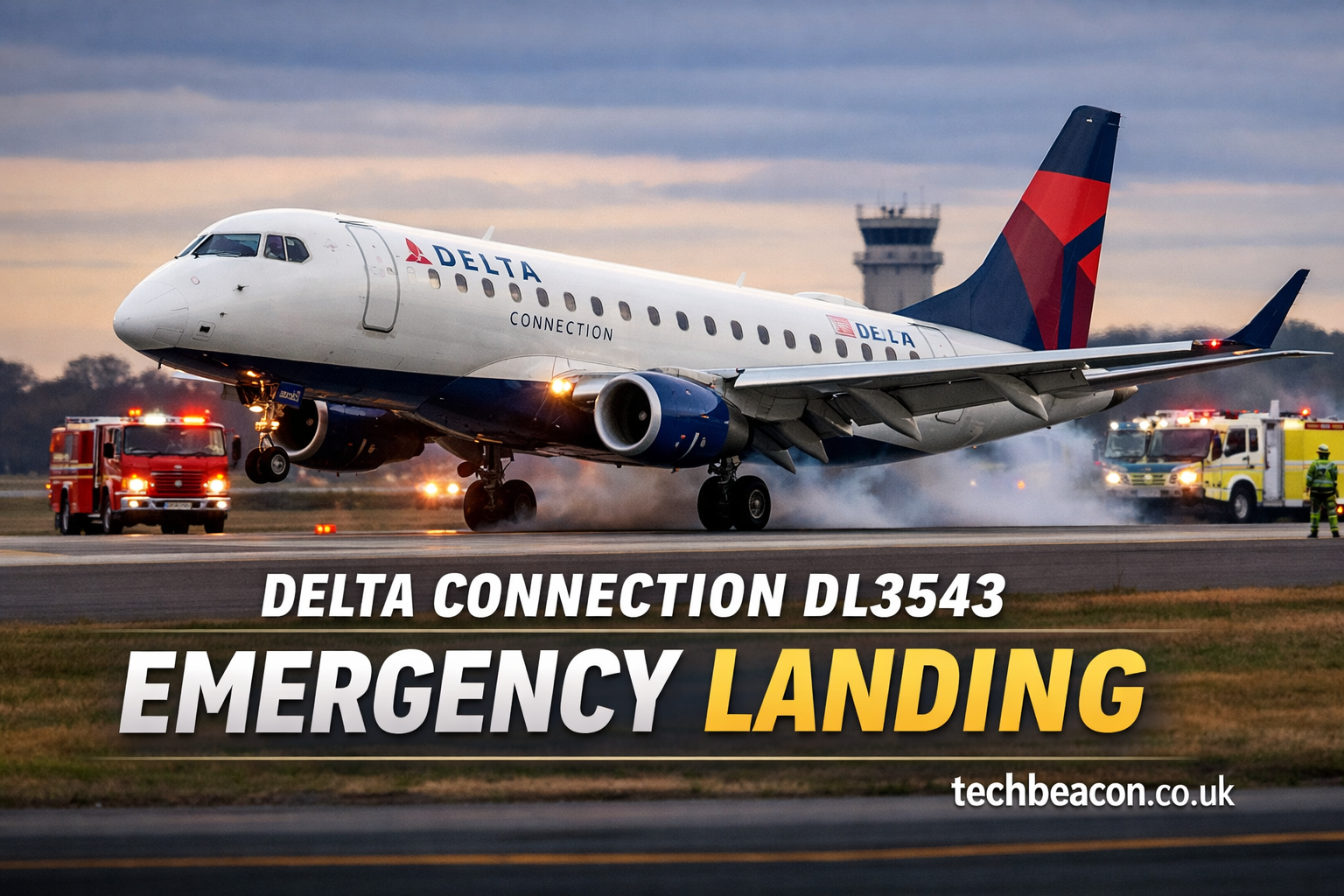
Air travel is widely regarded as one of the safest modes of transportation, yet incidents like the delta connection dl3543 emergency landing remind us that safety protocols are constantly being tested and refined. While such events may sound alarming at first, they often highlight how well aviation systems and crews are trained to respond under pressure.
In this article, we’ll take a closer look at what happened during the incident, why emergency landings occur, and what it means for passengers and the aviation industry.
What Happened During the Delta Connection DL3543 Emergency Landing?
The delta connection dl3543 emergency landing involved a regional flight operated under the Delta Air Lines brand. Like many Delta Connection flights, it was likely operated by a regional partner airline using a smaller aircraft for domestic routes.
During the flight, the crew identified a technical or safety-related issue that required immediate attention. Following standard aviation procedures, the pilots declared an emergency and diverted the aircraft to the nearest suitable airport.
Passengers onboard reported a controlled but urgent descent, followed by a safe landing. Emergency response teams were on standby as a precaution, which is standard practice in such situations.
The most important outcome: the aircraft landed safely, and no serious injuries were reported.
Understanding Emergency Landings in Aviation
What Is an Emergency Landing?
An emergency landing occurs when an aircraft must land sooner than planned due to a situation that could compromise safety. This doesn’t always mean a life-threatening issue—it often reflects caution and strict adherence to safety protocols.
Pilots are trained to handle a wide range of scenarios, including:
- Mechanical malfunctions
- Engine irregularities
- Cabin pressure issues
- Medical emergencies onboard
- Weather-related concerns
In the case of the delta connection dl3543 emergency landing, the decision to land early was a proactive safety measure.
Common Causes of Emergency Landings
1. Mechanical or Technical Issues
Aircraft systems are complex, and even minor irregularities can trigger an emergency landing. Pilots prefer to act early rather than risk escalation.
2. Medical Emergencies
If a passenger or crew member experiences a serious health issue, the flight may divert to get immediate medical assistance.
3. Weather Conditions
Sudden weather changes can make it unsafe to continue on the planned route.
4. Cabin Pressure Problems
Loss of cabin pressure requires rapid descent and immediate landing.
Although the exact cause of the delta connection dl3543 emergency landing may vary depending on reports, such decisions are always made with passenger safety as the top priority.
How Pilots Handle Emergency Situations
Pilots undergo rigorous training to manage emergencies calmly and efficiently. Their response typically includes:
Immediate Assessment
They quickly evaluate the situation using cockpit instruments and onboard diagnostics.
Communication
Pilots contact air traffic control to declare an emergency and request priority landing clearance.
Passenger Safety Measures
Cabin crew prepare passengers by giving clear instructions and ensuring everyone is seated and secured.
Controlled Landing
Despite the urgency, the landing itself is carefully managed to ensure maximum safety.
In incidents like the delta connection dl3543 emergency landing, this training is what prevents a concerning situation from becoming a disaster.
Passenger Experience During an Emergency Landing
For passengers, an emergency landing can feel stressful, especially if they are unaware of what’s happening. However, it’s important to understand:
- Aircraft are designed to handle emergencies
- Pilots are highly trained professionals
- Emergency landings are often precautionary
Passengers on flights like DL3543 often describe:
- A noticeable change in altitude
- Increased communication from the crew
- Emergency vehicles visible upon landing
These are all standard procedures and part of a well-coordinated safety system.
Safety Measures in Modern Aviation
The aviation industry has multiple layers of safety to prevent incidents and manage them effectively when they occur.
Advanced Aircraft Technology
Modern aircraft are equipped with systems that detect issues early, allowing pilots to act quickly.
Strict Maintenance Protocols
Airlines like Delta Air Lines follow rigorous inspection schedules to ensure aircraft reliability.
Crew Training
Pilots and cabin crew regularly undergo simulation training for emergency scenarios.
Air Traffic Control Support
Air traffic controllers prioritize emergency aircraft, ensuring a clear and safe landing path.
The successful outcome of the delta connection dl3543 emergency landing reflects how these systems work together seamlessly.
What This Incident Means for Travelers
While news of an emergency landing can be unsettling, it actually reinforces confidence in aviation safety.
Key Takeaways for Passengers
- Emergency landings are rare but well-managed
- They are often precautionary rather than dangerous
- Safety systems are designed to protect passengers at every stage
In fact, the aviation industry learns from every incident, improving procedures and technology over time.
How to Stay Calm During an Emergency Landing
If you ever find yourself in a similar situation, here are practical tips:
Listen to the Crew
Follow all instructions given by flight attendants and pilots.
Stay Seated and Buckled
Keep your seatbelt fastened and remain calm.
Avoid Panic
Remember that emergency landings are controlled and planned.
Focus on Facts
Trust the training and experience of the crew.
Passengers on the delta connection dl3543 emergency landing were able to disembark safely because of these coordinated efforts.
Also read: Walmart Anti Money Laundering CBL Answers
Final Thoughts
The delta connection dl3543 emergency landing serves as a powerful example of how aviation safety systems are designed to handle unexpected situations effectively. While the word “emergency” may sound alarming, the reality is that such events are usually handled with precision, professionalism, and a strong focus on passenger safety.
Air travel continues to be one of the safest ways to travel, thanks to continuous improvements in technology, training, and operational procedures. Incidents like this don’t highlight failure—they showcase how well the system works when it matters most.
