

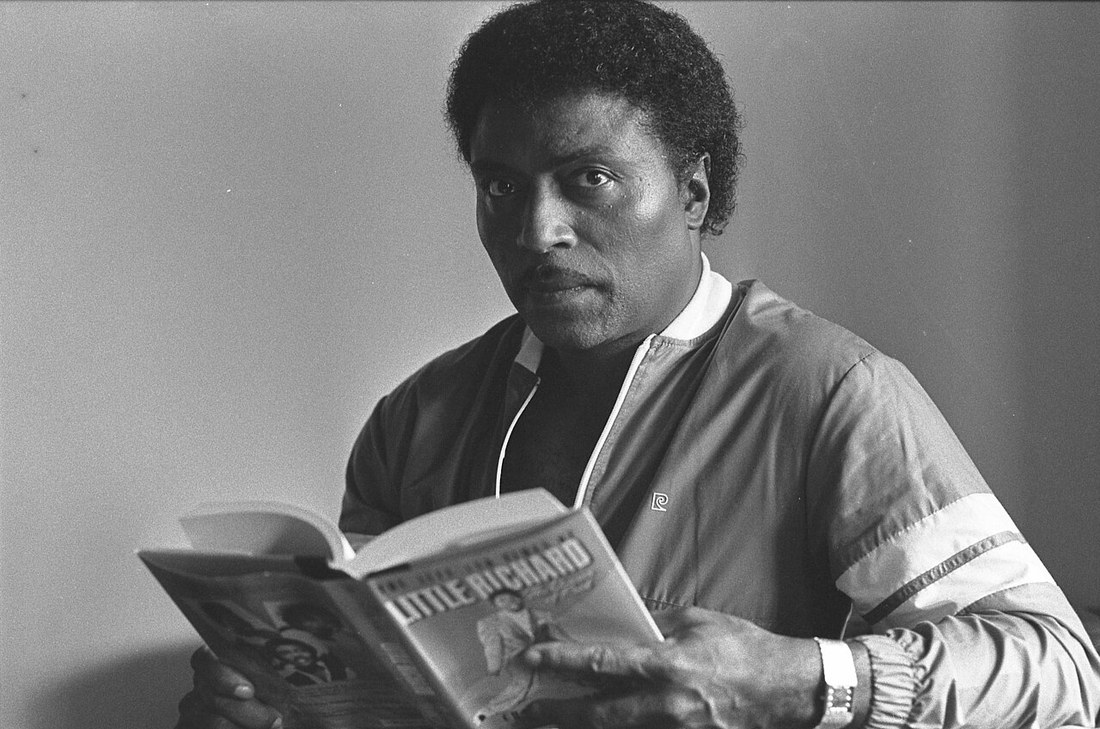
Ernestine Harvin is a name most people first meet as a single line in the story of someone else. She was the only legal wife of Little Richard, the rock and roll pioneer whose piano, voice and stage presence helped change popular music in the 1950s. Yet Harvin was not a performer chasing the spotlight, and she did not build a public career out of her marriage. She was a working woman from Washington, D.C., a secretary whose life crossed with a famous musician at a church rally, and whose five-year marriage placed her, briefly, at the centre of one of the loudest careers in American music.
That contrast is what makes her story worth telling properly. Little Richard — born Richard Wayne Penniman on 5 December 1932 and died on 9 May 2020 — lived much of his life in public, moving between hit records, ministry, comebacks and long interviews. Ernestine Harvin moved in the opposite direction. After the marriage ended in 1964, she lived privately, remarried, and stayed out of the press. As a result, the few facts that do survive about her are often repeated carelessly online, sometimes with dates that conflict and sometimes with a death date that is simply wrong. This article sets out what is actually known, says plainly where the sources disagree, and does not fill the gaps with guesswork.
Ernestine Harvin: Quick Facts
| Full name | Ernestine Harvin, later Ernestine Harvin Campbell; also recorded as Ernestine Harvin Penniman |
| Born | Washington, D.C., in the mid-1930s; her exact birth date is not reliably documented |
| Known for | Only legal wife of Little Richard |
| Occupation | Secretary in Washington, D.C. |
| Met Little Richard | October 1957, at an evangelical rally |
| Married | July 1959 |
| Marriage ended | Separated and divorced in 1964 |
| Children | No biological children; adopted son Danny Jones Penniman |
| Later marriage | McDonald Campbell, reportedly in 1975 |
| Los Angeles home | Reportedly nicknamed the “Tutti Frutti” mansion |
Early Life in Washington, D.C.
Ernestine Harvin was born in Washington, D.C., in the mid-1930s. That much can be said with confidence. Her exact birth date, however, is not reliably documented, and any biography that gives one without a warning is overstating what the record supports. Some sources place her birth in the mid-1930s without a day or a year. Others give 31 October 1935. Still others give 1939. Those versions cannot all be right, and there is no widely available public record that settles the question. The honest summary, and the one used here, is that she was born in Washington, D.C., in the mid-1930s, and that her exact birth date is not reliably documented.
What is clearer is the kind of life she was living before she met Little Richard. She worked as a secretary in Washington, D.C., an ordinary, steady office job in a city where government and administrative work employed thousands of women. One source says she also worked at the Navy Department. That detail is worth recording because it fits the same picture — a young woman in clerical work in the capital — but it should be read as a single-source claim rather than a fully confirmed part of her employment history. Nothing in the available record suggests she was seeking a career in music, entertainment or public life. She was, by every account, a private person who happened to meet a very public man.
Washington in the 1950s was also a city of churches, gospel music and revival meetings, and that setting matters for understanding how the couple met. Harvin’s faith was not a background detail in her life. It was central to who she was and, as the next part of the story shows, it was the ground on which she and Little Richard first connected.
Meeting Little Richard at an Evangelical Rally
Ernestine Harvin met Little Richard at an evangelical rally in October 1957. The timing is important, because Richard was not at the height of a concert tour when they met. He had temporarily stepped back from secular music to focus on ministry, a decision that surprised many people in the music business who had watched him become one of the most explosive performers of the decade. He was, in that period, preaching and attending religious gatherings rather than recording hit after hit or touring night after night.
The rally setting explains a great deal about the relationship that followed. The two did not meet backstage, in a recording studio or at a show-business party. They met in a religious setting, and their shared Christian faith was central to the relationship from the start. That shared faith gave them common ground that had little to do with fame, record sales or the music industry. It also helps explain why the marriage, when it came, was described in religious rather than show-business terms by people who knew the couple.
For Harvin, the meeting did not turn her into a public figure overnight. She remained, in the accounts that survive, a Washington secretary who had married into a famous life rather than someone who had set out to join it. For Richard, the relationship came during a period of real change in his own life, when he was trying to balance — and at times to choose between — the world of popular music and the world of the church. The fact that they met while he was in his ministry phase, rather than at the peak of his touring years, is one of the most consistent details in the story, and it is also one of the most useful for understanding the marriage itself.
Marriage in July 1959
Ernestine Harvin and Little Richard married in July 1959, about a year and nine months after they met at the rally in October 1957. The month is not in doubt. The exact day, however, is another point on which the sources conflict, and it is worth stating the disagreement openly. Wikipedia gives the wedding date as 11 July 1959. Most other sources give 12 July 1959. Both dates are reported, and there is no reason to present one of them as settled fact when the published record itself is split. What can be said safely is that the couple married in July 1959.
The marriage made Harvin the wife of one of the best-known musicians in the world, and she took the name Ernestine Harvin Penniman. Yet the wedding did not change the basic shape of her life in the way it might have done for someone looking for fame. She did not become a regular presence in the press, she did not record music, and she did not build a career as a celebrity spouse. The marriage was, in that sense, a private commitment entered into by a private person, even though her husband’s work was anything but private.
Life as Little Richard’s Wife
The couple were married for about five years, from July 1959 until their separation and divorce in 1964. Those five years covered a complicated period in Richard’s career, as he moved back towards secular music after his time in ministry. For Harvin, those years meant living with the demands of a famous husband’s work: travel, attention, long absences and the pressure that comes with a public career. The available accounts do not give a detailed, day-by-day picture of their married life, and that gap should not be filled with invented scenes or imagined conversations. What the record does give is a small number of clear facts, and they are worth setting out one by one.
First, the couple had no biological children. That is stated consistently in the sources, and it is an important fact to get right, because the family they did build came about in a different way. They adopted a son, Danny Jones Penniman. Adoption, rather than a biological child, is how the couple became parents, and Danny Jones Penniman is the child named in accounts of the marriage.
Second, the couple’s Los Angeles home was reportedly nicknamed the “Tutti Frutti” mansion, after Richard’s hit song “Tutti Frutti.” The word “reportedly” matters here. The nickname is given by one source, and it is the kind of detail that is easy to repeat and hard to verify from a distance. It is, however, a plausible and telling detail: “Tutti Frutti,” released in the mid-1950s, was the song that made Richard a star, and a home named after it would have been a reminder, every day, of the career that shaped the couple’s life together. Whether the name was used by the couple themselves or by people around them, it captures the way Richard’s music followed them home.
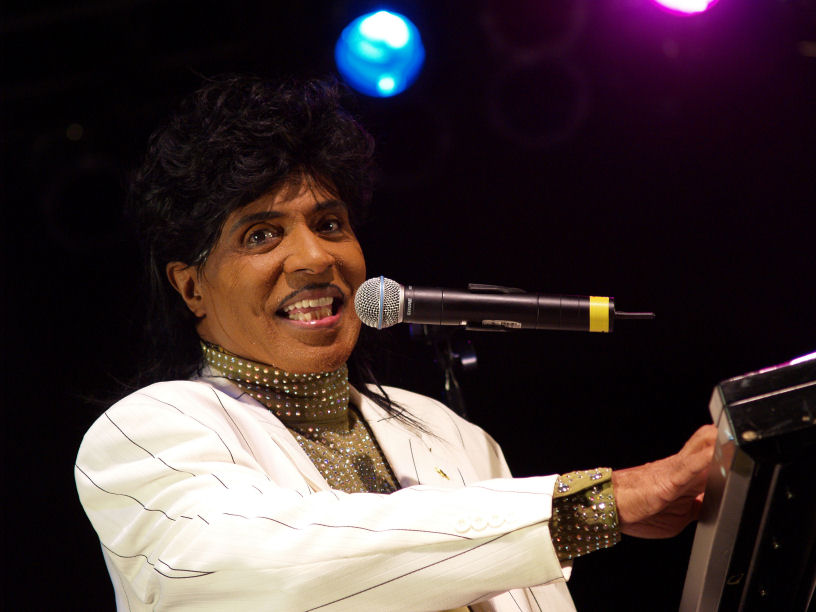
Third, and most importantly for any accurate biography, Ernestine Harvin remained Little Richard’s only wife. Richard, who lived from 1932 to 2020 and whose career spanned more than six decades, married once. He did not remarry after the divorce, and no other marriage is recorded for him. That fact is central to Harvin’s place in his story. She was not one wife among several, and she was not a brief early marriage later overshadowed by others. She was his only legal wife, and that remains true even though the marriage itself lasted only about five years.
Separation and Divorce in 1964
The marriage ended in 1964, when the couple separated and divorced. The divorce, like the wedding, is dated consistently to 1964, and the length of the marriage — about five years — follows directly from the July 1959 wedding and the 1964 divorce. The sources do not give a full, agreed account of why the marriage broke down, and this article does not invent one. Marriages end for many reasons, and the pressures of a famous career, long periods apart, and two people moving in different directions are all part of the background here. What matters for the record is the outcome: the marriage ended, Harvin and Richard went their separate ways, and she remained his only wife.
It is also worth noting what did not happen after the divorce. Harvin did not stay in the public eye, write a tell-all account, or build a career out of her former marriage. Richard, for his part, continued his long and uneven career, returning to music, to ministry and to public life in turn. The divorce was, in the end, a clean break in public terms. The two people’s lives diverged, and Harvin’s life after 1964 is best understood as a private life, not as a footnote to Richard’s career.
Life After the Divorce
After the divorce, Ernestine Harvin lived privately. That single sentence covers most of what can honestly be said about the following years, because she did not seek publicity and the press did not follow her. She was not giving interviews, appearing at events or commenting on Richard’s career. For a biographer, that silence is frustrating, but it is also informative. It tells us that Harvin’s choice, after a very public marriage, was to return to a private life.
One fact from this later period is recorded: she later remarried McDonald Campbell, taking the surname Campbell and becoming Ernestine Harvin Campbell. One source dates that remarriage to 1975. As with several other details in her story, the year should be treated as reported rather than as fully confirmed, but the remarriage itself is part of the accepted account of her later life. After 1975, she is generally referred to in sources by her later married name, which is one reason readers searching for “Ernestine Harvin” sometimes find her under the name Campbell instead.
Beyond that remarriage, the details of her later life — where she lived, what work she did, and how she spent her years — are not reliably documented in the public record. That is not a gap this article can fill by guessing. A private life, by definition, leaves few public traces, and Harvin seems to have been content with that. The right response, for a reader who wants the facts, is to accept the limits of the record rather than to mistake a short biography for a short life.
The Wrong Death Date: Why 9 May 2010 Is Incorrect
One of the most important things to say about Ernestine Harvin is what did not happen. Several online biographies list 9 May 2010 as her date of death. That date is wrong. She was alive well past 2010, and the 2010 date should not be repeated as fact.
The proof is straightforward and public. Harvin appears in the 2023 documentary “Little Richard: I Am Everything,” which premiered at the Sundance Film Festival in January 2023. She is credited in the film as “Self, Wife,” appearing in archive footage. A person cannot appear in a documentary released in 2023 if she died in 2010, and the credit alone is enough to show that the 2010 date is incorrect. The documentary’s use of archive footage also fits what we know about Harvin: she appears as herself, in her role as Richard’s wife, rather than as a new interview subject, which is consistent with a woman who had long since chosen a private life.
How did the wrong date spread? The likely source of the error is easy to spot once it is pointed out. 9 May is the date Little Richard himself died — but in 2020, not 2010. Richard Wayne Penniman died on 9 May 2020. It looks as though the day and month of his death were at some point attached to his wife, with the year changed to 2010, and the mistake was then copied from one online biography to another. That kind of error is common in short celebrity biographies, where a single wrong entry can be repeated across many sites until it starts to look like a confirmed fact. It is not a confirmed fact. It is a mistake, and it should be corrected wherever it appears.
Two things follow from that correction. First, no death date for Ernestine Harvin should be given in this article, because no reliable one is available in the sources used here. Second, no current age should be claimed for her, and it should not be claimed that she is alive in 2026, because that has not been verified. What can be said, honestly, is that the 2010 date is wrong, that she was alive well past 2010, that she appears in archive footage in a documentary premiered in January 2023, and that her later life is private. That is the full, accurate position, and it is better than a confident-sounding date that is simply not true.
Why Ernestine Harvin’s Story Still Matters
Ernestine Harvin matters for two reasons, and neither of them depends on her having been famous in her own right. The first is historical. Little Richard was one of the founders of rock and roll, and the people around him — including the one woman he married — are part of the history of that music. A marriage that began at an evangelical rally in 1957, during Richard’s ministry period, and ended in divorce in 1964, tells us something about the man himself: about his faith, about the tension in his life between church and stage, and about the private choices he made away from the piano. Harvin is the person who shared that part of his life, and without her the picture of Richard is incomplete.
The second reason is about how biography should be written. Harvin’s story is a good example of why uncertain facts should be labelled as uncertain. Her birth date is given in at least three different ways. Her wedding day is given as both 11 and 12 July 1959. Her remarriage is dated to 1975 by one source. A wrong death date of 9 May 2010 is repeated on several sites. In each case, the careful answer is to say what is known, say where the sources disagree, and leave the rest open. That is what this article has tried to do, and it is a better service to readers than a smooth, confident biography built on dates that do not hold up.
Her story also belongs alongside the stories of other women who were married to famous men and then chose privacy over publicity. Laura Deibel, the first wife of comedian Tim Allen, is another example of a woman whose life is most often told through a famous former husband, and whose own later life was lived largely out of the spotlight. Reading the two stories together is a useful reminder that a short public record does not mean a small life — it often means a deliberate choice to live privately, and that choice deserves respect.
Frequently Asked Questions About Ernestine Harvin
Who was Ernestine Harvin?
Ernestine Harvin was the only legal wife of Little Richard, the rock and roll pioneer born Richard Wayne Penniman. She was born in Washington, D.C., in the mid-1930s, worked as a secretary, met Richard at an evangelical rally in October 1957, and married him in July 1959. After their divorce in 1964, she lived privately and later remarried McDonald Campbell.
When was Ernestine Harvin born?
Her exact birth date is not reliably documented. She was born in Washington, D.C., in the mid-1930s, but sources disagree on the detail: some give only the mid-1930s, others give 31 October 1935, and others give 1939. No single year should be stated as certain.
When did Ernestine Harvin marry Little Richard?
They married in July 1959, after meeting at an evangelical rally in October 1957. The exact day is disputed: Wikipedia gives 11 July 1959, while most other sources give 12 July 1959. Both dates are reported. The marriage lasted about five years, ending in separation and divorce in 1964.
Did Ernestine Harvin have children?
She had no biological children. She and Little Richard adopted a son, Danny Jones Penniman, who is named in accounts of the marriage as their adopted son.
Did Ernestine Harvin die in 2010?
No. The date 9 May 2010, given in several online biographies, is incorrect. Ernestine Harvin was alive well past 2010 and appears, credited as “Self, Wife” in archive footage, in the 2023 documentary “Little Richard: I Am Everything,” which premiered at Sundance in January 2023. The error probably comes from confusing her with Little Richard himself, who died on 9 May 2020. No reliable death date for Harvin is available, and her later life is private.
Conclusion
Ernestine Harvin’s life can be told in a few clear sentences, and those sentences are worth getting right. Born in Washington, D.C., in the mid-1930s, she worked as a secretary, met Little Richard at an evangelical rally in October 1957, and married him in July 1959. They were together for about five years, adopted a son, Danny Jones Penniman, and divorced in 1964. She later remarried McDonald Campbell and lived privately. She was, and remains, Little Richard’s only wife — a fact that gives her a permanent place in the history of rock and roll, even though she never sought the spotlight for herself.
The uncertainties in her story — her exact birth date, the exact day of her wedding, the year of her remarriage, and the wrongly reported 2010 death date — are not reasons to stop telling it. They are reasons to tell it carefully, with the disagreements stated openly and the gaps left as gaps. If this article has done its job, you now know what is known about Ernestine Harvin, what is still uncertain, and why the difference matters.
If you found this biography useful, share it with someone who loves the history of rock and roll, and explore more life stories on Tech Beacon. The best way to keep a private person’s story honest is to pass on the facts as they are — no more, and no less.
