

Investment strategies can feel overwhelming when you are just starting out. There are thousands of stocks, funds, apps and opinions competing for your attention, and every market dip seems to bring a new prediction. A good strategy cuts through that noise. It gives you a clear plan for what to buy, how much to invest, how often to invest and when to leave your money alone. Instead of reacting to headlines, you follow a set of rules that match your goals, your time horizon and your tolerance for risk.
The best place to start is with the basics. The U.S. Securities and Exchange Commission’s introduction to investing explains how investing differs from saving, why compound growth matters and why all investments carry risk. Saving usually means putting money in a bank account for short-term needs, while investing means buying assets such as stocks and bonds with the expectation of a return over time. That return is not guaranteed, but over long periods diversified investments have historically rewarded patient investors far more than cash sitting idle.
Consider the power of time. If you invest $200 a month and earn an average annual return of 7 percent, you would have about $24,000 after 10 years, about $52,000 after 15 years and about $104,000 after 25 years, before taxes and fees. The contributions total only $60,000 over 25 years, so the rest comes from growth on earlier growth. That is why starting early often matters more than starting with a large amount. A 25-year-old who invests $200 a month has a much easier path than a 45-year-old trying to catch up with $600 a month, even though the older investor contributes more in total.
1. Start with broad index investing
Index investing is one of the simplest and most reliable investment strategies for beginners. An index fund tracks a broad market index, such as the S&P 500 in the United States or the FTSE 100 in the United Kingdom, instead of trying to pick individual winners. When you buy one fund, you instantly own a small slice of hundreds of companies across many industries. That built-in diversification reduces the damage if one company performs badly.
Index funds also tend to be cheap. Many broad stock index funds charge an annual fee, known as an expense ratio, of 0.10 percent or less. That means you pay $10 a year on a $10,000 investment. Actively managed funds often charge 0.75 percent to 1.00 percent or more, and many fail to beat their index after fees over 10 or 15 years. Lower costs may sound boring, but over decades they can add tens of thousands of dollars to your final balance. For most beginners, a low-cost, broad-market index fund is a sensible core holding.
2. Diversify across assets, sectors and countries
Diversification means not putting all your eggs in one basket. A diversified portfolio spreads money across different types of assets, such as stocks, bonds and cash, and across different sectors, company sizes and countries. Technology stocks, healthcare companies, energy firms and consumer businesses do not all move in the same direction at the same time. When one area falls, another may hold steady or rise, which can smooth out your overall returns.
A practical example is a portfolio that holds 60 percent in global stocks and 40 percent in bonds, or 80 percent in stocks and 20 percent in bonds for a younger investor with a longer horizon. You can achieve this with just two or three funds: a global stock index fund, a bond index fund and perhaps a cash or short-term bond fund for near-term needs. Rebalancing once or twice a year, by selling a little of what has grown and buying a little of what has lagged, brings the mix back to your target and stops risk from drifting higher without you noticing.
3. Use dollar-cost averaging to invest regularly
Dollar-cost averaging means investing a fixed amount at regular intervals, regardless of market prices. If you invest $300 every month, you automatically buy more shares when prices are low and fewer shares when prices are high. You do not need to predict the perfect moment to invest, which even professional investors struggle to do consistently. This approach also removes emotion from the decision. You invest on payday, not after reading alarming headlines.
Automatic investing works especially well with workplace retirement plans and regular savings plans. Many employers offer a 401(k) or similar plan in the United States, while workers in the United Kingdom may use a workplace pension. Contributing a percentage of each paycheck, and increasing it by one percentage point each year when you get a raise, builds a habit that is easy to maintain. If your employer matches part of your contribution, that match is effectively free money, so contributing at least enough to get the full match should usually come first.
4. Understand value versus growth
Value and growth are two different styles of stock investing. Value investors look for companies that appear cheap compared with their earnings, assets or cash flow. They may buy established businesses that are temporarily out of favour, such as a bank trading at a low price-to-earnings ratio. Growth investors, by contrast, look for companies expected to grow sales and profits quickly, even if the current share price looks expensive. Technology and healthcare innovators often fall into this group.
Neither style wins every year. Growth stocks led markets for much of the 2010s, while value stocks performed better in several earlier periods and again in 2022 when interest rates rose sharply. Holding both styles, usually through broad funds rather than individual shares, avoids betting your future on a single trend. Beginners should focus less on labelling a fund and more on whether it is diversified, low cost and suited to their time horizon.
5. Use bonds to steady the journey
Bonds are loans to governments or companies. In return, the borrower usually pays regular interest and returns the original amount when the bond matures. Government bonds are generally considered lower risk than company bonds, while high-yield corporate bonds pay more interest because the risk of default is higher. Bonds rarely match the long-term returns of stocks, but they can reduce volatility and provide income, which matters when markets fall.
A useful rule of thumb is to hold a bond percentage that rises as you get closer to needing the money. A 30-year-old saving for retirement might hold 10 to 20 percent in bonds, while a 60-year-old approaching retirement might hold 40 to 60 percent. Short-term bonds are less sensitive to interest rate changes than long-term bonds. If interest rates rise by one percentage point, a bond fund with an average duration of five years might fall by roughly five percent in price, although higher interest payments over time help to offset that loss.
6. Match risk tolerance and time horizon
Risk tolerance is how much short-term loss you can accept without panicking, while time horizon is how long you can leave the money invested. These two ideas work together. Money you need in the next two years for a house deposit should not be in volatile stocks, because a 20 percent fall could force you to sell at a loss. Money for retirement in 30 years can tolerate larger swings, because it has time to recover and benefit from future growth.
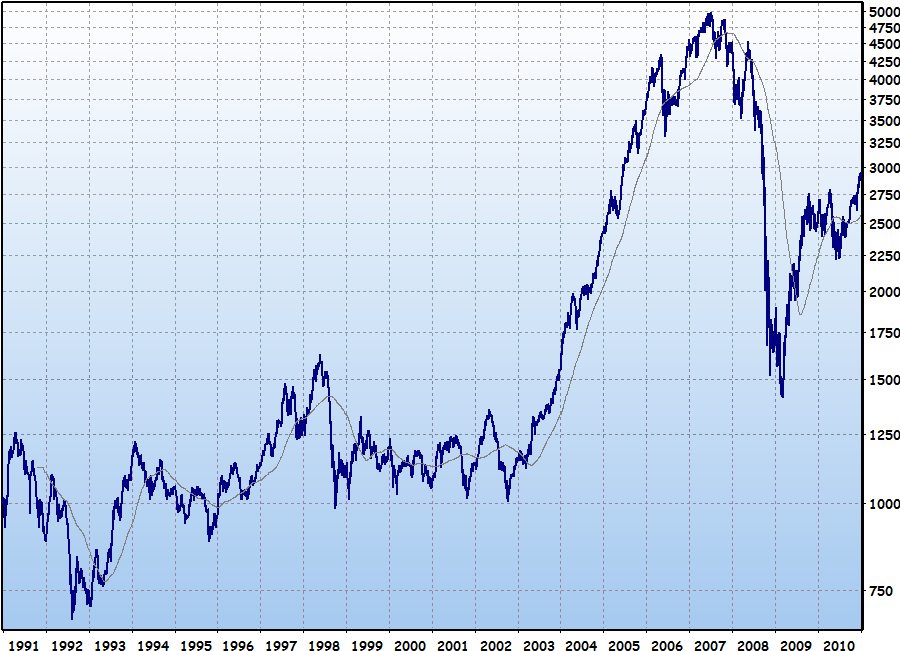
Test your tolerance honestly. In 2020, global stock markets fell by more than 30 percent in about a month before recovering. In 2008, many stock funds fell by 40 percent or more. If a fall of that size would make you sell everything, a more balanced portfolio with more bonds and cash is safer, even if its expected return is lower. Staying invested through a downturn is usually more valuable than having the theoretically perfect portfolio on paper. An emergency fund of three to six months of expenses, kept in cash, also stops you from being forced to sell investments when an unexpected bill arrives.
7. Keep fees and taxes under control
Fees are one of the few parts of investing you can control. Compare expense ratios before you buy a fund, watch out for trading commissions and avoid paying for advice you do not need. A difference of 0.90 percent a year may look small, but on a $100,000 portfolio growing at 7 percent before fees, paying 1.00 percent instead of 0.10 percent could cost more than $50,000 over 30 years. Tax also matters. In the United Kingdom, Individual Savings Accounts allow up to 20,000 pounds of contributions per tax year with tax-free growth, while pensions offer tax relief on contributions within annual limits. In the United States, 401(k) plans and Individual Retirement Accounts offer tax-deferred or tax-free growth depending on the type. Use tax-advantaged accounts first when they fit your goals, and keep investments you trade often inside those accounts where possible.
Common beginner mistakes to avoid
The most common mistake is trying to time the market. Studies of investor behaviour repeatedly show that missing just the 10 best days in the market over 20 years can cut returns by more than half, because the best days often follow the worst days. Other mistakes include chasing last year’s hottest fund, concentrating everything in one stock or one sector, borrowing to invest, and checking your portfolio every day. Daily checking makes normal volatility feel like a crisis and increases the temptation to trade. A quarterly review is enough for most long-term portfolios.
Another mistake is investing before the basics are covered. Pay off high-interest credit card debt first, because interest rates of 20 percent or more are very hard to beat by investing. Build an emergency fund, then invest money you will not need soon. Starting small is fine. A regular habit matters more than a perfect first choice, and that habit is easier to build alongside a simple savings plan, as shown in Tech Beacon’s saving money tips.
This article is general information only and is not personal financial advice.
Frequently asked questions
How much money do I need to start investing?
You can start with as little as $25 or $50 a month through many index funds and investment apps. Some funds have no minimum investment at all. The amount matters less than consistency, low fees and a long time horizon.
Are investment strategies risky?
All investing involves risk, including the risk of losing money in the short term. Diversification, a suitable mix of stocks and bonds, and a long horizon reduce risk, but they do not remove it. Cash also carries risk, because inflation can erode its purchasing power over time.
Should beginners pick individual stocks or funds?
Most beginners are better served by diversified funds. Picking individual stocks requires research, discipline and tolerance for company-specific risk. A single bad earnings report can cut a share price by 20 percent or more, while a broad fund spreads that risk across hundreds of companies.
How often should I check or change my portfolio?
Review your portfolio once or twice a year, or when your goals change. Rebalance if your stock and bond mix has drifted far from target. Avoid reacting to daily market news, which is designed to grab attention rather than improve long-term decisions.
What is the best investment strategy for beginners?
For most beginners, a simple strategy works best: invest regularly in low-cost, diversified index funds, hold a sensible amount of bonds for your age and goals, keep fees low, and stay invested. Complexity rarely improves results, while consistency usually does.
Conclusion: start simple, stay consistent
The best investment strategies share the same traits. They are diversified, low cost, matched to your time horizon and easy to stick with when markets are difficult. You do not need to predict the next market winner or trade every week. Choose a broad, low-cost portfolio, set up automatic monthly investing, keep an emergency fund separate, and review your plan once or twice a year. Start with an amount you can afford this month, even if it is small, and increase it gradually as your income grows. Over time, regular investing and compound growth can turn steady habits into meaningful wealth.
