

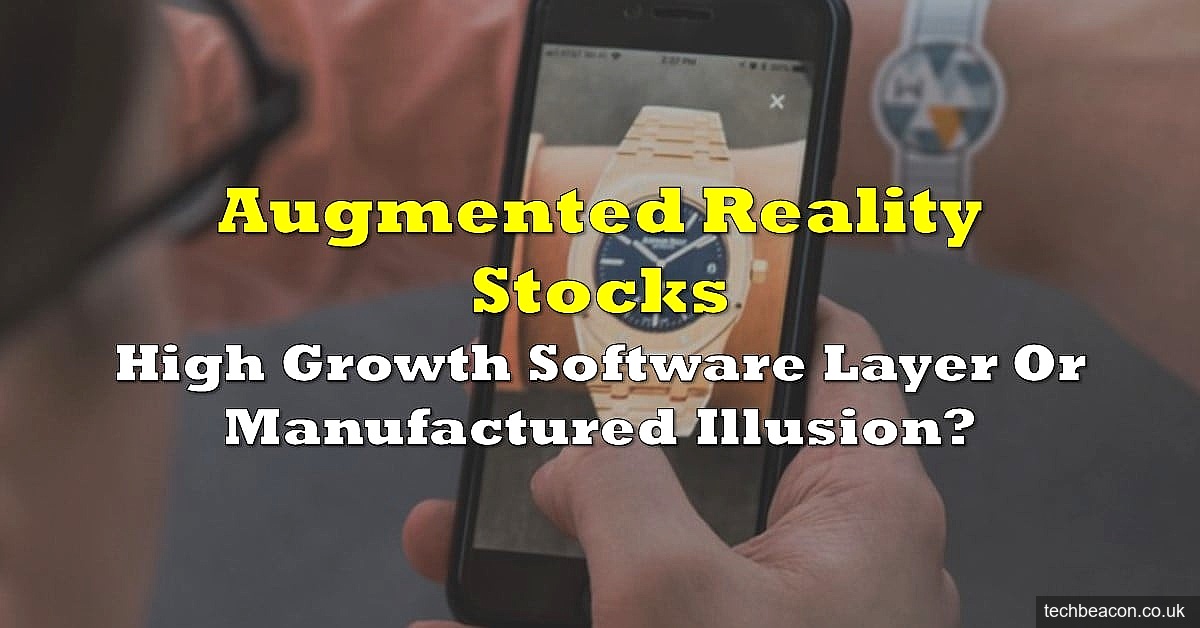
Understanding the Foundations of Augmented Reality Stock Price Valuations
Over the past few years, spatial computing and immersive technologies have transitioned from niche scientific concepts into mainstream economic powerhouses. Investors across the globe are constantly evaluating how breakthrough developments in optics, micro-LED displays, advanced depth sensors, and cloud infrastructure directly influence the augmented reality stock price across various market sectors. Unlike traditional technology investments that rely solely on software adoption or hardware sales, augmented reality spans a complex ecosystem combining semiconductor fabrication, real-time spatial mapping, specialized computer vision algorithms, and consumer design aesthetics. As tech titans and nimble startups compete for dominance in this multi-billion dollar frontier, tracking equity performance requires a nuanced understanding of product rollouts, enterprise adoption rates, and macro-tech trends that drive modern financial markets worldwide. Consequently, market analysts continuously adjust revenue forecasts and target multiples based on technological breakthroughs.
To build a resilient and growth-oriented portfolio in this high-tech sector, investors must look beyond simple stock tickers and examine the structural fundamentals driving true long-term enterprise value. Evaluating an individual company’s financial performance entails thoroughly analyzing operational margins, research and development expenditures, strategic cross-industry partnerships, and patent portfolios that protect proprietary hardware design. Furthermore, keeping a close eye on the comprehensive list of augmented reality stocks helps traders identify top performers and emerging market leaders across the entire tech supply chain. As consumer adoption shifts from basic smartphone camera filters to dedicated smart glasses and advanced spatial headsets, the underlying augmented reality stock price for key industry leaders is expected to undergo substantial recalibration, reflecting expanded recurring revenue streams and rapid total addressable market expansion across global markets.
Key Industry Drivers Shaping the Augmented Reality Stock Price Trajectory
Several macro and microeconomic forces exert a heavy influence on how Wall Street values companies operating within the immersive technology ecosystem. First and foremost, hardware miniaturization remains a pivotal catalyst; as display optical systems become lighter, more energy efficient, and capable of displaying high-fidelity 3D graphics in bright sunlight, consumer adoption rates rise significantly. When major hardware vendors demonstrate high-yield manufacturing capabilities and steady gross profit margins, overall market sentiment shifts favorably, providing strong upward momentum to the augmented reality stock price of component providers and primary developers alike. Furthermore, the integration of artificial intelligence—specifically generative AI models and real-time spatial awareness software—has rapidly accelerated the utility of smart glasses by allowing devices to contextually comprehend user environments instantly. This technological synergy creates high barrier to entry moats for market leaders.
Enterprise adoption represents another massive, sustainable growth engine driving equity valuations across the immersive tech space. Key sectors such as automotive manufacturing, aerospace engineering, complex healthcare procedures, and global logistics are increasingly relying on hands-free AR headsets to improve worker safety, reduce expensive operational error rates, and streamline remote assistance protocols. When enterprise clients sign multi-year enterprise license agreements, software providers secure predictable, recurring subscription revenue that drastically reduces quarterly earnings volatility. Investors frequently monitor these major corporate partnerships, as substantial enterprise contract announcements routinely spark significant positive movement in a company’s augmented reality stock price, validating the real-world commercial viability of these technologies beyond consumer gaming and entertainment applications. As enterprise ROI becomes undeniably clear, capital investment into these platforms continues to compound exponentially.
Hardware Manufacturers vs. Software Developers: Valuation Differences
Analyzing the financial performance of immersive technology companies requires carefully distinguishing between hardware manufacturers and software developers, as each business model exhibits vastly different margin profiles and capital requirements. Hardware companies, responsible for producing custom silicon chips, waveguide optics, depth sensors, and ergonomic lightweight frames, often face substantial upfront capital expenditures and complex global supply chain logistics. Consequently, their valuation metrics usually trade at lower price-to-earnings ratios compared to pure software vendors. However, when a hardware manufacturer achieves high unit volume sales, the long-term appreciation of its augmented reality stock price can be staggering due to the sheer operational scale and foundational market dominance established early in the technology adoption lifecycle. These hardware foundations often pave the way for high-margin peripheral software services later on.
On the opposite end of the market spectrum, software developers, spatial rendering engine creators, and cloud platform providers benefit from scalable, asset-light business models with exceptionally high gross profit margins. Software platforms that enable third-party creators to build interactive augmented reality experiences enjoy powerful network effects and highly dedicated developer communities. When institutional investors recognize a software ecosystem becoming the default development standard, valuation multiples expand rapidly. This dynamics often results in a higher premium placed on software developers, insulating their share value during periods of broader macroeconomic contraction. Balancing a portfolio between hardware supply chain leaders and high-margin spatial software platforms allows investors to capitalize on broader industry growth while effectively mitigating sub-sector headwinds. Diversification across these distinct business models ensures exposure to both foundational hardware expansion and scalable software monetization.
Evaluating Risk Factors and Market Volatility in AR Investing
While the long-term total addressable market for spatial technology is immensely promising, potential investors must remain cognizant of the unique risks and high price volatility associated with emerging technology equities. Disproportionate research and development costs can compress short-term operating profit margins, leaving high-growth tech companies vulnerable to sharp sell-offs during high-interest-rate environments. Delays in product launches, supply chain bottlenecks for specialized optical components, or unexpected regulatory hurdles surrounding user privacy and location-based data collection can severely depress short-term market valuations. Consequently, tracking sudden swings in an augmented reality stock price requires analyzing quarterly earnings call transcripts, inventory turn rates, and management guidance regarding technical development milestones. Investors who fail to monitor these underlying operational metrics risk misinterpreting short-term price momentum.
Another critical factor contributing to equity volatility is consumer sentiment and the timeline for mass market optical hardware adoption. While enterprise applications provide a stable baseline of revenue, broad consumer adoption depends heavily on solving ergonomic challenges, battery life restrictions, and price sensitivity. Until lightweight, stylish, all-day smart glasses reach mass market price points, revenue projections for consumer-facing hardware will remain subject to periodic downward revisions. Savvy investors interested in expert tech innovation and market analysis insights often utilize dollar-cost averaging techniques to navigate these temporary drawdowns, building strategic positions while market sentiment is subdued prior to major industry product cycles. This patient approach enables long-term investors to manage risk effectively while capitalizing on upcoming technology adoption inflection points.
The Role of Big Tech and Ecosystem Dominance in Stock Performance
Mega-cap technology corporations hold an exceptionally dominant position in shaping the spatial computing market landscape. These tech giants possess deep financial balance sheets, allowing them to fund billions of dollars in annual research and development without jeopardizing overall corporate profitability. By bundling spatial audio, wearable fitness trackers, spatial computing platforms, and mobile application stores into unified digital ecosystems, these companies lock in loyal user bases and create high barriers to entry for independent competitors. Consequently, the consolidated augmented reality stock price of mega-cap tech companies often exhibits far lower downside volatility compared to small-cap pure-play AR stocks, offering conservative investors a safer entry point into spatial computing exposure. Furthermore, their massive global distribution networks ensure immediate worldwide product reach whenever new spatial devices are launched.
Nevertheless, small-cap specialized firms and pure-play technology vendors often serve as the true engines of rapid innovation in niche hardware and specialized enterprise software. Smaller companies that hold vital patents for advanced diffraction waveguides, specialized micro-display technologies, or high-precision eye-tracking algorithms frequently become lucrative acquisition targets for mega-cap platforms seeking to accelerate their spatial roadmaps. When strategic buyout rumors surface or licensing agreements are signed, these specialized firms can experience explosive upside movements in share price overnight. Including a blend of established mega-cap tech conglomerates alongside carefully selected high-upside pure-play stocks provides an optimal balance between capital preservation and capital growth. This hybrid portfolio strategy enables investors to capture defensive stability while preserving exposure to high-multiplier buyout opportunities.
Long-Term Investment Strategies for Capitalizing on Augmented Reality
Navigating the evolving landscape of spatial tech investments requires a well-structured, multi-year investment horizon aligned with technological inflection points. Rather than attempting to time short-term market fluctuations or chase speculative momentum rallies, successful market participants typically establish clear asset allocation guidelines based on sector fundamentals. Diversification across the entire ecosystem—encompassing semiconductor foundries, sensor manufacturers, cloud rendering providers, and enterprise software developers—helps protect portfolios against single-firm execution risks while ensuring broad exposure to the sector’s overarching expansion. Monitoring broad industry metrics, such as global smart glass shipment volumes and enterprise deployment counts, helps investors gauge whether current market prices reflect underlying operational reality. Disciplined monitoring prevents emotional trading decisions during broader market corrections.
As spatial computing converges with artificial intelligence, 5G telecommunications networks, and edge computing, the commercial utility of augmented reality will expand into virtually every facet of modern business and daily human interaction. Investors who maintain a disciplined focus on fundamental valuation metrics, balance sheet health, and continuous technological innovation will be best positioned to generate superior long-term returns. By closely monitoring trends in the augmented reality stock price across key industry players and executing well-timed strategic allocations, forward-thinking investors can participate in one of the most transformative economic megatrends of the twenty-first century. As digital and physical worlds blur, early capital allocation into market leaders promises to redefine portfolio growth over the next decade.
